Time-of-Flight (ToF) proximity sensors represent a significant leap in non-contact sensing technology, fundamentally transforming how machines perceive and interact with their environment. At its core, a ToF sensor measures the distance to a target by calculating the time it takes for a light signal, typically from a modulated infrared LED or a laser diode, to travel to the object and back to the sensor. This is achieved not by measuring a single pulse, but by using continuous wave modulation and comparing the phase shift between the emitted and reflected signals. The resulting distance data is highly accurate, fast, and largely independent of the target's surface color or reflectivity compared to traditional triangulation-based sensors.
The operational principle hinges on precision timing. The sensor emits a modulated light wave. When this light hits an object, it is reflected back. A specialized sensor, often a CMOS imaging array or a single-photon avalanche diode (SPAD), detects the returning light. An internal processor then analyzes the phase difference between the emitted and received waveforms. Since the speed of light is a known constant, the round-trip time, and consequently the distance, can be calculated with remarkable precision using the formula: Distance = (Speed of Light × Time of Flight) / 2. Modern ToF sensors integrate the light source, optics, detector, and processing circuitry into compact, robust modules, making them ideal for industrial integration.
The advantages of ToF proximity sensors are compelling for industrial automation. They offer high measurement speeds, often in the millisecond range, enabling real-time object detection and positioning in high-speed assembly lines. Their measurement range can vary from a few centimeters to several meters, depending on the model and optical power. Furthermore, they are relatively immune to ambient light interference due to sophisticated filtering techniques that only recognize the sensor's specific modulation frequency. This robustness makes them suitable for harsh environments where lighting conditions may fluctuate.
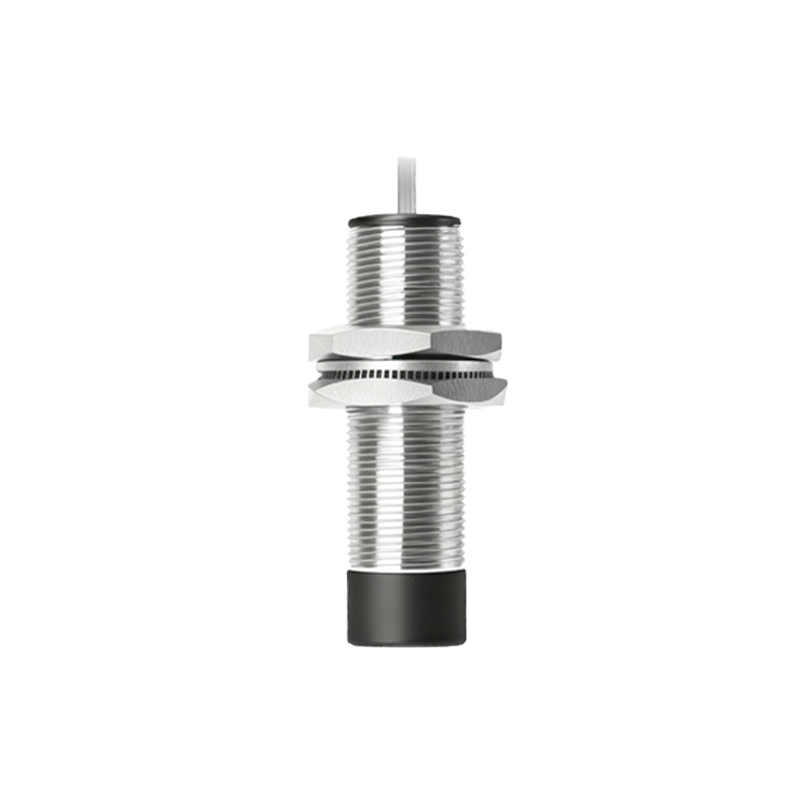
In practical industrial applications, ToF sensors are ubiquitous. They are deployed for precise object positioning on conveyor belts, ensuring robotic arms pick and place components with sub-millimeter accuracy. In automated guided vehicles (AGVs) and mobile robots, they serve as collision avoidance and navigation aids, creating a simple 3D map of the immediate surroundings. Level monitoring in silos or tanks, where contact is undesirable, is another common use case. Additionally, they are integral to safety systems, forming light curtains that instantly halt machinery when an intrusion is detected within a predefined zone.
Recent technological advancements continue to push the boundaries. The development of multi-zone ToF sensors, which can provide distance data for several discrete fields of view simultaneously, enhances situational awareness. Integration with industrial communication protocols like IO-Link allows for seamless parameter configuration, real-time diagnostics, and predictive maintenance data streaming directly into PLC systems. Furthermore, the emergence of direct Time-of-Flight (dToF) sensors, which measure the direct delay of a single light pulse, offers even higher precision for very short distances and is gaining traction in ultra-fine positioning tasks.
When selecting a ToF sensor for an industrial application, several critical parameters must be evaluated. The required measurement range and resolution are paramount. The sensor's response time must align with the process speed. Environmental factors such as temperature extremes, potential exposure to dust, oil, or vapors, and the presence of highly reflective or absorbent materials in the operating area must be considered. The housing material, typically stainless steel or ruggedized plastics with specific IP ratings, ensures longevity. Finally, the output interface—analog voltage/current, digital switching (PNP/NPN), or serial communication—must be compatible with the existing control architecture.
Looking forward, the convergence of ToF sensing with artificial intelligence and edge computing presents the next frontier. Smart sensors capable of not only measuring distance but also classifying object types or detecting abnormal patterns are on the horizon. This will enable more autonomous and adaptive manufacturing systems. As the technology matures and costs decrease, Time-of-Flight proximity sensors are poised to become even more deeply embedded in the fabric of Industry 4.0, driving efficiency, safety, and intelligence in automated processes across the globe.