Large laser sensors represent a critical advancement in industrial measurement and detection technology, leveraging the fundamental properties of laser light to achieve high precision, long-range operation, and robust performance in challenging environments. At their core, these sensors operate based on the principles of laser triangulation, time-of-flight (ToF), or interferometry, each suited to specific application demands.
Laser triangulation is a widely adopted method for distance and displacement measurement. A laser diode emits a focused beam onto a target surface. The reflected light is captured by a position-sensitive detector (PSD) or a CMOS/CCD sensor at a known angle relative to the emission source. By analyzing the position of the reflected spot on the detector, the sensor calculates the distance to the target with micron-level accuracy. This technique is particularly effective for short to medium ranges and is extensively used in quality control, surface inspection, and dimensional gauging.
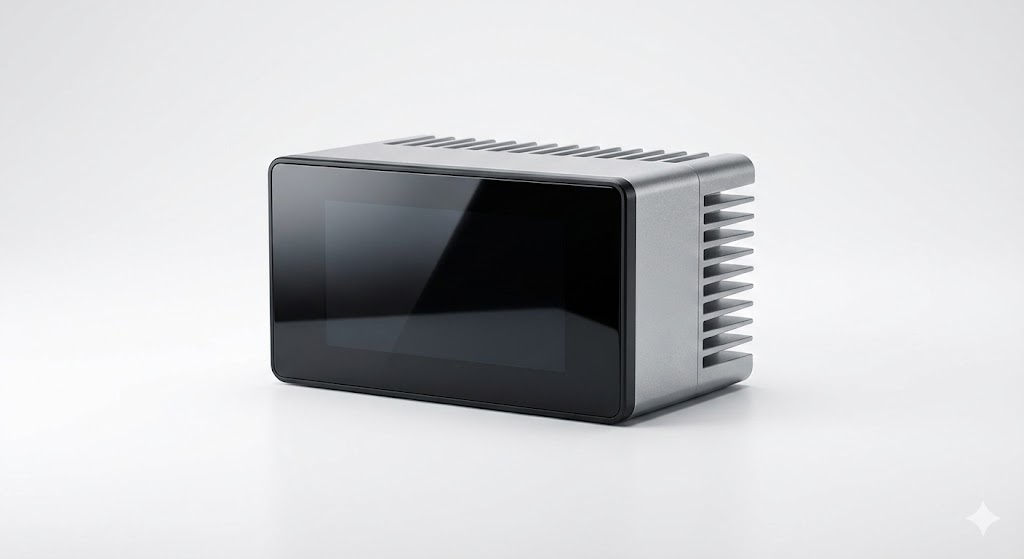
For longer distances, time-of-flight (ToF) principles are predominant. ToF sensors measure the time interval between the emission of a laser pulse and the reception of its reflection. Given the constant speed of light, the distance is computed as d = (c × t) / 2, where c is the speed of light and t is the measured time. Modern ToF systems utilize advanced pulsed or modulated continuous-wave (CW) lasers coupled with high-speed photodetectors and precise timing circuits. These sensors are ideal for applications such as bulk level monitoring, large-scale 3D mapping, and autonomous vehicle navigation, offering ranges from several meters to hundreds of meters.
Interferometric laser sensors provide the highest precision for nanometer-scale measurements. They operate by splitting a coherent laser beam into a reference path and a measurement path. The beam reflected from the target recombines with the reference beam, creating an interference pattern. Changes in the target's position alter the optical path difference, causing shifts in the interference fringes. By analyzing these shifts, the sensor determines displacement with extreme accuracy. This method is crucial in semiconductor manufacturing, precision machining, and scientific research.
Key components of a large laser sensor system include the laser source, optics, detector, and signal processing unit. Laser sources are typically semiconductor lasers (laser diodes) or fiber lasers, chosen for their coherence, wavelength, and power output. Optics, such as lenses and beam expanders, shape and direct the laser beam. Detectors, including avalanche photodiodes (APDs) or photomultiplier tubes (PMTs), convert optical signals into electrical ones. The signal processing unit employs algorithms to filter noise, compensate for environmental factors (e.g., ambient light, temperature), and output reliable data.
Industrial applications demand sensors that withstand harsh conditions. Large laser sensors are often housed in rugged enclosures with ingress protection (IP) ratings, feature temperature compensation circuits, and incorporate fail-safe mechanisms. They interface with programmable logic controllers (PLCs) and industrial networks (e.g., Ethernet/IP, PROFINET) for seamless integration into automation systems.
Emerging trends include the integration of artificial intelligence for adaptive measurement, the use of multi-wavelength lasers to mitigate material-dependent errors, and the development of compact, energy-efficient designs. As Industry 4.0 advances, large laser sensors will continue to evolve, enabling smarter, more responsive manufacturing and inspection processes.
In summary, large laser sensors are indispensable tools in modern industry, transforming how distances, displacements, and profiles are measured with unparalleled speed and accuracy. Their underlying principles—triangulation, ToF, and interferometry—cater to diverse needs, driving innovation across sectors from automotive to aerospace. Understanding these principles is essential for engineers aiming to optimize measurement systems and harness the full potential of laser-based sensing technology.