Proximity sensors are essential components in modern industrial automation, enabling non-contact detection of objects across various sectors. Different countries and manufacturers have developed distinct models tailored to specific applications, each with unique features and compliance standards. This article explores prominent proximity sensor models from key regions, highlighting their technical specifications and industrial uses.
In Europe, leading manufacturers like Siemens (Germany) and Schneider Electric (France) produce widely adopted models. The Siemens BERO series, for instance, offers inductive, capacitive, and ultrasonic variants with ranges up to 70 mm. These sensors are known for high switching frequencies and robust housing, making them ideal for automotive assembly lines and packaging machinery. Schneider Electric’s XS series provides compact designs with IP67 protection, commonly used in food processing and material handling due to their resistance to moisture and dust. European models often comply with IEC 60947-5-2 standards, ensuring reliability in harsh environments.
North America features models from companies such as Rockwell Automation (USA) and Allen-Bradley. The Allen-Bradley 871TM series includes inductive proximity sensors with embedded diagnostics, suitable for heavy industries like mining and aerospace. These sensors operate in temperature extremes from -40°C to 85°C and support IO-Link communication for real-time data monitoring. Rockwell’s 875C series is renowned for its weld-field immunity, preventing false triggers in welding applications. U.S. models typically adhere to NEMA and UL standards, emphasizing durability and safety in manufacturing plants.
Japan contributes advanced models from Omron and Keyence. Omron’s E2E series features ultra-small inductive sensors with detection distances up to 15 mm, designed for precision robotics and electronics assembly. Keyence’s PR series combines photoelectric and inductive technologies, offering high-speed response times under 1 ms for semiconductor fabrication. Japanese sensors prioritize miniaturization and energy efficiency, aligning with industries requiring high-density installations and low power consumption.
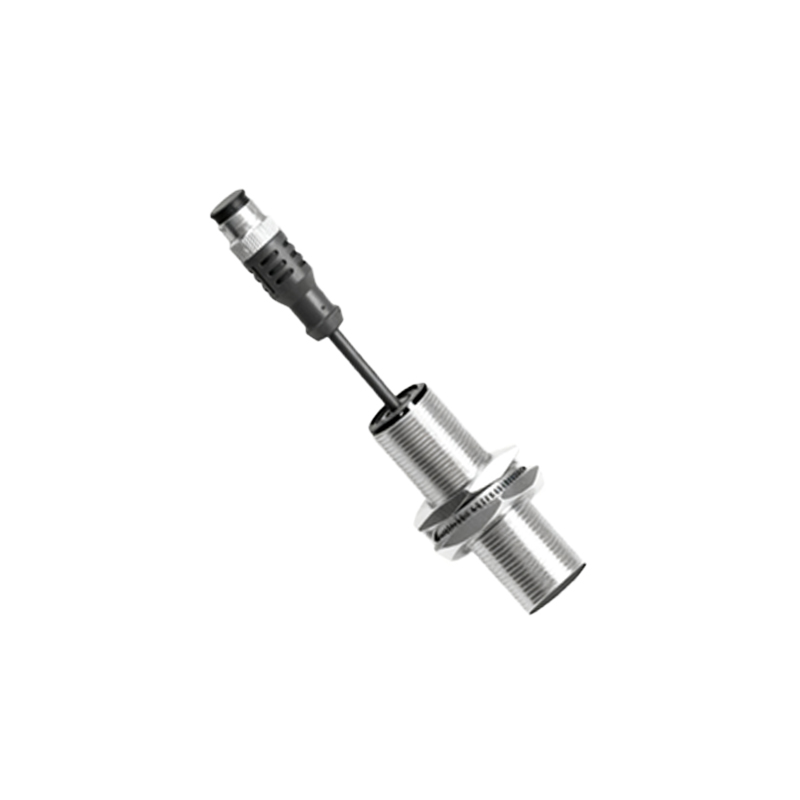
Emerging markets like China and South Korea have also developed competitive models. Chinese brands such as Sick (with regional manufacturing) and local producers offer cost-effective options like the Sick IM series, which provides basic inductive sensing for consumer goods manufacturing. South Korea’s Autonics produces the PR series with analog output capabilities, used in textile machinery and conveyor systems. These models often meet international certifications like CE and RoHS, catering to global supply chains.
Technological trends are shaping new sensor models globally. The integration of IoT connectivity allows sensors like the Siemens SIMATIC RF200 to enable predictive maintenance in smart factories. Additionally, hybrid sensors combining inductive and capacitive functions, such as the Pepperl+Fuchs UC series, are gaining traction for versatile object detection. Industry 4.0 demands sensors with enhanced data analytics, driving innovations in self-calibrating and wireless models.
In summary, proximity sensor models vary by region based on industrial needs and standards. European sensors excel in robustness, North American models in harsh-condition performance, Japanese designs in precision, and emerging market options in affordability. Understanding these differences helps engineers select appropriate sensors for applications ranging from automotive to electronics, ensuring efficiency and reliability in automated systems.