In industrial automation and control systems, proximity switch sensors are fundamental components used for non-contact detection of objects. A key feature in modern proximity sensors is the digital display, often integrated into the device. But what does "digital display" mean for a proximity switch sensor? Essentially, it refers to an integrated screen, typically an LCD or LED panel, that provides real-time visual feedback on the sensor's status, parameters, and operational data. This functionality transforms a simple detection device into an intelligent, user-friendly tool for setup, monitoring, and troubleshooting.
The primary purpose of a digital display on a proximity sensor is to enhance configurability and diagnostics. Unlike traditional sensors without displays, which rely on external indicators like LED blink codes or manual measurement with tools, a digital display presents information directly and clearly. Common data shown includes the current sensing distance to a target, the output status (e.g., ON/OFF), the configured switching threshold or sensing range, and operational modes (e.g., normally open, normally closed). Some advanced models also show parameters like supply voltage, output current, temperature, or error codes for faults such as short circuits, wire breaks, or overload conditions. This immediate visibility allows technicians to verify if the sensor is working correctly within its application without needing additional diagnostic equipment.
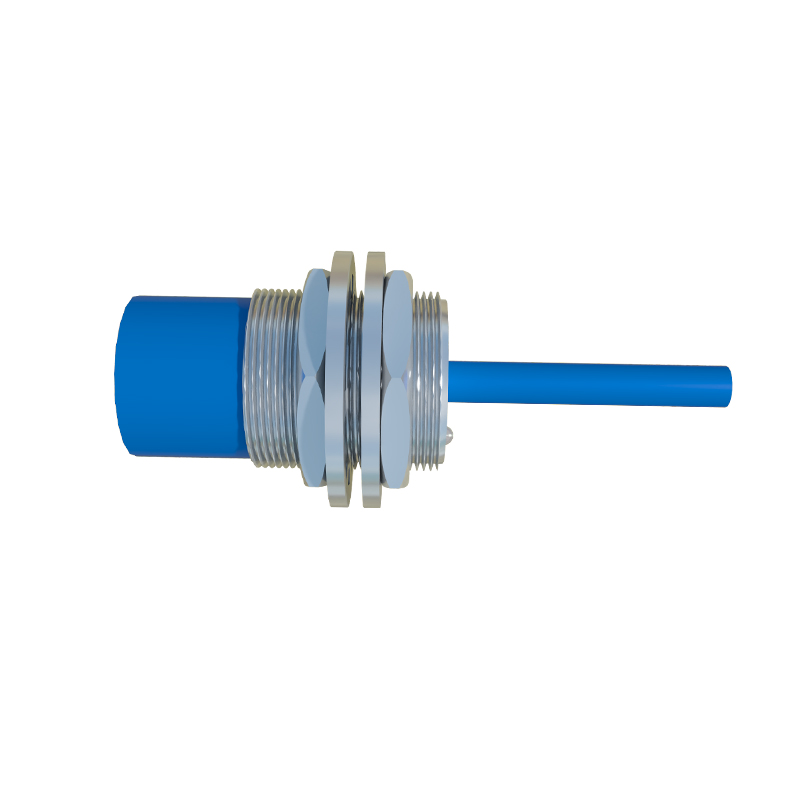
From a setup perspective, the digital display simplifies installation and adjustment. Many programmable proximity sensors with displays allow users to set parameters directly via buttons on the housing. For instance, you can teach-in the sensing distance by placing the target object in front of the sensor and pressing a button to store the value, which is then shown on the screen. This eliminates the need for potentiometer adjustments with screwdrivers and reduces setup time. The display confirms the exact setpoint, ensuring precision in applications requiring specific detection ranges, such as in packaging machinery, robotic positioning, or assembly line counting.
In terms of operational monitoring, the digital display offers continuous feedback. In a running system, an operator can quickly glance at the display to check the sensor's live performance. If a sensor shows a fluctuating distance reading when it should be stable, it might indicate mechanical vibration, an incorrect mounting position, or an unsuitable target material. Real-time values help in predictive maintenance by identifying drift in performance before a failure occurs, thereby minimizing unplanned downtime. For sensors with analog current or voltage outputs (e.g., 4-20mA, 0-10V), the display often shows the exact analog value corresponding to the measured distance, providing a clear interpretation of the signal for process control.
Error diagnosis is another critical area where digital displays prove invaluable. When a fault occurs, the sensor can display specific error messages. Instead of interpreting a blinking pattern, a technician reads a clear code like "Err1" for a short circuit or "OL" for overload, often accompanied by a brief description. This accelerates troubleshooting, as maintenance personnel can identify issues directly at the sensor location without consulting manuals or connecting to a PLC for diagnostics. It enhances system reliability and reduces mean time to repair (MTTR) in complex industrial environments.
It is important to note that not all proximity sensors have digital displays; they are more common in advanced inductive, capacitive, or ultrasonic sensors where parameterization is beneficial. The inclusion of a display often signifies a higher-end, feature-rich sensor designed for demanding applications requiring fine-tuning and visibility. When selecting a sensor, considering a model with a digital display can be advantageous for applications involving frequent changeovers, precise adjustments, or where operational transparency is crucial for efficiency and quality control.
In summary, the digital display on a proximity switch sensor means enhanced functionality: it provides a direct window into the sensor's operation, enabling easy setup, real-time monitoring, and swift diagnostics. This feature aligns with Industry 4.0 trends towards smart, connected devices that offer data accessibility and user interaction, ultimately contributing to more efficient, reliable, and maintainable automation systems.