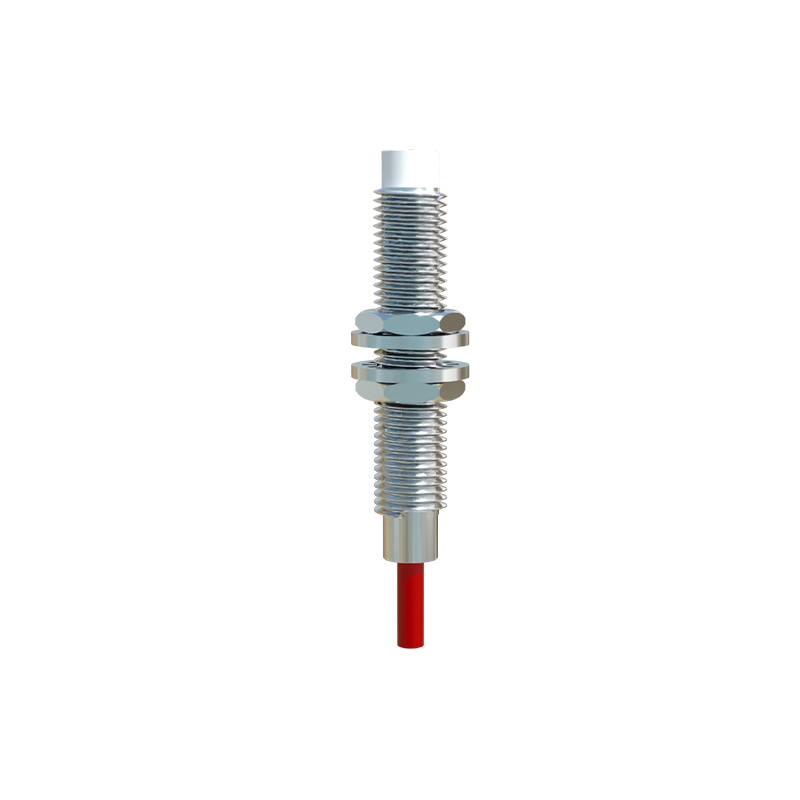
In the demanding environments of modern industry, where flammable gases, vapors, or combustible dusts are present, safety is not just a priority—it is an absolute mandate. Traditional sensing solutions can pose a significant ignition risk due to electrical sparks or thermal energy. This is where Intrinsic Safety (IS) certified equipment, particularly capacitive proximity sensors, becomes indispensable. These specialized devices are engineered to operate with energy levels so low that they are incapable of igniting a specific hazardous atmospheric mixture. This article delves into the working principles, key applications, and critical selection criteria for intrinsic safety capacitive proximity sensors.
At its core, a capacitive proximity sensor functions by generating an electrostatic field. The sensor's active face, along with an internal or external measurement electrode, forms a capacitor. When a target object enters this electrostatic field, it alters the dielectric constant and thus the capacitance of the system. The sensor's internal oscillator detects this change, triggering a switching output. What distinguishes an IS-rated capacitive sensor is its meticulously designed circuitry. This design incorporates current-limiting and voltage-limiting barriers, often through Zener diodes, resistors, and fuses, ensuring that under both normal and fault conditions (such as a short circuit), the electrical energy in the hazardous area remains below the ignition threshold for the classified zone.
The applications for these sensors are vast and critical across numerous high-risk sectors. In the oil and gas industry, they are deployed on offshore platforms and in refineries for non-contact level detection of liquids and granular solids within tanks and silos, even through non-metallic walls. The pharmaceutical and chemical manufacturing sectors utilize them for precise presence detection of plastic or glass containers, monitoring powder levels in hoppers, and controlling filling processes—all within potentially explosive atmospheres. In grain handling and food processing facilities where combustible dust is a constant hazard, IS capacitive sensors reliably detect the presence of materials like flour, sugar, or grain, ensuring process automation without spark risk. Furthermore, they are essential in paint spray booths, mining operations, and any area processing flammable solvents.
Selecting the appropriate intrinsic safety capacitive proximity sensor requires careful consideration of several technical and certification parameters. First and foremost is the Explosion Protection Rating. The sensor must carry certifications (like ATEX, IECEx, or UL/CSA) matching the hazardous area classification (e.g., Zone 0/1/20/21 for gases/dusts). The Sensing Distance is a crucial factor; it is typically shorter than standard models and is derated for non-metallic targets. Engineers must also account for the Dielectric Constant of the target material, as it directly influences the effective sensing range—materials with a higher constant (like water) are easier to detect than those with a low constant (like plastics). The Output Type (PNP/NPN, NO/NC) must be compatible with the associated intrinsic safety barrier or isolator and the control system. Housing Material (often stainless steel or PBT plastic) must be suitable for the environment, offering resistance to chemicals, washdowns, or mechanical impact. Finally, Temperature Range specifications must align with the operational environment to ensure long-term reliability.
Installation and maintenance, while straightforward, demand adherence to strict guidelines. The sensor must be connected to a certified intrinsic safety barrier or galvanic isolator located in the safe area. All wiring must comply with the entity parameters (Ui, Ii, Pi, Ci, Li) specified in the sensor's documentation to maintain the integrity of the safety loop. Regular inspections should check for buildup of material on the sensing face, which can cause false triggering, and verify the integrity of the housing and cable entries.
In conclusion, intrinsic safety capacitive proximity sensors represent a sophisticated fusion of precise sensing technology and rigorous safety engineering. They enable automation and process control in the world's most hazardous industrial locations, providing reliable detection of a wide array of materials while fundamentally preventing the possibility of ignition. For engineers designing systems for explosive atmospheres, a deep understanding of their principles, certifications, and application nuances is not merely beneficial—it is a fundamental requirement for ensuring operational safety, efficiency, and regulatory compliance. By making an informed selection and following proper installation practices, these sensors become a cornerstone of safe and productive industrial operations.