In the rapidly evolving landscape of industrial automation and control systems, the demand for more efficient, reliable, and cost-effective sensing solutions is paramount. Among the most significant advancements in this domain is the emergence and widespread adoption of non-contact proximity sensors, particularly those that operate on a wiring-free or "wireless" principle. This article delves into the core concept of what constitutes a "wiring-free" proximity sensor, its operational principles, key technologies, and the transformative benefits it brings to modern electrical and automation engineering.
At its essence, a proximity sensor is a device that detects the presence or absence of an object within a specific range without any physical contact. Traditional inductive, capacitive, or photoelectric sensors, while highly effective, typically require a wired connection for power supply and signal transmission. This wiring, comprising power lines and signal cables, is often a source of complexity, cost, and potential failure points in system installation and maintenance.
The term "wiring-free" or "wireless" in the context of proximity sensors refers to a paradigm shift. It does not imply the sensor operates without any power source, but rather that it eliminates the need for hard-wired connections for data communication and, in some advanced iterations, for power as well. These sensors are designed to communicate detection events and other data through wireless protocols, fundamentally changing how sensors are integrated into systems.
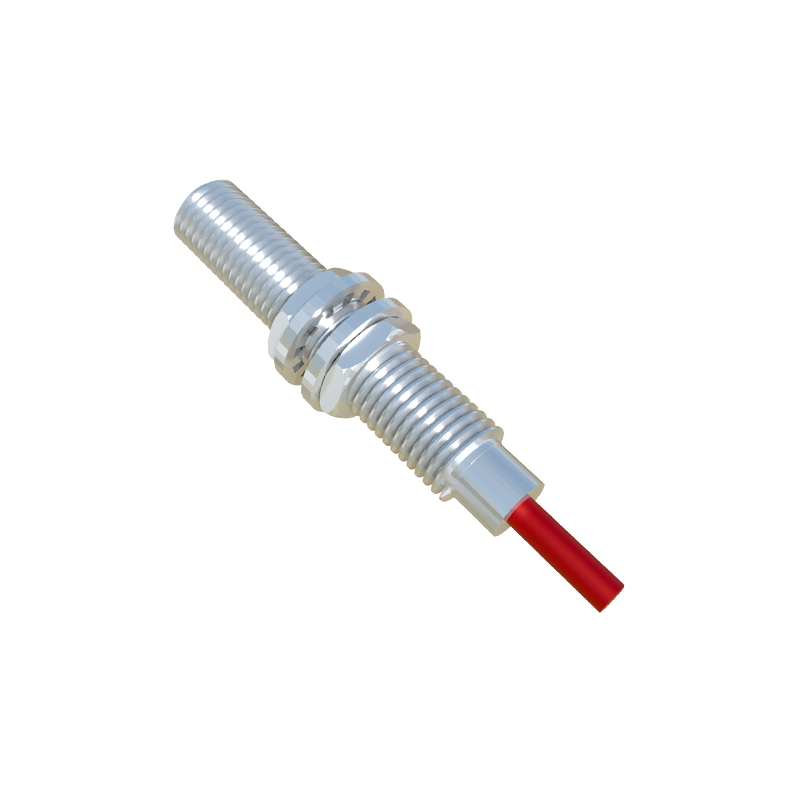
The operational principle hinges on integrated wireless communication modules. When a sensor detects a target object, it processes this event internally and then transmits a digital signal via a radio frequency (RF) technology. Common protocols include Bluetooth Low Energy (BLE), Zigbee, Wi-Fi, or proprietary industrial wireless standards like IO-Link Wireless or WirelessHART. This transmitted signal is received by a central gateway, controller, or a networked system of receivers, which then interprets the data and triggers the appropriate control actions. For power, these sensors are typically powered by long-life batteries or, more innovatively, through energy harvesting techniques such as vibration, light, or thermal energy conversion, pushing the concept towards complete autonomy.

Several key technologies enable this wiring-free functionality. First, ultra-low-power microcontrollers and RF chips are critical, ensuring the sensor can operate for years on a small battery by spending most of its time in a deep sleep mode, waking only to sense and transmit. Second, robust wireless protocols are essential to ensure reliable data transmission in electrically noisy industrial environments, offering features like frequency hopping, encryption, and mesh networking for extended range and reliability. Third, advanced sensing elements themselves have become more power-efficient and accurate, reducing the overall energy budget.
The advantages of implementing wiring-free proximity sensors are substantial and multifaceted. The most immediate benefit is the drastic reduction in installation time and cost. Engineers no longer need to plan extensive cable trays, conduit runs, or complex wiring diagrams for each sensor point. This simplifies system design, especially in large facilities, rotating machinery, mobile equipment, or hard-to-reach areas where running cables is impractical or hazardous. Maintenance becomes significantly easier; sensor diagnostics, configuration, and even firmware updates can often be performed wirelessly. Furthermore, system flexibility and scalability are greatly enhanced. Adding, moving, or reconfiguring sensors becomes a trivial task, facilitating rapid line changes and adaptations in flexible manufacturing systems. This also contributes to improved safety by reducing trip hazards and potential short-circuit risks associated with damaged cables.
However, the adoption of wiring-free sensors is not without considerations. Engineers must carefully evaluate factors such as battery life and management, the potential for radio interference in dense installations, the required network security to prevent unauthorized access or data jamming, and the initial investment cost compared to traditional wired systems. The choice of wireless standard must align with the application's requirements for latency, data rate, range, and coexistence with other wireless systems in the plant.
In conclusion, the wiring-free proximity sensor represents a significant leap forward in sensing technology. By decoupling the sensor from physical wiring for data and sometimes power, it unlocks unprecedented levels of flexibility, cost-efficiency, and simplicity in system integration. As wireless technologies continue to mature, offering greater reliability, security, and energy efficiency, the adoption of these intelligent, connected sensors is poised to become the new standard. For electrical engineers and system integrators, understanding and leveraging this technology is crucial for designing the agile, resilient, and smart industrial systems of the future, driving productivity and innovation across countless applications from assembly lines and material handling to predictive maintenance and the Industrial Internet of Things (IIoT).