In the realm of industrial automation and control, proximity sensors stand as fundamental components for non-contact object detection. Among the diverse array of designs, the pin-style proximity sensor, often referred to as a pin-type or plug-in proximity switch, represents a highly specialized and reliable solution for applications demanding precision in confined spaces. This article delves into the operational principles, key selection criteria, and prevalent industrial applications of these compact yet robust devices.
At its core, a pin-style proximity sensor operates on the same fundamental principle as other inductive proximity sensors: electromagnetic induction. The sensor generates a high-frequency oscillating electromagnetic field from its active face, which in the pin-style design is the tip of a cylindrical, pin-like probe. When a metallic target (typically ferrous metals like steel or iron, though specific models can detect non-ferrous metals) enters this field, eddy currents are induced on the target's surface. This causes a change in the oscillation amplitude within the sensor's internal LC circuit. A dedicated evaluation circuit detects this change and triggers a solid-state switching output, signaling the presence of the target. The defining characteristic of the pin-style sensor is its elongated, slender cylindrical form factor, resembling a pin or a small probe. This design allows it to be installed in extremely tight locations where standard barrel-shaped sensors cannot fit, such as small holes in machinery, narrow gaps between components, or within compact jigs and fixtures.
Selecting the appropriate pin-style proximity sensor requires careful consideration of several technical parameters. First and foremost is the sensing distance, or nominal range. Due to their miniature size, these sensors typically offer very short sensing ranges, often from 0.5mm to 3mm. It is crucial to ensure the target will reliably enter this limited detection zone. The diameter and length of the pin probe are critical mechanical dimensions that must match the installation space. Common thread sizes for the housing include M3, M4, and M5, with probe lengths varying to suit the application. The output type is another vital choice; NPN (sinking) and PNP (sourcing) transistor outputs are standard, with 2-wire, 3-wire, and sometimes 4-wire (with dual complementary outputs) configurations available to interface with different PLC (Programmable Logic Controller) and control system inputs. Environmental ratings, specifically the Ingress Protection (IP) rating (e.g., IP67, IP69K), are essential for ensuring reliable operation in the presence of coolants, oils, metal chips, and washdown procedures common in machining and packaging environments. Finally, the switching frequency defines how quickly the sensor can detect objects passing by, a key factor for high-speed counting or positioning tasks.
The industrial applications for pin-style proximity sensors are vast and critical to modern manufacturing. In automated assembly lines, they are indispensable for verifying the precise presence or absence of tiny components—such as screws, springs, or pins—before a subsequent process step commences, preventing assembly errors. Within precision machine tools, these sensors are frequently employed for tool breakage detection. A sensor mounted near the tool path can detect if a drill bit or tap is broken by sensing the absence of its shank, immediately halting the machine to prevent damage to the workpiece and tool holder. They also serve as precise end-position detectors for small cylinders or actuators in pneumatic systems, providing feedback for control sequences. In electronic component manufacturing, they detect the leads of integrated circuits (ICs) or other connectors. Furthermore, their use in robotic grippers for confirming successful part pickup is commonplace, enhancing robotic cell reliability.
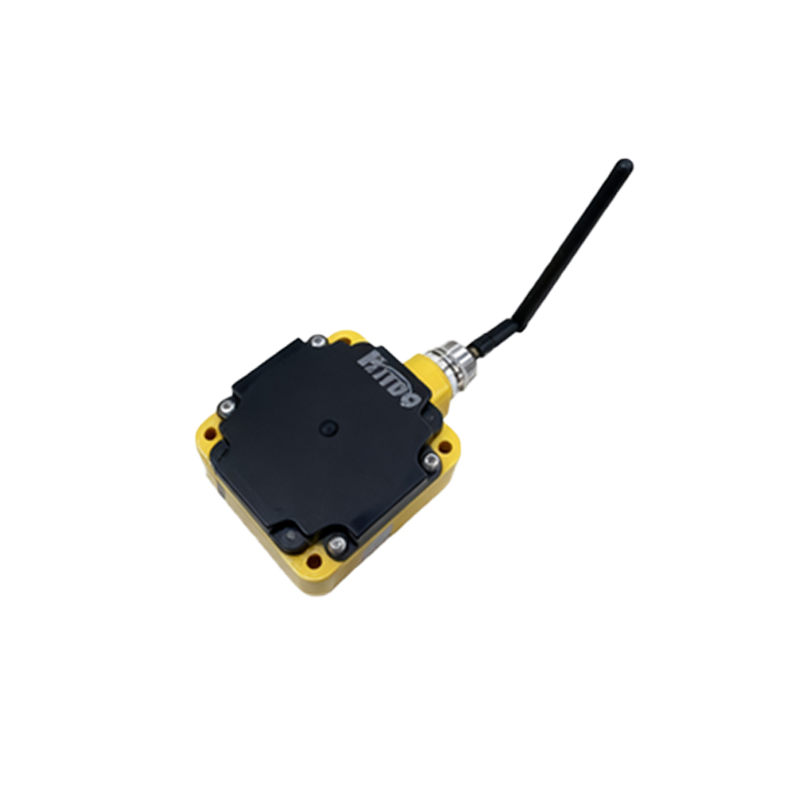
Installation and maintenance best practices significantly impact sensor longevity and performance. Proper mounting is paramount; the sensor must be securely fastened, and the sensing pin should not be subjected to lateral mechanical stress or used as a physical stop for the target. Ensuring a stable power supply within the sensor's specified voltage range (commonly 10-30V DC) is necessary. For detecting non-ferrous metals like aluminum or copper, sensors specifically designed for this purpose, often with reduced nominal range, must be selected. Regular cleaning of the sensing tip from accumulated debris or oil film is recommended to maintain consistent detection performance.
In conclusion, pin-style proximity sensors are specialized instruments that solve specific spatial challenges in automation. Their ability to provide reliable, non-contact detection in miniature form factors makes them irreplaceable in applications demanding high precision and reliability. A thorough understanding of their operating principles, coupled with a methodical approach to selection based on mechanical, electrical, and environmental requirements, enables engineers and technicians to effectively integrate these sensors, thereby enhancing the efficiency, quality, and safety of automated industrial systems.