In industrial automation and harsh environment applications, the ability of proximity sensors to operate reliably under elevated temperatures is a critical performance parameter. This article delves into the high-temperature tolerance of various proximity sensor technologies, exploring their limits, design considerations, and practical implications for engineers and system designers.
Proximity sensors, which detect the presence or absence of an object without physical contact, are fundamental components in manufacturing, automotive, aerospace, and energy sectors. Their performance in high-temperature environments directly impacts system reliability, safety, and maintenance costs. The maximum operating temperature a proximity sensor can withstand is not a single universal figure; it varies significantly based on the sensor's technology, construction materials, housing design, and electronic components.
Inductive proximity sensors, commonly used for metal detection, typically have a standard operating temperature range from -25°C to +70°C. However, specialized high-temperature models are available that can function reliably from -40°C up to +150°C or even +200°C in some cases. The limiting factors include the Curie temperature of the ferrite core, the thermal stability of the coil winding insulation, and the semiconductor components in the oscillator and amplifier circuits. For sustained operation above 150°C, sensors often employ high-temperature epoxy potting, ceramic housings, and wires with PTFE or fiberglass insulation.
Capacitive proximity sensors, suitable for both metallic and non-metallic materials, generally share similar temperature ranges with their inductive counterparts for standard versions. High-temperature variants can also reach up to 150°C to 200°C. Key challenges involve maintaining stable dielectric properties in the sensing face and preventing thermal drift in the capacitance measurement circuitry. Designers must select materials with low thermal expansion coefficients and stable permittivity over the intended temperature span.
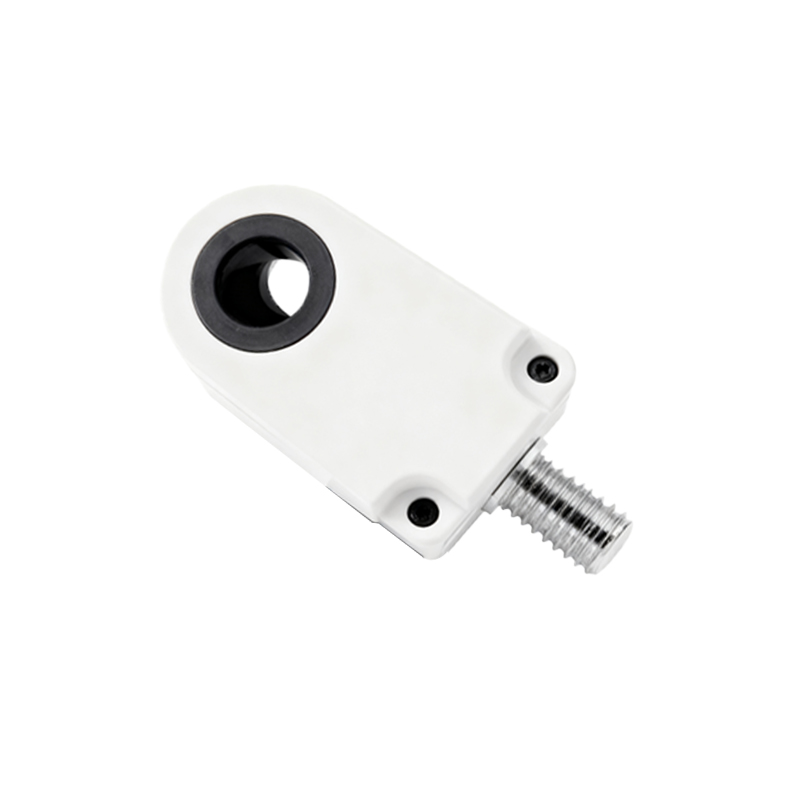
Magnetic proximity sensors, such as reed switches or Hall-effect sensors, exhibit a wide range of temperature capabilities. Standard reed switches may operate up to 125°C, while high-temperature glass-sealed reeds can withstand 200°C or more. Hall-effect sensors, being semiconductor-based, usually have a maximum junction temperature specified, often around 150°C for standard ICs. For extreme environments, sensors using gallium arsenide or silicon carbide semiconductors can push limits beyond 300°C, though these are specialized and costly.
Photoelectric sensors present a unique set of challenges. The LED or laser light sources, photodetectors, and optical elements are sensitive to heat. Standard photoelectric sensors might be rated for up to 60-70°C. High-temperature models with specialized components and heat dissipation designs can operate up to 120-150°C. Prolonged exposure to temperatures near the upper limit can accelerate LED lumen depreciation and shift the wavelength of the emitted light, affecting sensing reliability.
The sensor housing and cable are equally crucial. Stainless steel housings (e.g., 316L) offer good high-temperature resistance and corrosion protection. Connectors and cable jackets must be rated for the same temperature range; silicone rubber is a common choice for high-flex, high-temperature applications. It is vital to consider not just ambient air temperature but also the temperature of the target object and any radiant heat from nearby processes.
For applications exceeding 200°C, such as near furnaces, turbine monitoring, or metal casting, non-contact sensing becomes exceptionally demanding. In these scenarios, engineers might opt for sensors with integrated cooling systems (air or water-cooled jackets), use waveguide extensions to distance the sensitive electronics from the heat source, or employ high-temperature alloys and ceramics in construction. Fiber-optic-based proximity sensing systems can be highly effective here, as the sensitive electronics can be remotely located, with only the robust optical fiber tip exposed to the extreme heat.
When selecting a proximity sensor for a high-temperature application, several best practices should be followed. First, always consult the manufacturer's datasheet for the continuous maximum operating temperature, not a peak or short-term rating. Second, consider derating; operating the sensor 10-20°C below its maximum rated temperature can significantly extend its service life. Third, account for all heat sources, including conduction from the mounting fixture, radiant heat, and internal self-heating from the sensor's electronics. Finally, ensure the entire system, including the controller and wiring, is rated for the expected temperature conditions.
In conclusion, the question "how many degrees can a proximity sensor withstand?" has a layered answer. While standard industrial sensors reliably serve up to 70-85°C, purpose-built high-temperature proximity sensors are readily available for ranges of 150°C to 200°C. For ultra-high-temperature environments beyond 250°C, specialized solutions involving cooling, remote electronics, or exotic materials are necessary. The key for engineers is to thoroughly analyze the application's thermal profile and select a sensor with a proven temperature rating that includes