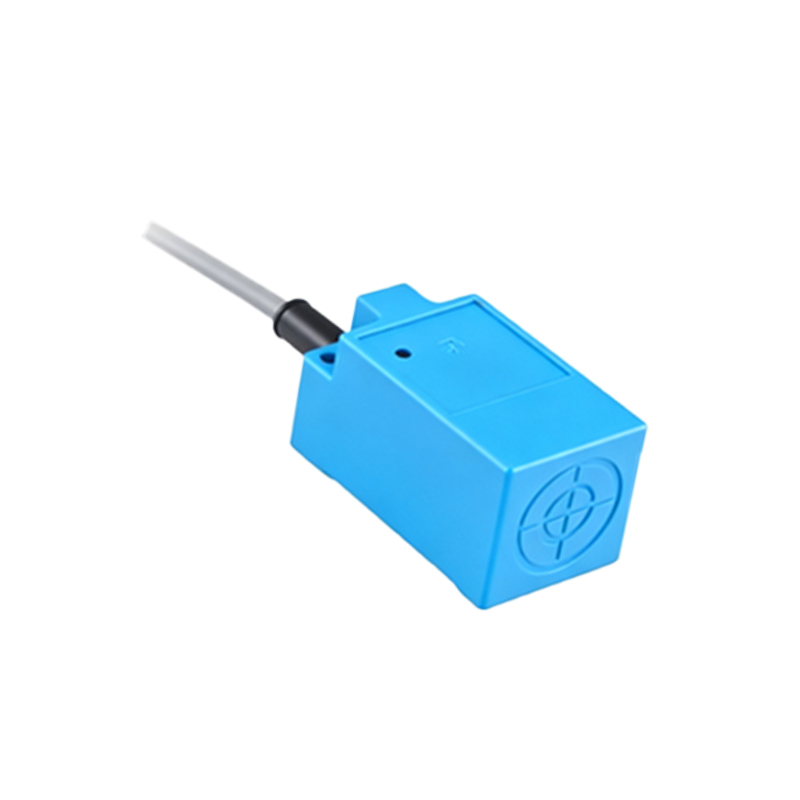
In the realm of industrial automation, where precision, reliability, and safety converge, the M12 safety proximity sensor stands as a critical component. These compact, robust devices are engineered to detect the presence or absence of objects without physical contact, playing a pivotal role in safeguarding machinery, personnel, and processes. Unlike standard proximity sensors, safety-rated variants are designed and certified to meet stringent international safety standards such as IEC 60947-5-3, IEC 62061, and ISO 13849. This certification ensures they contribute to Safety Integrity Level (SIL) or Performance Level (PL) rated safety functions within a control system.
The "M12" designation refers to the standardized 12mm threaded cylindrical housing, a prevalent form factor in industrial connectivity known for its durability, resistance to vibration, and ease of installation. These sensors are typically available in inductive, capacitive, or magnetic operating principles. Inductive sensors are the most common for metal detection, generating an electromagnetic field to sense ferrous and non-ferrous metals. Capacitive sensors can detect a wider range of materials, including liquids, plastics, and wood, by measuring changes in capacitance. Magnetic sensors are specifically designed to detect permanent magnets, often used in cylinder position sensing.
The core distinction of a safety proximity sensor lies in its internal architecture. They incorporate redundant and self-monitoring circuits. A standard sensor might have a single switching output, while a safety sensor will have dual, independently evaluated outputs (e.g., OSSD - Output Signal Switching Device). The internal diagnostics continuously check for faults such as wire breaks, short circuits, cross-circuit faults, and internal component failures. If a fault is detected, the sensor drives its outputs to a safe state (typically OFF), and this diagnostic information can be communicated to a safety controller. This fail-safe behavior is non-negotiable for applications involving robot workcells, press brakes, automated guided vehicles (AGVs), or access gates.
Selecting the right M12 safety proximity sensor requires careful consideration of several application parameters. The sensing distance, or "sn," is crucial and must be chosen with a safety margin, considering target material, size, and approach speed. Environmental factors are paramount; sensors are rated with an Ingress Protection (IP) code (e.g., IP67, IP69K) defining their resistance to dust and water. Models designed for harsh environments feature corrosion-resistant stainless-steel housings, robust cabling, and the ability to withstand extreme temperatures, washdowns with high-pressure chemicals, and heavy electromagnetic interference.
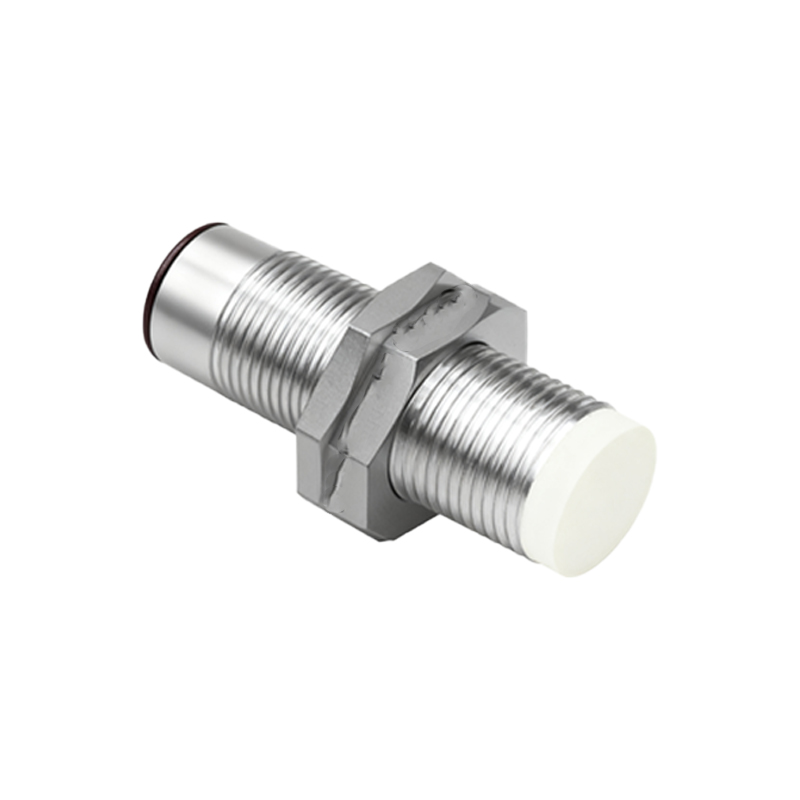
Integration into a safety system is a systematic process. The sensor's outputs must be connected to a certified safety relay, safety programmable logic controller (PLC), or other safety evaluation device. The entire safety function, including the sensor, logic solver, and final element (e.g., a contactor stopping a motor), must be validated to achieve the required PL or SIL. Regular functional testing, as dictated by the machine's risk assessment, is essential to maintain the integrity of the safety loop over time.
The evolution of Industry 4.0 and smart manufacturing has further propelled the capabilities of these sensors. Modern M12 safety sensors often feature IO-Link communication. While the safety function remains hardwired and independent, IO-Link provides a digital channel for rich diagnostic data, parameterization, and condition monitoring. This allows plant managers to monitor sensor health, predict maintenance needs, and optimize processes without compromising the fundamental safety functionality.
In conclusion, the M12 safety proximity sensor is far more than just a detection device; it is an intelligent, fault-tolerant guardian embedded within the industrial ecosystem. Its design philosophy of redundancy and self-checking provides the high level of confidence necessary for modern automated systems. For engineers and system integrators, a deep understanding of their principles, standards, and application nuances is not merely technical knowledge—it is a fundamental responsibility in the pursuit of creating productive yet inherently safe industrial environments. Proper selection, installation, and integration ensure these unsung heroes perform their vital role seamlessly, protecting both capital investment and, most importantly, human well-being on the factory floor.