In the demanding landscape of industrial automation, reliable and robust sensing solutions are paramount. Among the most critical components for detecting metallic objects in harsh environments is the 380V inductive proximity sensor. This guide delves into the operational principles, key specifications, application benefits, and selection criteria for these high-voltage sensors, providing essential knowledge for engineers and system integrators.
Fundamental Operating Principle
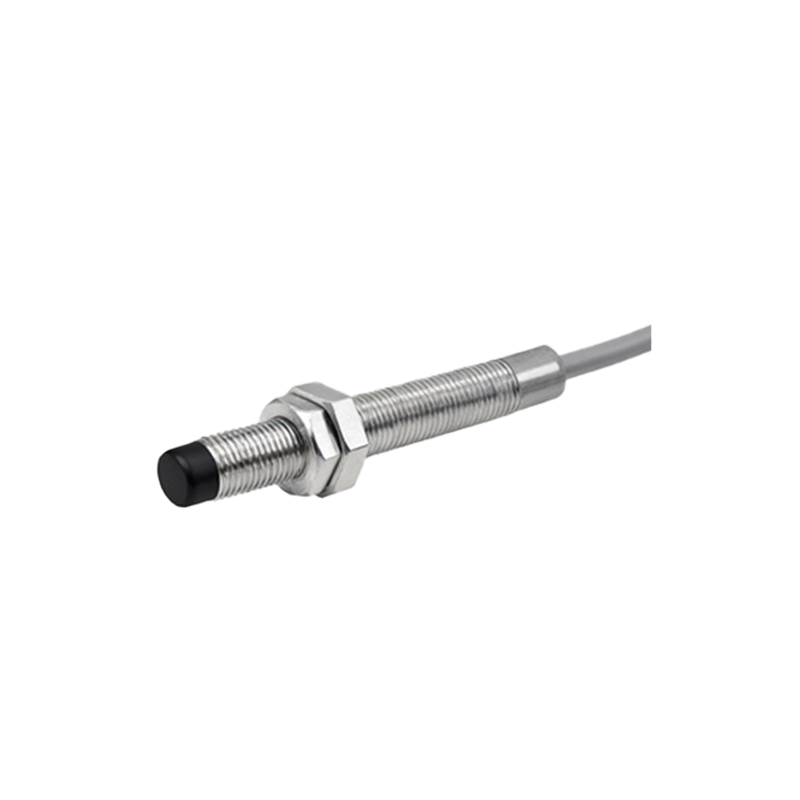
An inductive proximity sensor is a non-contact electronic device. Its core function is to detect the presence or absence of metallic objects (ferrous and non-ferrous) within its sensing range without physical contact. The 380V variant is designed to operate directly from a high-voltage alternating current (AC) power supply, typically 380VAC, which is a standard industrial voltage in many regions. The sensor generates an oscillating electromagnetic field from its active face via a coil. When a metallic target enters this field, eddy currents are induced within the target, causing a change in the oscillation amplitude. This change is detected by the sensor's internal circuitry, which subsequently triggers a solid-state switching output (e.g., NPN or PNP for DC types, or a relay/thyristor for AC types like the 380V model). The target is then considered "detected."
Key Specifications and Design Features
Understanding the specifications is crucial for correct application.
Operating Voltage: The primary characteristic is the nominal supply voltage of 380VAC, usually within a range of 90-250VAC or 20-250VAC for wide-range models, with 380V as a common upper benchmark for direct high-voltage line connection.
Sensing Distance: Rated sensing distance (Sn) is specified for a standard mild steel target. For 380V sensors, common ranges are from 2mm to 40mm. It is critical to note that the effective sensing distance can vary with different metals (e.g., aluminum, brass, stainless steel) and typically requires a derating factor.
Output Configuration: Common outputs for 380V AC sensors include Normally Open (NO), Normally Closed (NC), or changeover contacts. The switching element is often a solid-state relay or thyristor to handle the high voltage and current.
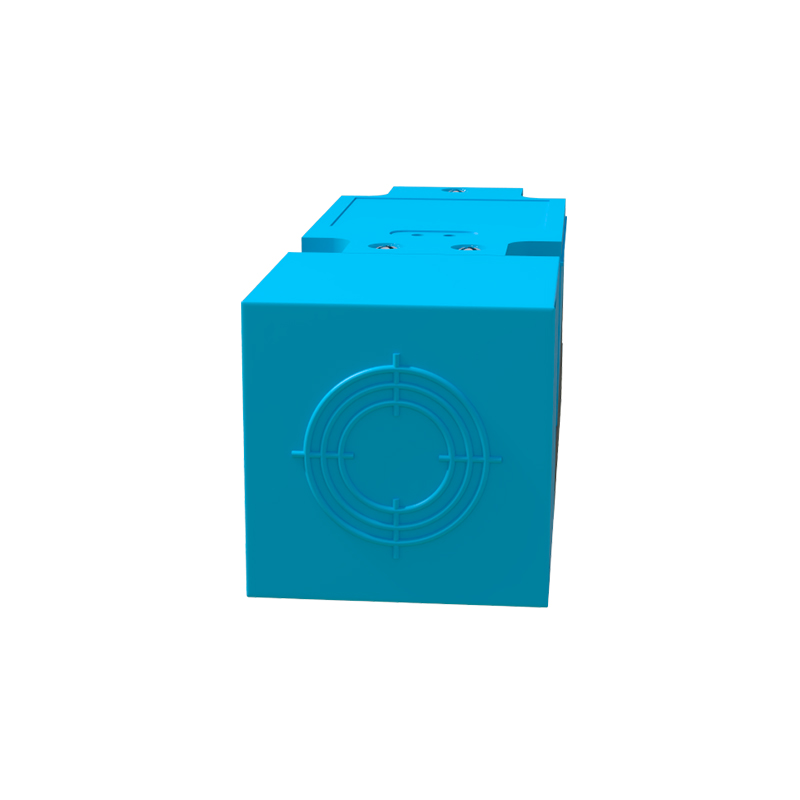
Housing Material: Constructed from robust materials like nickel-plated brass, stainless steel (V2A/V4A), or high-grade PBT plastic to withstand industrial environments involving coolants, oils, metal chips, and mechanical impact.
Protection Class: A high Ingress Protection (IP) rating, such as IP67 or IP69K, is standard, ensuring resistance to dust and temporary immersion, which is vital for washdown areas in food & beverage or chemical industries.
Temperature Range: Operational temperature ranges typically span from -25°C to +70°C, allowing functionality in unheated warehouses or near hot machinery.
Advantages in Industrial Applications
The use of 380V inductive proximity sensors offers distinct benefits:
1. Simplified Wiring and Power Supply: They eliminate the need for a separate step-down transformer or DC power supply at the sensor location, reducing component count and cabinet space.
2. High Noise Immunity: AC-operated sensors generally exhibit excellent immunity to electromagnetic interference (EMI) common in industrial settings with motors and variable frequency drives.
3. Robustness and Long Service Life: With no moving parts and sealed housings, they offer exceptional reliability and longevity, even in environments with severe vibration, shock, and contamination.
4. High Switching Capacity: They can often switch loads directly (e.g., contactors, solenoid valves, small motors) without an intermediate relay, simplifying control logic.
5. Fast Response Time: Despite operating on AC, modern designs offer rapid switching frequencies, suitable for high-speed counting and positioning tasks.
Typical Application Scenarios
These sensors are ubiquitous across heavy industry:
Machine Tooling: Tool breakage detection, part positioning on CNC lathes, and end-of-travel limits.
Material Handling: Detecting metal pallets on conveyor lines, monitoring fill levels in metal bins, and position sensing on automated storage and retrieval systems (AS/RS).
Packaging Machinery: Registration mark sensing (using metal foils) and verifying the presence of metal caps or lids.
Automotive Manufacturing: Robot end-effector positioning, part presence verification in welding stations, and safety interlocking on heavy presses.
Selection and Installation Best Practices
To ensure optimal performance, consider the following:
Target Material and Size: Always account for the reduction factor for non-ferrous metals. The target should be at least equivalent to the sensor's face diameter.
Flush vs. Non-Flux Mounting