Proximity sensors are a cornerstone of modern automation, silently performing critical tasks in countless applications. From ensuring your smartphone screen turns off during a call to preventing collisions in robotic assembly lines, these devices detect the presence or absence of nearby objects without physical contact. However, like any technology, they come with a distinct set of advantages and limitations. A clear understanding of these positive and negative aspects is essential for engineers, designers, and integrators to select the right sensor for the job and ensure optimal system performance.
On the positive side, the primary benefit of proximity sensors is their non-contact operation. This eliminates mechanical wear and tear, leading to exceptionally long service life and reduced maintenance costs. Since there is no physical interaction, they can detect fragile, soft, or easily contaminated objects without causing damage. This makes them ideal for food processing, packaging, and delicate electronics manufacturing. Furthermore, most proximity sensors offer very high switching speeds and frequency response, capable of detecting objects passing by at rapid rates, which is crucial for high-speed counting and positioning tasks in industrial settings.
Another significant advantage is their reliability and robustness in harsh environments. Many models are sealed to withstand dust, moisture, oils, and coolants. Inductive sensors, for instance, are virtually immune to environmental factors like dirt, and capacitive sensors can detect objects through non-metallic barriers. This durability ensures stable operation in challenging conditions found in factories, outdoor applications, and washdown areas. Additionally, modern sensors are highly precise and repeatable, providing consistent detection points which is vital for quality control and precise machine automation.
Despite these strengths, proximity sensors are not without their drawbacks or "negative" considerations. One of the most prominent limitations is their finite sensing range. Unlike vision systems, they can only detect objects within a very specific, short distance from their face. This range varies by type and size but is typically a few millimeters to several tens of millimeters. Attempting to detect objects outside this specified range will result in failure, requiring careful mechanical design and installation.
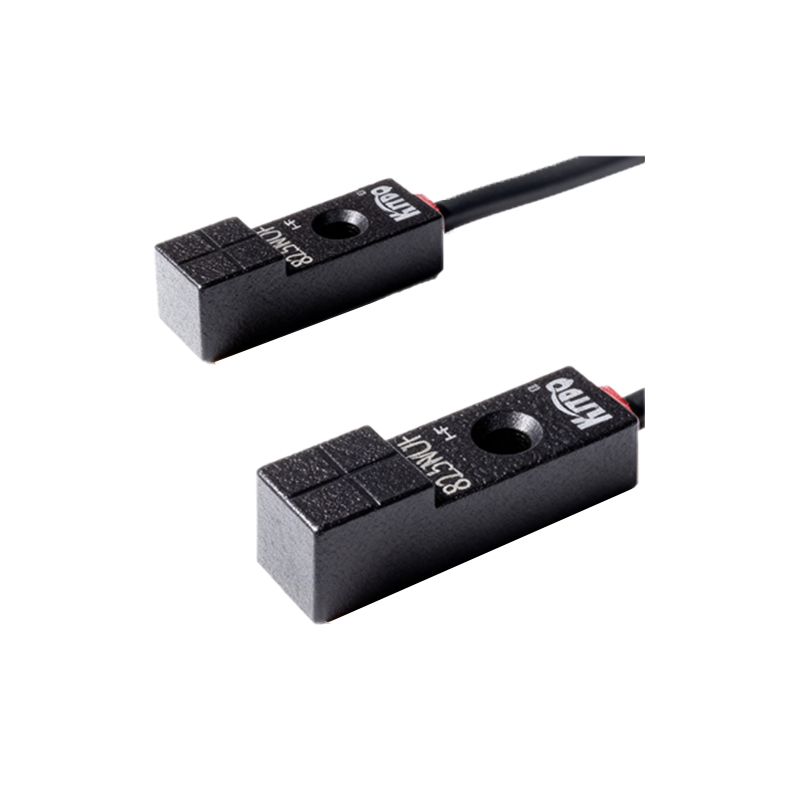
The sensing performance is also highly dependent on the target material and environmental conditions. An inductive sensor, while excellent for metals, cannot detect plastics, wood, or liquids. A capacitive sensor can detect these materials but may be falsely triggered by changes in humidity or the presence of unrelated non-target objects. Ultrasonic sensors can be affected by temperature gradients or air turbulence, and photoelectric sensors can struggle with transparent objects or adverse lighting conditions. This material and environmental sensitivity necessitates thorough application analysis before selection.
Other negative aspects include potential electrical interference and physical installation constraints. Sensors can interfere with each other if mounted too closely, leading to erratic operation. They also require a specific mounting geometry; for example, flush-mounted inductive sensors have a reduced range compared to non-flush models. The initial cost of high-precision or specialized sensors can be significant, and integrating them often requires compatible power supplies and interface circuitry, adding to system complexity.
In conclusion, proximity sensors offer unparalleled benefits in non-contact detection, speed, and durability, forming the backbone of automated sensing. However, their effectiveness is bounded by range limits, material specificity, and environmental factors. The key to successful implementation lies in a thorough evaluation of the application requirements—target material, required sensing distance, environmental conditions, and necessary response speed. By carefully weighing these positive capabilities against the inherent negative limitations, one can leverage this powerful technology to build more efficient, reliable, and intelligent automated systems.