In the realm of industrial automation and machine design, proximity sensors are indispensable components for non-contact object detection. A common and critical question that arises for engineers, especially in packaging, automotive, and material handling sectors, is: Can standard inductive proximity sensors reliably detect aluminum? The short answer is nuanced: standard ferrous-target sensors perform poorly, but specialized sensors and techniques make reliable detection possible. This article delves into the physics, challenges, and practical solutions for aluminum detection using proximity sensors.
The core principle of an inductive proximity sensor involves generating an oscillating electromagnetic field from its coil. When a conductive metal object enters this field, eddy currents are induced on the object's surface. These eddy currents create a secondary magnetic field that opposes the original field, causing a change in the oscillation amplitude. The sensor's circuitry detects this change and triggers an output signal. The effectiveness of this process depends heavily on the target material's electrical conductivity and magnetic permeability.
Herein lies the primary challenge with aluminum. Aluminum is a non-ferrous metal with high electrical conductivity but very low magnetic permeability (µr ≈ 1). Standard inductive proximity sensors are typically optimized and calibrated for ferrous materials like steel and iron, which have both high conductivity and high magnetic permeability. The high permeability of steel significantly concentrates the sensor's magnetic field, leading to a strong eddy current reaction and thus a long sensing range. Aluminum, lacking this magnetic property, results in a much weaker interaction. Consequently, the rated sensing distance (Sn) specified for steel is drastically reduced for aluminum—often to just 30-50% of the nominal value. An unmodified sensor might fail to detect an aluminum target at the expected operational distance.
However, several effective strategies and sensor types enable reliable aluminum detection:
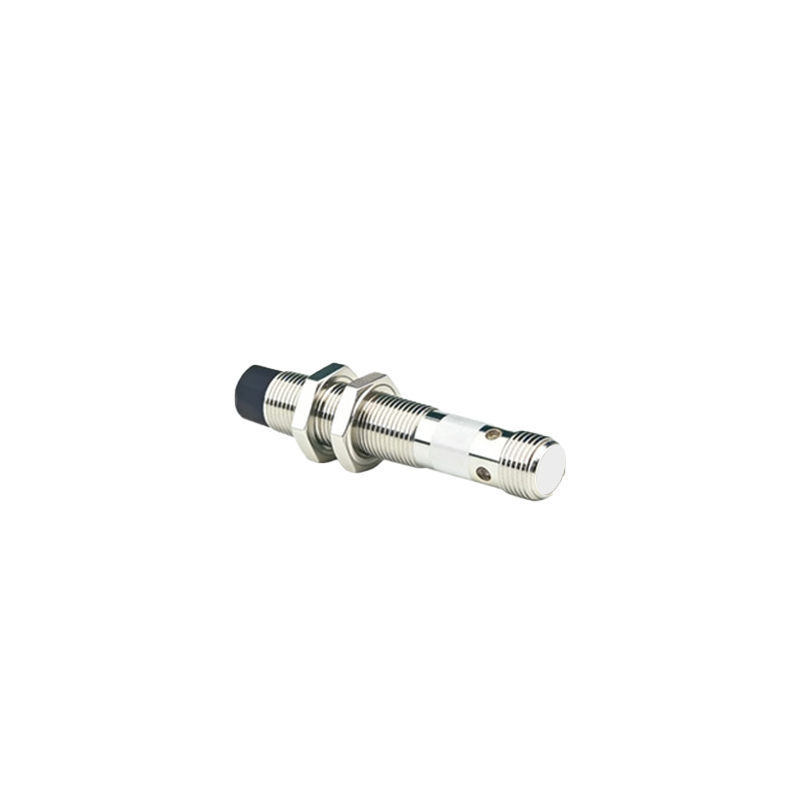
1. Factor-1 Sensors: These are specifically designed for detecting non-ferrous metals like aluminum, copper, and brass. They operate at a higher frequency, which increases the eddy current generation in highly conductive but non-magnetic materials. A Factor-1 sensor will have a sensing distance for aluminum that is approximately equal to its sensing distance for steel, often defining its rated sensing distance (Sn) based on aluminum (Al) as the reference target.
2. All-Metal Sensors (Factor-1 Sensors): Sometimes marketed as "all-metal" sensors, these devices offer a consistent sensing range for both ferrous and non-ferrous metals. They are an excellent general-purpose choice in environments where the target material may vary.
3. Adjusting for Reduced Sensing Distance: If a standard inductive sensor must be used, the key is derating. Engineers must consult the sensor's datasheet, which usually provides a correction or reduction factor (e.g., 0.3 to 0.5) for aluminum. The operational mounting distance must be set within this reduced effective range. This often requires more precise mechanical alignment.
4. Capacitive Proximity Sensors: For a fundamentally different approach, capacitive sensors detect changes in capacitance caused by any material that alters the dielectric constant near the sensing face, including metals, plastics, liquids, and powders. They are perfectly capable of detecting aluminum regardless of its magnetic properties. Their sensing range is also material-dependent but offers a viable alternative, especially for very thin aluminum foils or non-metallic targets.
5. Ultrasonic Sensors: For applications requiring longer ranges or detection through dust or vapor, ultrasonic sensors provide a robust solution. They measure the time-of-flight of sound waves and are completely unaffected by the color, conductivity, or magnetic properties of the target, making them ideal for aluminum.
Practical Application Considerations:
Alloy Composition: The specific aluminum alloy (e.g., 6061, 1100) affects conductivity. Pure aluminum has higher conductivity than many alloys, which can slightly influence detection performance.
Target Size and Thickness: The target must be at least as large as the sensor's sensing face. Very thin aluminum foil may not generate sufficient eddy currents for reliable inductive sensing, making capacitive sensors a better choice.
Environment: Factor-1 and high-frequency sensors can be more susceptible to electromagnetic interference (EMI). Proper shielding and installation are crucial.
Mounting: Flush-mounting (embedding in metal) is possible with shielded (flush-mountable) sensors, but this further reduces the effective sensing range for aluminum.
In conclusion, while standard inductive proximity sensors are not ideal for aluminum, the industry provides ample solutions. For dedicated aluminum detection, specifying a Factor-1 inductive sensor is typically the most direct and reliable method, offering performance parity with ferrous targets. Capacitive and ultrasonic sensors present powerful alternatives for challenging conditions or diverse material requirements. The engineer's task is to carefully evaluate the application's specific parameters—required sensing distance, target size,