In the realm of industrial automation and control systems, proximity sensors are indispensable components, providing non-contact detection of objects. A critical performance parameter often scrutinized by engineers is response time—the delay between a target entering the sensing field and the sensor's output signal change. While factors like sensing principle (inductive, capacitive, photoelectric), target material, and environmental conditions are well-known influencers, the physical size of the sensor itself plays a surprisingly significant and sometimes overlooked role in determining this key metric.
At its core, the response time of a proximity sensor is the sum of the oscillator stabilization time, the detection circuit processing time, and the output switching time. The size of the sensor housing directly impacts the design and performance of the internal oscillator coil (for inductive types) or the electrode plate (for capacitive types). A larger sensor typically allows for a larger oscillator coil. This larger coil can generate a more robust electromagnetic field, which often leads to a faster buildup of the oscillating signal when a target perturbs it. Consequently, the initial detection phase can be marginally quicker. However, this is not a linear relationship. A substantially larger coil also has higher inductance, which can potentially slow down the oscillation frequency and the speed at which the circuit can detect changes. The design becomes a careful balancing act between field strength, sensitivity, and circuit speed.
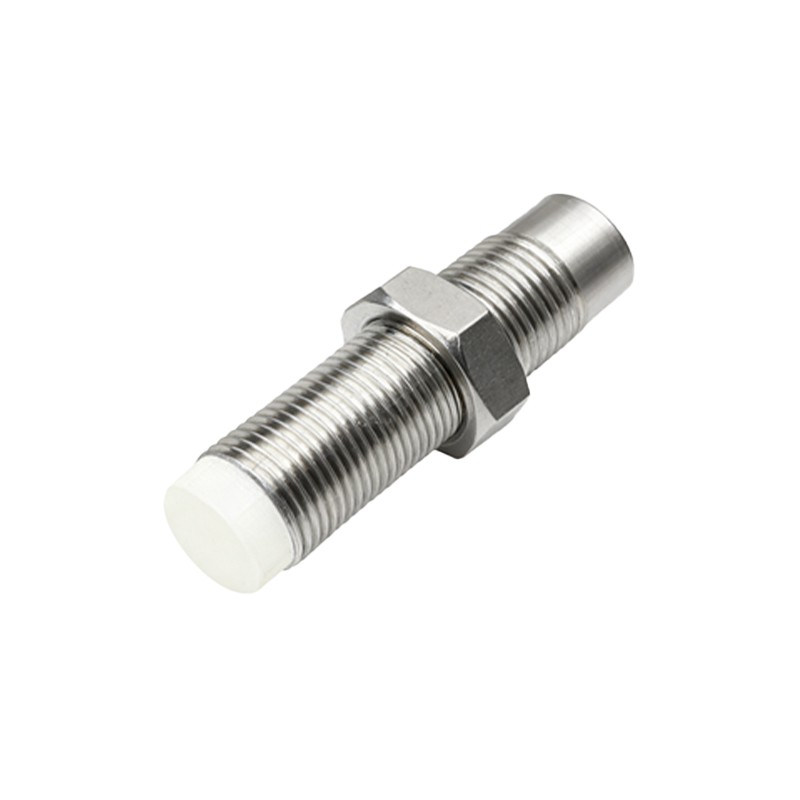
Furthermore, sensor size dictates the available space for internal electronics. A compact, miniaturized sensor faces stringent space constraints. This often necessitates the use of highly integrated, surface-mount components and specialized ASICs (Application-Specific Integrated Circuits). Modern miniaturization has led to incredibly fast-processing chips that can compensate for physical limitations. Therefore, a very small sensor equipped with advanced, high-speed electronics can easily outperform a larger, older-generation sensor with slower processing circuitry. The miniaturization trend has consistently pushed the boundaries, allowing M8 and even M5 threaded cylindrical sensors to achieve sub-millisecond response times that were once the domain of much larger units.
The physical construction also affects thermal management. A larger metal housing provides a greater thermal mass and surface area for heat dissipation from internal components. Excessive heat can degrade the performance of semiconductors, potentially increasing signal processing delays and causing response time drift. A well-sized housing ensures stable thermal conditions, contributing to consistent response times over long operational periods and across varying ambient temperatures. An undersized sensor in a high-temperature environment may suffer from slowed response or need to implement thermal throttling in its circuitry.
Another crucial consideration is the relationship between sensor size, sensing distance, and response time. A general rule is that a sensor with a longer nominal sensing range requires a larger active face or coil. While this larger sensor might have a inherently capable faster initial detection due to a stronger field, the actual achievable response time in an application is often set by the need for stability. To prevent false triggering from background objects or environmental noise, the detection circuitry often incorporates filtering algorithms or hysteresis. When a sensor is operating at the very edge of its sensing range, these stability measures are more aggressively applied, which can increase the effective response time. Therefore, selecting an appropriately sized sensor for the required sensing distance—avoiding both undersizing and significant oversizing—is key to optimizing response time in practice.
In high-speed applications like packaging lines, robotic pick-and-place, or semiconductor handling, where response times of 0.1ms to 1ms are demanded, the choice is often guided by specialized high-speed sensor families. These sensors, regardless of their final packaged size (which can be quite small), are designed from the ground up with high-frequency oscillators and ultra-fast comparators. Their size is optimized not for maximum sensing range, but for minimal internal signal path length and optimal electrical characteristics to reduce propagation delays.
In conclusion, while proximity sensor size influences response time through its effects on oscillator design, thermal performance, and internal space for electronics, it is not the sole determinant. The advancement in microelectronics has decoupled size from speed to a great extent. The modern design philosophy prioritizes selecting a sensor whose size is appropriate for the mechanical installation and required sensing range, while its response time specification is verified based on its internal technology and circuit design. Engineers must consult detailed datasheets, paying close attention to the listed response time under specified conditions, rather than relying on size as a direct proxy for speed. The optimal sensor delivers the necessary speed, in the right size, for the specific application challenge.