In the realm of industrial automation and control systems, proximity switches stand as fundamental components for non-contact object detection. Among the various types available, AC/DC universal proximity sensors represent a significant advancement, offering unparalleled flexibility and simplified inventory management. This article delves into the operational principles, key advantages, and application considerations of these versatile sensors.
At their core, proximity switches are sensors that detect the presence or absence of an object without physical contact. They achieve this by emitting an electromagnetic field or a beam of electromagnetic radiation and looking for changes in the field or return signal. The term "AC/DC universal" specifically refers to a sensor designed to operate reliably on both alternating current (AC) and direct current (DC) power supplies. This dual compatibility is a defining feature that sets them apart from traditional sensors, which are typically designed for one specific power type.
The operational principle of a universal sensor hinges on its sophisticated internal circuitry. Regardless of whether AC or DC voltage is supplied at the input terminals, the sensor's internal power supply unit converts and regulates it to the stable DC voltages required by the oscillator, amplifier, and output switching circuits. The sensing element, often an inductive coil for detecting metallic objects or a capacitive plate for non-metallic materials, generates a high-frequency oscillating field. When a target object enters this field, it causes a change in oscillation amplitude or frequency. This change is detected, processed by the amplifier, and triggers a change in the output state—either opening or closing a solid-state switch (like a transistor) or an electromechanical relay in some hybrid models.
The primary advantage of AC/DC universal proximity sensors is their exceptional flexibility. In facilities with mixed voltage systems or during machine upgrades and retrofits, engineers no longer need to specify and stock separate sensors for AC and DC circuits. This drastically reduces part numbers in inventory, minimizes procurement errors, and simplifies maintenance procedures. A technician can carry a single type of sensor to address a wider range of faults, enhancing operational efficiency. Furthermore, these sensors often exhibit robust performance across a wide voltage range (e.g., 20-250V AC/DC), providing a buffer against power supply fluctuations common in industrial environments.
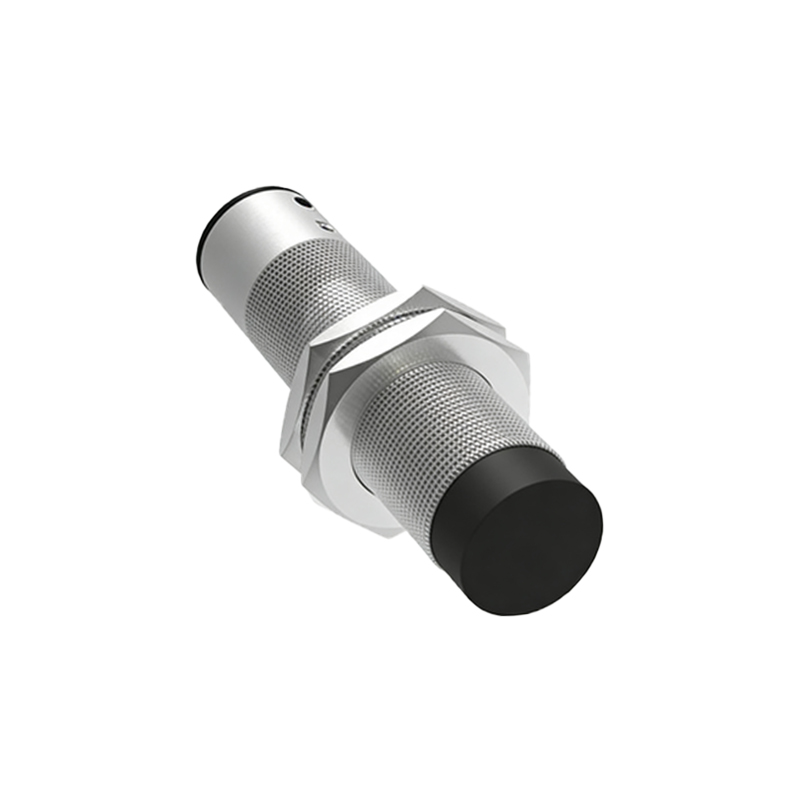
When selecting and applying a universal proximity sensor, several critical factors must be considered. First is the sensing distance, which must be chosen with a safety margin to account for target material, size, and environmental conditions like temperature extremes or the presence of dust and moisture, necessitating appropriate Ingress Protection (IP) ratings. The output type is another crucial decision point. While universal at the input, the output can be configured as NPN (sinking) or PNP (sourcing) for DC-style wiring, or as a solid-state AC switch. Some models feature selectable output modes via wiring or a switch. The load current and voltage ratings of the output must be carefully matched to the connected device, such as a programmable logic controller (PLC) input, a relay coil, or a small motor.
Installation practices are paramount for reliable operation. Metal-to-metal mounting (embedding a sensor in metal) can reduce its effective sensing range due to eddy currents; non-metallic brackets are recommended. Maintaining adequate clearance between multiple sensors prevents mutual interference. Regular functional testing is advised to ensure the sensor responds correctly to its target, as buildup of contaminants like metal shavings or oil film can impair performance over time.
In conclusion, AC/DC universal proximity sensors are a testament to the drive for standardization and efficiency in modern industrial engineering. By consolidating functionality and simplifying power requirements, they offer a reliable, cost-effective solution for countless detection tasks in packaging, material handling, automotive assembly, and machine tooling. Their adoption streamlines design, maintenance, and supply chain logistics, making them a smart choice for engineers seeking to build resilient and adaptable automation systems. As technology progresses, we can expect these sensors to incorporate even more diagnostic features and connectivity options, further solidifying their role as a cornerstone of industrial sensing.