Inductive proximity sensors have become indispensable components in modern industrial automation, and the 21mm diameter variant represents one of the most versatile and widely adopted form factors. These non-contact sensing devices operate on the principle of electromagnetic induction, generating an oscillating electromagnetic field from a coil within the sensor head. When a metallic target object enters this detection field, eddy currents are induced on the target's surface, causing a change in the oscillation amplitude. This change is detected by the sensor's internal circuitry, which subsequently triggers a solid-state output switch. The 21mm cylindrical housing, typically constructed from nickel-plated brass or stainless steel, offers an optimal balance between physical robustness, sensing range, and installation flexibility, making it suitable for a vast array of harsh factory floor environments.
The operational characteristics of 21mm inductive sensors are defined by several key parameters. The nominal sensing distance, or Sn, is standardized. For a standard 21mm sensor, this is typically 5mm for mild steel targets. It is crucial to note that this effective sensing range varies with target material; factors such as material type, size, and shape significantly influence performance. Correction factors must be applied for non-ferrous metals like aluminum, brass, or copper, which generally reduce the effective sensing distance. The sensors are available in both shielded (flush-mountable) and unshielded (non-flush) designs. Shielded sensors can be mounted flush in metal without affecting their sensing field, conserving space. Unshielded versions offer a longer sensing range but require a clearance zone around the sensor head.
Output configurations are another critical selection criterion. The majority of 21mm sensors feature solid-state PNP (sourcing) or NPN (sinking) transistor outputs, compatible with programmable logic controllers (PLCs) and standard industrial DC circuits. Some models offer analog current (4-20mA) or voltage (0-10V) outputs for distance-proportional measurement, or even IO-Link digital communication for advanced diagnostics and parameterization. The operating voltage range commonly spans from 10-30V DC, with LED status indicators providing immediate visual feedback on power and output state.
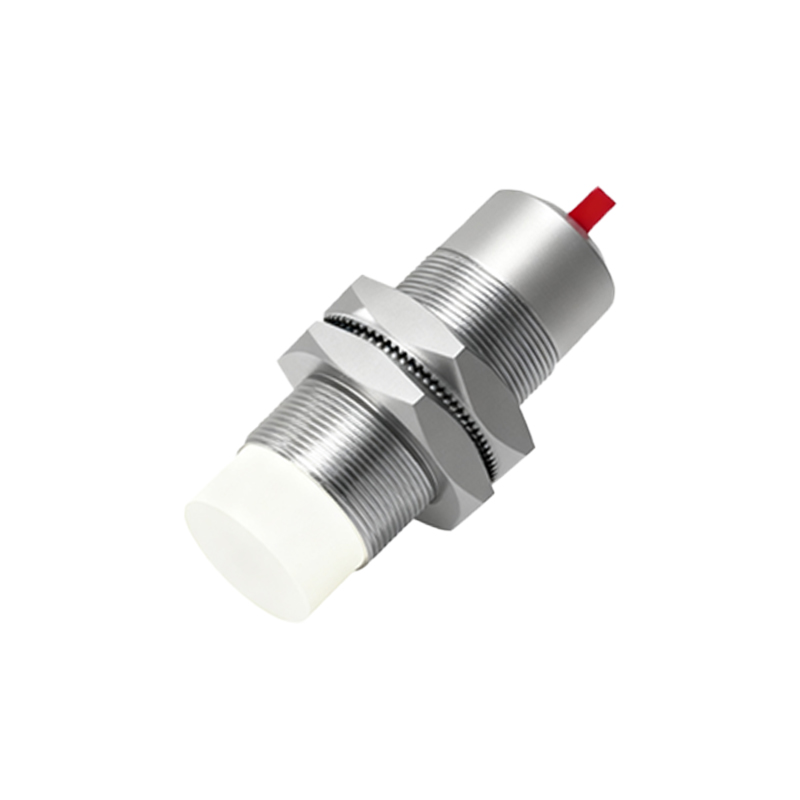
Installation and environmental considerations are paramount for reliable operation. While these sensors are renowned for their durability, proper mounting is essential. Factors such as mutual interference between adjacent sensors, the presence of different metals in the mounting area, and extreme environmental conditions must be accounted for. They exhibit high resistance to common industrial contaminants like dust, coolants, and oils, with many models boasting IP67 or IP68 ingress protection ratings, allowing them to withstand temporary immersion or high-pressure washdowns. Their operating temperature range typically extends from -25°C to +70°C, ensuring functionality in most industrial settings.
The application spectrum for 21mm inductive proximity sensors is exceptionally broad. They are fundamental in position detection tasks, such as verifying the presence of a metal part on a conveyor, confirming the end-of-travel of a cylinder, or counting metallic objects. In machine tools, they monitor tool presence and position. In packaging machinery, they detect foil seals or metal components on production lines. Their non-contact, wear-free operation makes them ideal for high-cycle applications where mechanical limit switches would fail prematurely.
When selecting a 21mm inductive sensor, engineers must conduct a thorough analysis of the application requirements. This includes defining the target material, required sensing distance, necessary electrical interface (PNP/NPN/analog), environmental conditions (temperature, chemicals), housing material (e.g., stainless steel for corrosive environments), and required certifications (e.g., ATEX for hazardous areas). Understanding these factors ensures optimal sensor performance, longevity, and system reliability, minimizing downtime and maintenance costs. In conclusion, the 21mm inductive proximity sensor remains a cornerstone of industrial sensing, offering a reliable, cost-effective solution for countless automation challenges where robust and precise metallic object detection is required.