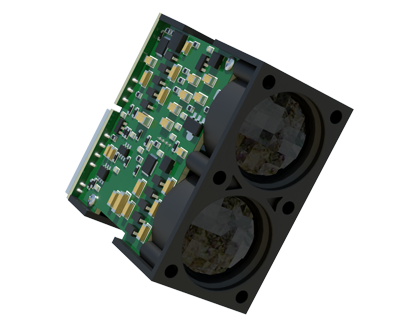
In the rapidly evolving landscape of industrial automation and precision engineering, the demand for accurate, reliable, and robust distance measurement solutions has never been greater. League laser distance sensors stand at the forefront of this technological wave, offering a sophisticated blend of high performance, versatility, and durability tailored for demanding applications. These sensors utilize advanced time-of-flight or phase-shift measurement principles, where a laser diode emits a focused beam of light towards a target. The sensor then precisely calculates the distance by measuring the time or phase difference of the reflected signal. This non-contact method ensures high accuracy, often within sub-millimeter ranges, without physically touching the object, making it ideal for delicate surfaces or high-speed processes.
The core advantages of League laser sensors are manifold. Their exceptional measurement speed, often in the kilohertz range, allows for real-time monitoring and control in dynamic environments such as robotic guidance, conveyor belt sorting, and assembly line verification. The compact and rugged design of these units enables seamless integration into tight spaces and harsh industrial settings, resisting common challenges like vibration, ambient light interference, and dust. Furthermore, modern League sensors come equipped with intelligent features like programmable measurement windows, analog and digital outputs (e.g., 4-20mA, RS485, Ethernet/IP), and intuitive software interfaces for easy configuration and data logging. This flexibility allows them to be deployed across diverse sectors including automotive manufacturing for part positioning, logistics for warehouse level monitoring, metallurgy for thickness gauging, and construction for alignment and profiling.
When selecting a League laser distance sensor, key technical parameters must be considered. The measuring range, which can vary from a few centimeters to several hundred meters, should align with the specific application needs. Resolution and linearity define the sensor's precision, while the response time dictates its suitability for high-speed operations. The type of laser (typically Class 2, eye-safe) and the wavelength also play a role in performance under different surface conditions—dark, shiny, or transparent materials may require sensors with specialized algorithms or receiver sensitivity. Integration is straightforward, often involving mounting, power connection, and output signal routing to a PLC or control system. Regular maintenance is minimal, primarily consisting of keeping the lens clean to ensure optimal signal reflection.

Looking ahead, the integration of League laser sensors with Industry 4.0 frameworks is a significant trend. Through IoT connectivity and data analytics, these sensors transform from mere measurement tools into proactive system components capable of predictive maintenance, process optimization, and quality assurance. Their role in enabling smarter, more adaptive, and efficient industrial operations is undeniable. In conclusion, League laser distance sensors represent a critical technology for achieving unparalleled precision and reliability in measurement tasks. By understanding their operating principles, key features, and application best practices, engineers and technicians can leverage these powerful tools to enhance productivity, ensure quality, and drive innovation in their respective fields.