In the realm of industrial automation and precision measurement, laser sensors have become indispensable tools. At the heart of these sophisticated devices lies a critical optical component: the laser lens. This article delves into the fundamental principles governing laser lenses used in sensor systems, exploring their design, function, and impact on overall system performance.
The primary function of a laser lens within a sensor is to precisely shape and direct the laser beam emitted from the laser diode. Unlike simple glass, these lenses are engineered optical elements designed to manipulate light according to specific application requirements. The core principle involves refraction and, in some advanced designs, diffraction. When the laser light passes through the lens material—typically high-grade optical glass, fused silica, or specialized crystals—its speed changes, causing the light rays to bend. This bending is meticulously calculated to achieve a desired beam profile.
Two key parameters define a laser lens's operation: focal length and numerical aperture (NA). The focal length determines the distance at which the laser beam converges to its smallest point, known as the focal point or beam waist. This is crucial for applications like precision triangulation sensors, where the exact position of this focal point on a target defines measurement accuracy. A shorter focal length produces a tighter focus at a closer working distance, while a longer focal length offers a larger working range with a potentially larger spot size. The Numerical Aperture (NA) describes the lens's ability to gather light and resolve fine details. A higher NA lens can collect more of the diverging laser light, resulting in a smaller, more intense focal spot, which enhances resolution and signal strength in sensing applications.
Lens design is paramount. For most laser sensor applications, simple plano-convex or double-convex lenses are used for basic focusing and collimating. Collimating a beam—making the rays parallel—is essential for time-of-flight (ToF) sensors and laser rangefinders, as it minimizes beam divergence over long distances, maintaining energy density and measurement consistency. Aspheric lenses, with their complex, non-spherical surfaces, are employed to eliminate spherical aberration. This aberration causes rays striking the outer edges of a standard spherical lens to focus at a different point than those near the center, blurring the focal spot. By correcting this, aspheric lenses produce a sharper, more defined focal point, critical for high-resolution scanning and profiling sensors.
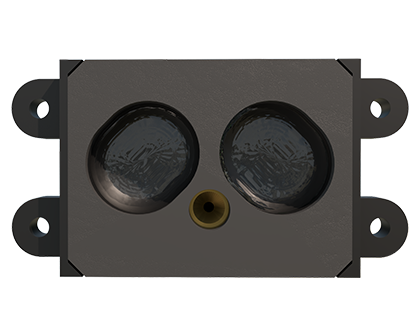
Furthermore, the lens must be treated with anti-reflective (AR) coatings. These multilayer thin-film coatings are applied to lens surfaces to minimize Fresnel reflections. Without AR coatings, a significant percentage of the precious laser light (often 4% per surface at normal incidence) would be reflected away, reducing the transmitted power, creating ghost images, and potentially causing harmful back-reflections into the laser diode itself, destabilizing its operation. AR coatings are tailored to the specific laser wavelength (e.g., 650nm for red visible lasers, 850nm or 1550nm for common infrared sensors), ensuring maximum transmission and signal integrity.
The choice of lens material is also dictated by the laser's wavelength and power. For high-power industrial lasers used in some sensing or marking systems, materials like zinc selenide (ZnSe) or germanium are used for their excellent transmission in the infrared spectrum and high laser-induced damage threshold (LIDT). For standard low-power sensor diodes, BK7 optical glass is a common and cost-effective choice.
In practical sensor operation, the lens works in concert with other components. In a laser triangulation sensor, for instance, the transmitter lens focuses a laser dot onto a target. The diffusely reflected light from this dot is then imaged by a receiver lens onto a position-sensitive detector (like a CCD or CMOS array). Any change in the target's distance causes the dot's image to shift on the detector. The precision of the initial beam shaping by the transmitter lens directly influences the clarity and size of the projected dot, which in turn defines the system's linearity and resolution.
Similarly, in confocal displacement sensors, highly precise microscope objective lenses are used to focus laser light to an extremely small spot. Only light reflected from the exact focal plane passes through a confocal pinhole to reach the detector, enabling nanometer-level resolution. Here, the lens's ability to create a diffraction-limited spot is the enabling principle.
Environmental robustness is a key consideration for industrial lenses. They are often housed in sealed, ruggedized barrels to protect against dust, moisture, oil, and mechanical vibration, which could misalign the sensitive optical path. The lens mounting and adjustment mechanisms allow for precise calibration during sensor assembly.
In summary, the laser lens is far more than a simple window; it is an active, engineered component that defines the spatial characteristics of the sensing beam. Its design principles—rooted in focal length control, aberration correction, and coating technology—directly translate into sensor capabilities such as working range, spot size, resolution, and signal-to-noise ratio. Understanding these principles allows engineers to select or specify the correct lens for a given sensing task, ensuring optimal performance in demanding industrial environments where reliability and accuracy are non-negotiable. From warehouse automation to semiconductor inspection, the humble laser lens plays a monumental role in translating photonic energy into actionable, precise data.