In the realm of industrial automation and precise control, the ability to detect the presence or absence of an object without physical contact is paramount. Among the various non-contact sensing technologies, high-frequency oscillation proximity sensors stand out for their reliability, speed, and versatility. These sensors operate on a fundamental electromagnetic principle, generating a high-frequency oscillating electromagnetic field from a coil within an oscillator circuit. When a metallic object enters this active field, eddy currents are induced on the object's surface. These eddy currents draw energy from the oscillator, resulting in a dampening or attenuation of the oscillation amplitude. This change is detected by the sensor's evaluation circuit, which subsequently triggers a switching signal—either solid-state or relay-based—to indicate the object's presence.
The core advantage of this technology lies in its non-contact nature, eliminating mechanical wear and tear associated with limit switches and ensuring exceptionally long operational life. The "high-frequency" aspect, typically ranging from several hundred kHz to several MHz, is crucial. This frequency range is optimally tuned for the detection of metals. Higher frequencies generally allow for better sensitivity to non-ferrous metals like aluminum, copper, or brass, though the exact sensing distance (the rated operating distance) is standardized and depends on the sensor's size and design according to IEC 60947-5-2. It is critical to note that the sensing distance can vary significantly between different metal types; a factor known as the reduction factor must be applied for non-ferrous metals.
The applications for high-frequency oscillation proximity sensors are vast and integral to modern manufacturing. They are ubiquitous in machine tools for tool positioning and workpiece detection, ensuring machining processes begin only when a component is correctly loaded. In automated assembly lines, they count parts, verify the presence of components, and control robotic pick-and-place operations with millisecond precision. Within packaging machinery, they monitor material flow, detect foil seals, and ensure proper fill levels. Material handling systems rely on them for pallet detection, conveyor line control, and crane positioning. Furthermore, their sealed, robust housings (often in IP67 or IP69K ratings) make them suitable for harsh environments involving coolants, oils, and washdown procedures.
When selecting and applying these sensors, engineers must consider several key parameters beyond just the sensing distance. The switching frequency defines how many detection cycles per second the sensor can perform, a critical factor for high-speed production lines. Hysteresis, a built-in difference between the switch-on and switch-off points, prevents chatter and ensures stable switching when an object is near the detection threshold. Environmental factors are also vital; temperature ranges, resistance to chemicals, and electromagnetic compatibility (EMC) must align with the operating conditions. Mounting plays a role too; flush-mountable sensors can be installed embedded in metal without false triggering, while non-flush types offer longer ranges but require a clear surrounding area.
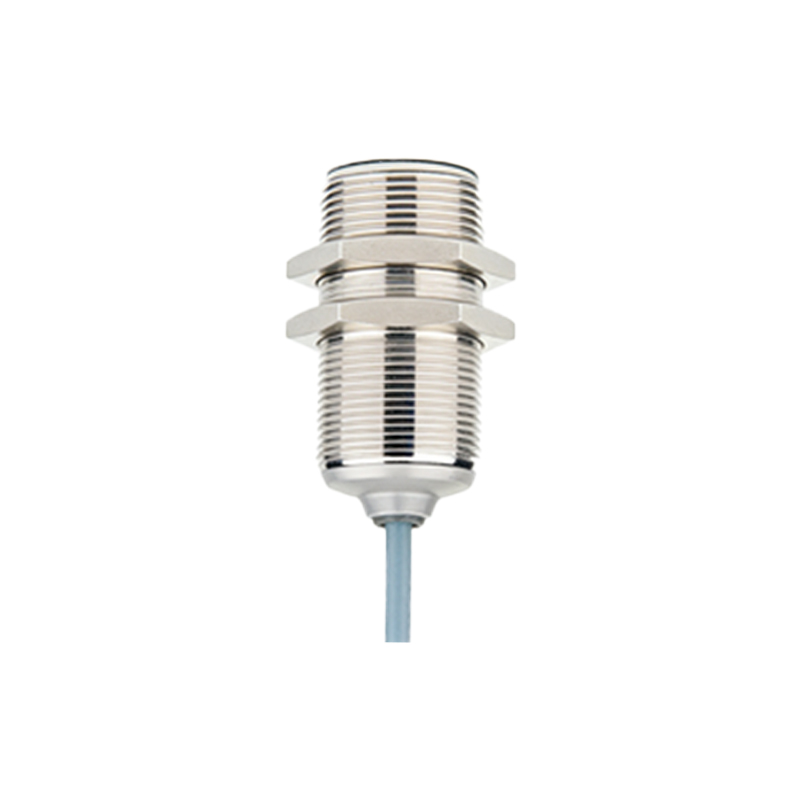
Recent advancements continue to push the boundaries of this mature technology. Miniaturization has led to sensors in M5, M8, and M12 housing sizes, enabling installation in space-constrained applications. Enhanced IO-Link communication capabilities transform simple sensors into intelligent devices, providing diagnostic data, parameterization on-the-fly, and process value outputs beyond a simple on/off signal. Manufacturers are also developing specialized variants with increased immunity to welding fields (for robotic welding cells) and sensors with advanced coatings for extreme chemical resistance. The integration of condition monitoring features allows for predictive maintenance, alerting operators to potential issues like mounting misalignment or buildup of contaminants before they cause downtime.
In conclusion, high-frequency oscillation proximity sensors remain a cornerstone of industrial sensing. Their simple yet effective operating principle, combined with rugged construction and continuous innovation in connectivity and intelligence, ensures their indispensable role in building efficient, reliable, and smart automated systems. From controlling a simple conveyor to enabling complex robotic sequences, these sensors provide the essential "eyes" for machines, translating physical presence into actionable electronic data with unwavering consistency.