In the realm of industrial automation, precision is paramount. Industrial positioning laser sensors have emerged as critical components for achieving high-accuracy, non-contact measurement and positioning across diverse applications. These sophisticated devices utilize laser technology to determine the exact location, distance, or presence of an object with remarkable speed and reliability, forming the backbone of modern smart manufacturing and quality control systems.
Fundamentally, a positioning laser sensor operates by emitting a focused laser beam towards a target. The sensor then analyzes the reflected light. Different technologies are employed for position calculation. Time-of-Flight (ToF) sensors measure the time delay between the emitted and reflected pulse to calculate distance. Triangulation sensors, often used for high precision at shorter ranges, use a laser diode, a receiving lens, and a position-sensitive detector (PSD) or CMOS array; the position of the reflected spot on the detector changes with the target's distance, allowing for precise calculation. Laser contrast sensors are optimized to detect edges or marks based on the intensity difference between the laser spot on the target and its background.
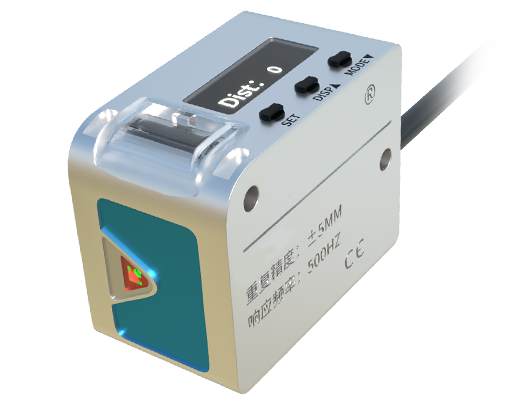
The advantages of using laser positioning sensors are compelling. They offer sub-micron level resolution, enabling measurements that are impossible with mechanical probes or conventional photoelectric sensors. Their non-contact nature eliminates wear and tear, prevents damage to delicate objects, and allows for inspection of hot, moving, or hazardous materials. Furthermore, they provide exceptionally fast response times, often in the microsecond range, which is essential for high-speed production lines. The ability to deliver precise, repeatable data in real-time directly feeds into process control loops, enhancing overall equipment effectiveness (OEE) and reducing waste.
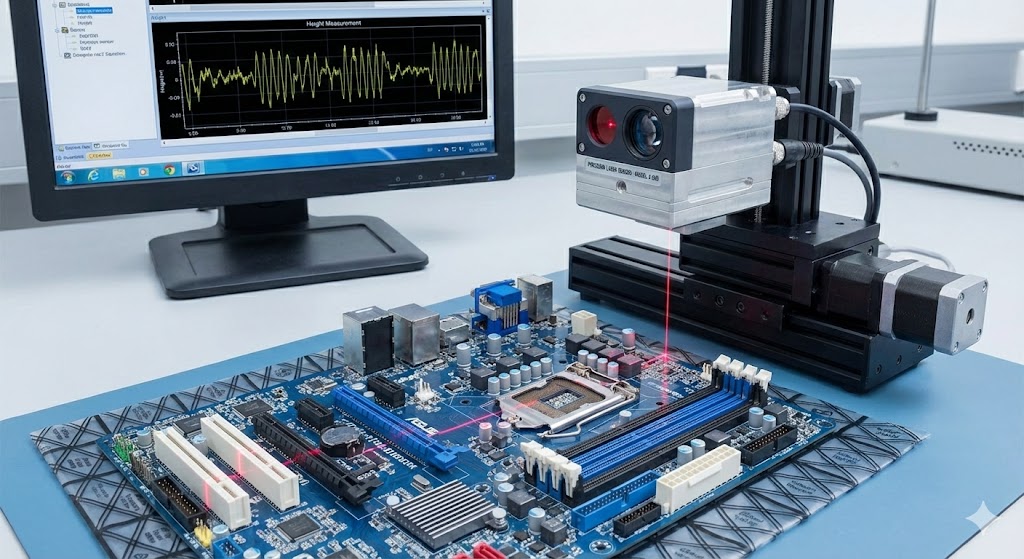
Applications for these sensors are vast and varied. In robotics, they are indispensable for precise guidance, bin picking, and assembly tasks, ensuring robots interact with their environment accurately. In semiconductor and electronics manufacturing, they measure wafer thickness, component placement, and solder paste height. The automotive industry relies on them for body-in-white gap and flush measurement, part positioning on assembly lines, and wheel alignment. They are also crucial in logistics for dimensioning packages, in metalworking for monitoring tool wear and part dimensions, and in printing for registration control.
Selecting the right industrial positioning laser sensor requires careful consideration of several key parameters. First, define the required measuring range and standoff distance. The resolution and repeatability specifications must align with the application's tolerance needs. The type of target material, surface color, and finish significantly affect performance; shiny or transparent materials may require sensors with specialized algorithms or filters. Environmental factors such as ambient light, dust, vibration, and temperature extremes must be accounted for, often necessitating sensors with high ingress protection (IP) ratings and robust housings. Output interfaces (e.g., analog voltage/current, digital IO, Ethernet-based protocols like EtherCAT or PROFINET) must be compatible with the existing control architecture. Finally, ease of integration, configuration software, and support for alignment tools are practical considerations that impact deployment time and long-term maintainability.
Looking ahead, the integration of industrial positioning laser sensors with Industry 4.0 frameworks is accelerating. Modern sensors come equipped with advanced diagnostics, predictive maintenance features, and direct connectivity to cloud platforms, facilitating data-driven decision-making. The convergence of laser measurement data with artificial intelligence and machine vision systems is opening new frontiers for adaptive and intelligent automation, where processes can self-optimize based on real-time sensor feedback.
In conclusion, industrial positioning laser sensors are more than just measurement tools; they are enablers of precision, efficiency, and quality in automated production. By understanding their operating principles, leveraging their strengths, and making informed selection choices based on application demands, engineers can unlock significant operational benefits and drive continuous improvement in their manufacturing processes.