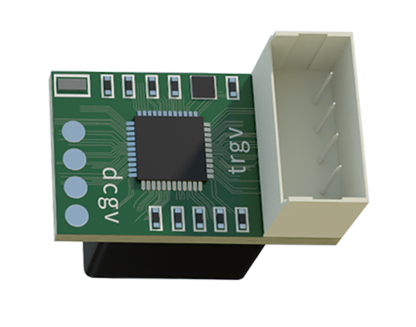
Internal laser sensors represent a pivotal advancement in electrical engineering, offering unparalleled precision in measurement and control systems. These sensors utilize laser technology embedded within devices to monitor parameters such as distance, displacement, velocity, and temperature with high accuracy. In industrial automation, internal laser sensors are integral to robotics, enabling real-time feedback for precise movements in assembly lines. Their non-contact nature minimizes wear and tear, enhancing durability in harsh environments like manufacturing plants or energy grids.
The core mechanism involves emitting a laser beam that reflects off a target, with the sensor analyzing the reflected light to calculate measurements. This process relies on principles like interferometry or time-of-flight, ensuring micron-level accuracy. For instance, in power generation systems, internal laser sensors monitor turbine blade vibrations, preventing failures and optimizing efficiency. Similarly, in smart grid infrastructure, they facilitate load monitoring and fault detection by measuring electrical parameters indirectly through thermal or positional changes.
Advantages of internal laser sensors include high resolution, fast response times, and immunity to electromagnetic interference, making them ideal for sensitive applications in medical devices or aerospace engineering. However, challenges persist, such as sensitivity to environmental factors like dust or humidity, which can scatter laser beams. Engineers address this through protective housings or adaptive algorithms that filter noise. Recent innovations incorporate fiber-optic integration, allowing sensors to operate in extreme temperatures or confined spaces, expanding their use in oil and gas exploration or automotive safety systems.
In the context of Industry 4.0, internal laser sensors synergize with IoT networks, transmitting data to cloud platforms for predictive analytics. This enables proactive maintenance in electrical systems, reducing downtime and costs. For example, in renewable energy, sensors monitor solar panel alignment or wind turbine blade integrity, boosting sustainability. As miniaturization trends advance, these sensors are becoming more compact and energy-efficient, paving the way for applications in consumer electronics or wearable health monitors.

Overall, internal laser sensors are transforming electrical engineering by enhancing reliability and precision. Future developments may focus on quantum-enhanced lasers for even greater sensitivity, driving innovations in autonomous vehicles or smart cities. By integrating these sensors, engineers can build more resilient and intelligent systems, underscoring their critical role in modern technology.