In the realm of industrial automation, precision, reliability, and durability are non-negotiable. Among the myriad of components that form the backbone of modern production lines and machinery, the photoelectric proximity sensor stands out for its versatility and critical function. The 80 Series, a prevalent and robust category of these sensors, exemplifies the engineering excellence required for demanding environments. This article delves into the technical specifications, operational principles, and key application considerations for the 80 Series proximity photoelectric sensor.
At its core, an 80 Series proximity photoelectric sensor is a non-contact device designed to detect the presence or absence of an object within its specified sensing range. Unlike mechanical limit switches, it operates without physical contact, thereby eliminating wear and tear and enabling high-speed detection. The "80" designation typically refers to a family of sensors with a standardized form factor, often a compact cylindrical housing (e.g., M8, M12, or M18 threaded barrels) that is rugged, resistant to environmental factors, and easy to install. The operating principle is based on the emission and reception of light. An internal LED (usually red, infrared, or laser, depending on the model) projects a light beam. A phototransistor or similar receiver then monitors this beam. Detection occurs when the target object interrupts or reflects this beam back to the receiver, depending on the sensing mode.
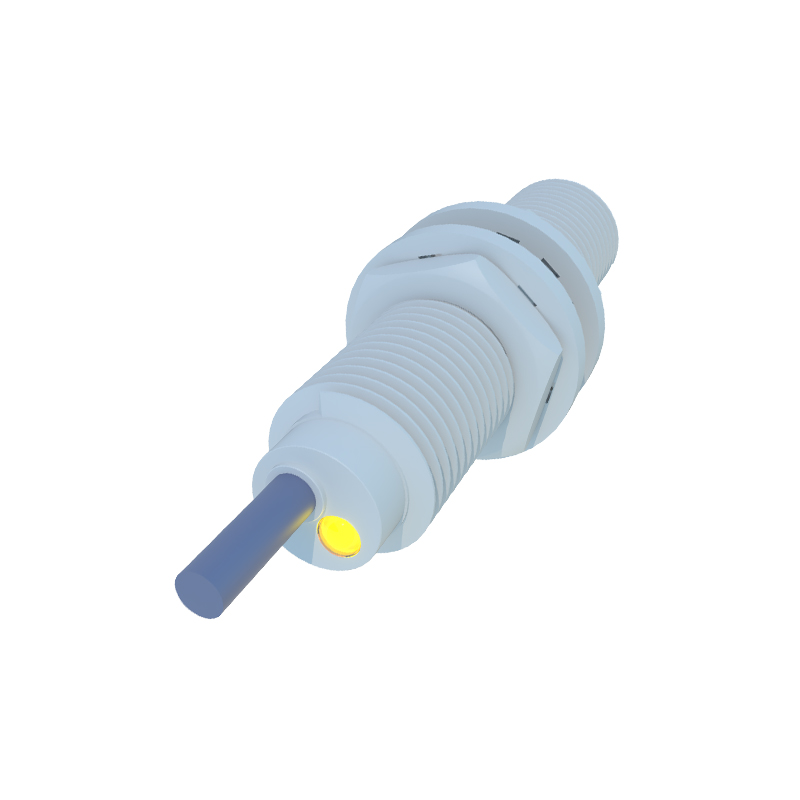
The 80 Series sensors are commonly available in three primary sensing modes, each suited for specific scenarios. First, the Through-beam (or Opposed) Mode employs separate units for the emitter and receiver. The object is detected when it breaks the beam path between them. This mode offers the longest sensing distances and highest reliability for precise detection. Second, the Retro-reflective Mode uses a single housing containing both emitter and receiver. It detects an object when the beam, reflected off a dedicated reflector (like a corner-cube reflector), is interrupted. This mode simplifies wiring while maintaining a reasonable sensing range. Third, the Diffuse (or Proximity) Mode also uses a single unit. Here, the sensor detects the object by receiving the light beam diffused (reflected) directly from the object's surface. This is the most common "proximity" style, ideal for detecting objects at shorter ranges without a separate reflector. Many 80 Series diffuse sensors incorporate advanced background suppression technology, allowing them to ignore objects beyond a set distance, even if they are reflective.
Key technical parameters define the performance of an 80 Series sensor. The sensing distance is paramount, ranging from a few millimeters for precise diffuse models to several meters for through-beam types. The response time is exceptionally fast, often in the microsecond range, enabling detection in high-speed assembly or packaging lines. Environmental robustness is a hallmark of the 80 Series. They typically feature high Ingress Protection (IP) ratings (e.g., IP67, IP69K), making them resistant to dust, water jets, and washdowns common in food & beverage or pharmaceutical industries. Electrical output is usually in the form of a solid-state NPN or PNP transistor switch, compatible with Programmable Logic Controllers (PLCs) and other control systems. Many models also feature built-in diagnostics, such as a visible LED status indicator, to simplify troubleshooting and maintenance.
Selecting the right 80 Series sensor requires careful consideration of the application. Factors include the target material (color, transparency, surface finish), required sensing distance, ambient light conditions, electrical requirements (voltage, output type), and the physical/chemical environment (temperature, potential for impacts, exposure to oils or coolants). For instance, a clear glass bottle on a filling line may require a polarized retro-reflective sensor to avoid false triggers from shiny surfaces, while a black rubber gasket might need a focused, high-gain diffuse sensor.
In practice, 80 Series sensors are ubiquitous. They perform critical tasks such as object counting on conveyors, verifying part presence in robotic grippers, controlling loop tension in web processing, ensuring correct positioning in CNC machines, and providing safety interlock signals. Their standardized design allows for easy replacement and interchangeability, minimizing downtime.
In conclusion, the 80 Series proximity photoelectric sensor is a fundamental and highly engineered component in industrial automation. Its ability to provide fast, accurate, and non-contact detection in compact, rugged packaging makes it an indispensable tool for engineers and technicians. Understanding its operating modes, specifications, and application nuances is key to designing efficient, reliable, and maintainable automated systems. As Industry 4.0 and smart manufacturing evolve, the integration of these sensors with IO-Link and other communication protocols further enhances their value, providing detailed diagnostic data and enabling predictive maintenance strategies.