In modern industrial environments, precision and efficiency are paramount. Online measurement systems have become indispensable tools for ensuring quality control, process optimization, and automation. Among the various technologies available, laser sensors stand out due to their high accuracy, non-contact nature, and versatility. This article delves into the principles, applications, and benefits of using laser sensors for online measurement in industrial settings.
Laser sensors operate based on optical triangulation, time-of-flight, or interferometry principles. In optical triangulation, a laser diode projects a focused beam onto the target surface. The reflected light is captured by a detector at a known angle, and the displacement is calculated using geometric relationships. This method is ideal for measuring distance, thickness, or profile with micron-level precision. Time-of-flight sensors measure the round-trip time of a laser pulse to determine distance, suitable for longer ranges. Interferometry leverages wave interference patterns for ultra-high-resolution measurements, often used in calibration and research.
The advantages of laser sensors are multifaceted. Their non-contact operation eliminates wear and tear, making them suitable for delicate or moving objects. They offer high-speed data acquisition, enabling real-time monitoring in dynamic processes. With resolutions down to sub-micron levels, laser sensors ensure exceptional accuracy even in harsh conditions, such as high temperatures, dust, or vibrations, when properly encapsulated. Additionally, they are compatible with digital interfaces like Ethernet/IP or PROFINET, facilitating seamless integration into Industry 4.0 frameworks.
Applications span diverse sectors. In automotive manufacturing, laser sensors measure component dimensions, weld seam quality, and paint thickness to maintain stringent standards. In electronics, they inspect PCB alignment and semiconductor wafer flatness. The packaging industry relies on them for fill-level detection and label positioning, while metal processing uses laser sensors for thickness gauging and surface defect identification. In logistics, they assist in barcode reading and object sorting with rapid response times.
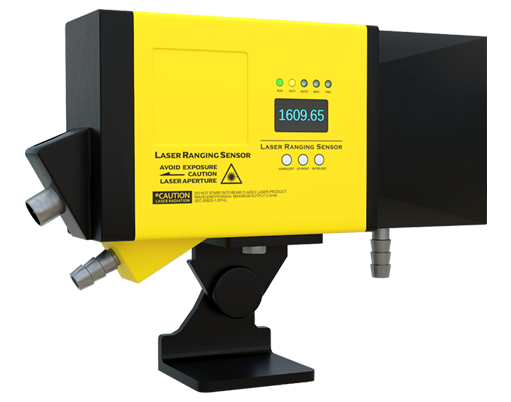
Implementing laser sensors requires careful consideration. Factors like target material, surface reflectivity, environmental disturbances, and required measurement range must be evaluated. Regular calibration and maintenance are essential to sustain accuracy. Advances in machine learning and IoT connectivity are enhancing these systems, allowing predictive analytics and adaptive control. For instance, AI algorithms can analyze measurement data to predict equipment failures or optimize production parameters automatically.
In conclusion, laser sensors are transformative for online industrial measurement. By providing reliable, precise, and real-time data, they empower industries to achieve higher productivity, reduce waste, and ensure consistent quality. As technology evolves, their role in smart manufacturing will only expand, driving innovation across the global industrial landscape.