In the realm of industrial automation, proximity switch sensors are indispensable components for non-contact detection. Among the various specifications, the 10mm sensing distance stands out as a particularly common and versatile standard. This article delves into the technical aspects, application considerations, and selection criteria for proximity sensors with this specific range, providing a comprehensive guide for engineers and technicians.
The sensing distance, often referred to as the nominal sensing distance (Sn), is a fundamental parameter. For a standard 10mm sensor, this value indicates the theoretical point at which a standard target (typically a square steel plate of defined dimensions) triggers the sensor's switching action. It is crucial to understand that this is a nominal value under ideal conditions. Factors such as target material, size, shape, temperature, and supply voltage can influence the effective operating distance. A well-designed 10mm sensor will incorporate a built-in hysteresis to prevent signal oscillation when the target is at the critical detection point, ensuring reliable switching.
Proximity sensors achieving a 10mm range are predominantly inductive type. These sensors generate an electromagnetic field. When a metallic target (especially ferrous metals like steel and iron) enters this field, eddy currents are induced in the target, causing a change in the oscillation amplitude within the sensor's coil. This change is detected by the internal circuitry, which then switches the output state. For non-ferrous metals like aluminum, brass, or copper, the effective sensing distance is reduced, often necessitating a correction factor—typically 0.3 to 0.5 times the nominal distance for aluminum. Therefore, specifying the target material is paramount during selection.
The 10mm distance offers an optimal balance between detection capability and physical robustness. Sensors with shorter ranges might be susceptible to mechanical damage from accidental contact or require precise alignment. Conversely, sensors with excessively long ranges might be prone to false triggering from unintended objects in the environment. The 10mm standard provides a comfortable margin for installation and alignment while maintaining a compact sensor housing. Common housing styles for such sensors include cylindrical threaded barrels (e.g., M12, M18, M30), rectangular, and limit switch styles, allowing for flexible integration into machinery.
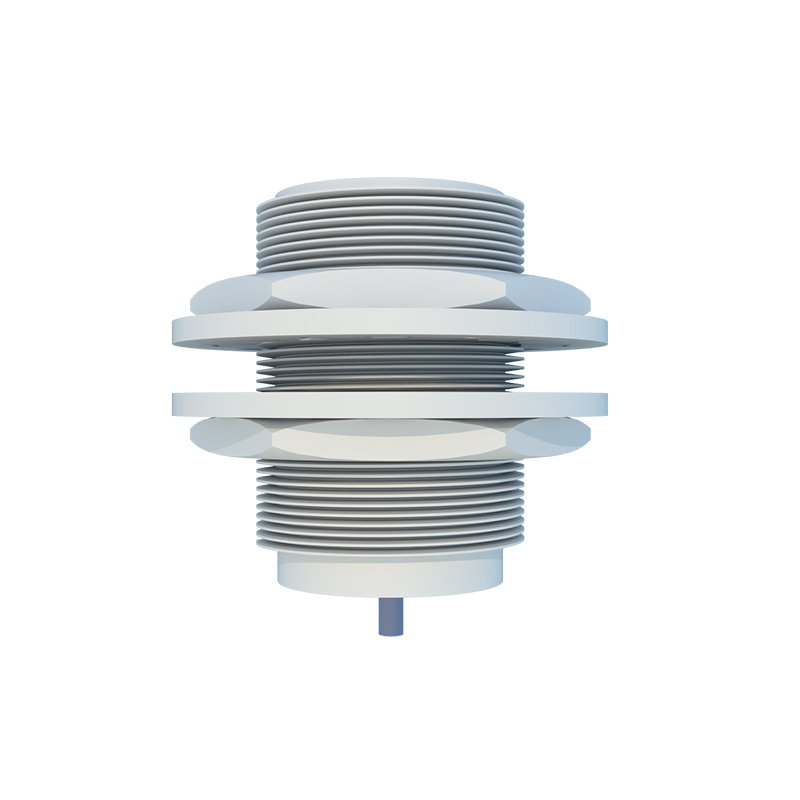
From an application perspective, 10mm sensing distance sensors are workhorses in numerous industries. They are extensively used for position sensing in pneumatic and hydraulic cylinders (often with built-in magnets in the piston), part presence verification on conveyor lines, rotary speed monitoring via gear teeth detection, and end-of-travel limit detection in various automated equipment. Their solid-state design, with no moving mechanical parts, grants them high reliability, long operational life, and resistance to vibration and contamination.
When integrating a 10mm proximity sensor, several installation guidelines must be followed. The sensor should be mounted securely to prevent movement. The sensing face must be kept free of obstructions, and buildup of metallic dust or chips should be avoided, as this can degrade performance or cause failure. For flush-mountable sensors, they can be installed metal-surrounded without affecting the sensing distance. Non-flush mountable types require a clear zone around the sensing face, as specified in the datasheet, to achieve their full 10mm capability. Electrical considerations are equally important: ensuring correct DC (typically PNP or NPN) or AC voltage supply, proper wiring of the output load, and attention to cable routing away from high-power lines to prevent electromagnetic interference.
Selecting the right 10mm sensor involves more than just the distance. Key specifications to review include the output type (e.g., normally open, normally closed), switching frequency, housing material (nickel-plated brass, stainless steel for harsh environments), IP rating for ingress protection, temperature range, and connection method (cable or connector). Always consult the manufacturer's datasheet for detailed performance characteristics and application notes.
In conclusion, the 10mm sensing distance proximity sensor represents a mature and highly optimized solution for a vast array of industrial detection tasks. Its popularity stems from its practical range, reliability, and adaptability. A thorough understanding of its operating principles, limitations due to target material, and correct installation practices is essential for engineers to deploy these sensors effectively, ensuring robust and trouble-free operation within automated systems. By paying close attention to the details outlined above, one can leverage the full potential of this critical component in modern manufacturing and control systems.