In the realm of industrial automation and control, proximity sensors are indispensable components for detecting the presence or absence of objects without physical contact. Among the diverse technologies available, electromagnetic capacitive proximity sensors stand out for their unique operating principles and versatile applications. This article delves into the fundamentals, operational mechanics, key advantages, and practical considerations for selecting and implementing these sensors.
At its core, an electromagnetic capacitive proximity sensor functions by generating an electrostatic field. The sensor typically consists of an oscillator circuit, a sensing electrode (often the sensor face itself), and a detection circuit. When no target is present, the oscillator operates at a specific baseline frequency. As a target object enters the sensing field, it alters the capacitance between the sensing electrode and ground. This change in capacitance modifies the oscillator's frequency or amplitude. The sensor's detection circuit monitors this change and triggers a switching output—usually a solid-state or relay output—when the shift exceeds a predefined threshold.
The defining characteristic of capacitive sensors is their ability to detect a wide range of materials, not just metals. Unlike inductive proximity sensors, which are limited to conductive metals, capacitive sensors can detect solids, liquids, granules, and powders, provided the target material has a dielectric constant different from that of air. This makes them exceptionally useful for applications involving non-metallic substances such as wood, plastic, glass, paper, and various chemicals. The sensing distance is influenced by the target material's dielectric constant; materials with higher constants (like water) can be detected from greater distances compared to those with lower constants (like plastics).
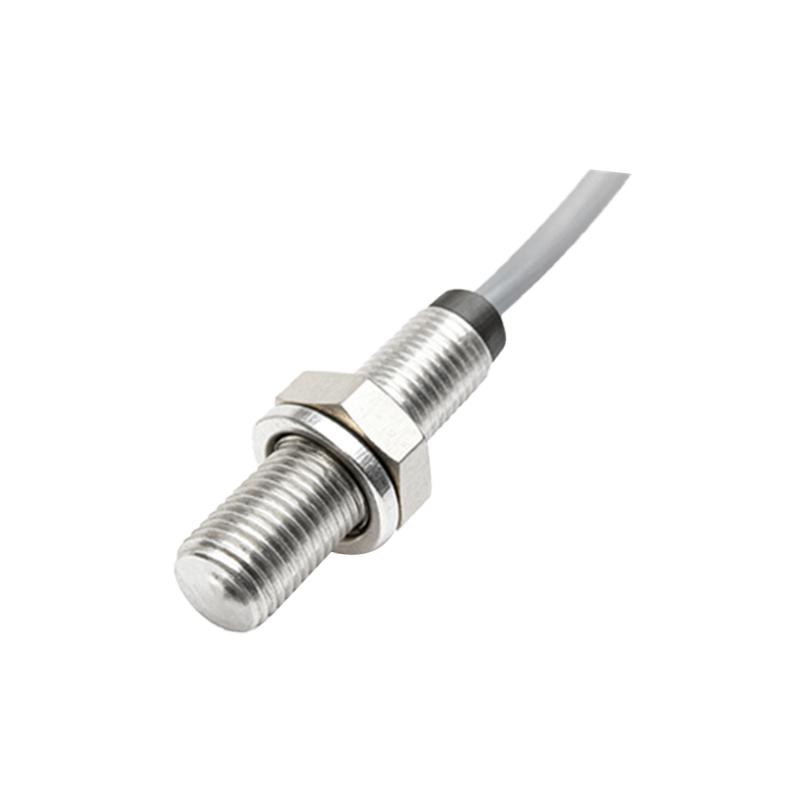
Key advantages of electromagnetic capacitive proximity sensors contribute to their widespread adoption. First is their material versatility, as mentioned. Second, they can often sense targets through non-metallic container walls, enabling tasks like liquid level detection in tanks or presence detection in packaging without direct contact with the product. Third, they are generally insensitive to factors like color, surface finish, or ambient light, providing reliable performance in diverse environments. Modern designs also offer robust housing (often in IP67 or higher ratings), making them suitable for harsh conditions involving dust, moisture, or mild chemical exposure.
Typical industrial applications are numerous. In packaging, they detect the presence of bottles or caps, regardless of material. In food and beverage processing, they monitor levels of liquids, pastes, or powders in silos and containers. In woodworking and paper industries, they control material flow and detect sheet breaks. They are also crucial in assembly lines for verifying component presence and in automotive manufacturing for fluid level monitoring.
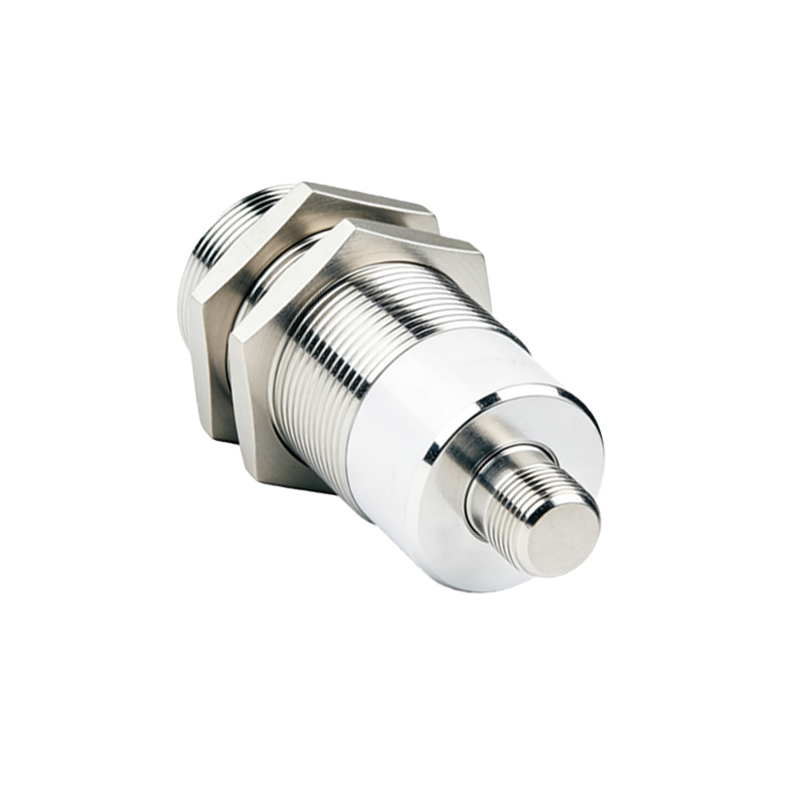
However, successful implementation requires careful consideration. The operating environment is paramount. Factors like humidity, temperature extremes, dust accumulation, or the presence of conductive contaminants can affect the sensor's field and lead to false triggering. Many sensors feature sensitivity adjustment potentiometers, allowing technicians to fine-tune the sensing range and compensate for environmental effects or different target materials. Mounting is another critical factor; sensors should be installed to minimize the influence of the surrounding mounting material (like metal brackets) on the electrostatic field. Adequate clearance from other objects is usually specified in the datasheet.
When selecting a capacitive proximity sensor, engineers must evaluate several parameters: the nominal sensing distance (Sn), which is typically calibrated for a standard target; the required output type (e.g., PNP, NPN, analog, or IO-Link); the supply voltage range; the housing material and shape (threaded barrel, rectangular, etc.) for compatibility with the installation; and the environmental protection rating. It is also advisable to consider sensors with built-in diagnostics or short-circuit protection for enhanced system reliability.
In conclusion, electromagnetic capacitive proximity sensors offer a flexible and reliable solution for non-contact detection across a broad spectrum of materials and industries. Their principle of operation, based on changes in capacitance, unlocks applications where other sensor types fall short. By understanding their capabilities, limitations, and proper selection criteria, automation engineers and system integrators can effectively leverage these sensors to improve process efficiency, ensure quality control, and enable sophisticated automation sequences. As Industry 4.0 advances, the integration of smart features like IO-Link communication in capacitive sensors further enhances their value by providing detailed diagnostic data and enabling parameterization on the fly, solidifying their role in the connected factory of the future.