Proximity switch sensors are fundamental components in modern industrial automation, serving as the critical "eyes" of machinery by detecting the presence or absence of objects without physical contact. Effective training on these devices is not merely about understanding their function but mastering their selection, installation, configuration, and troubleshooting in real-world scenarios. This guide provides a structured approach to building practical competency with proximity sensors.
The first step in any training regimen is understanding the core technology. Proximity sensors primarily operate on three principles: inductive, capacitive, and photoelectric. Inductive sensors detect metallic objects using an electromagnetic field, making them ideal for machine tools and robotic arms. Capacitive sensors can detect both metallic and non-metallic materials, including liquids and powders, by sensing changes in capacitance, which is useful in packaging or level control. Photoelectric sensors use a light beam, offering the longest sensing ranges and are versatile for various material types. A hands-on exercise should involve identifying different sensor types from a sample kit and matching them to typical application cards describing target materials and environmental conditions.
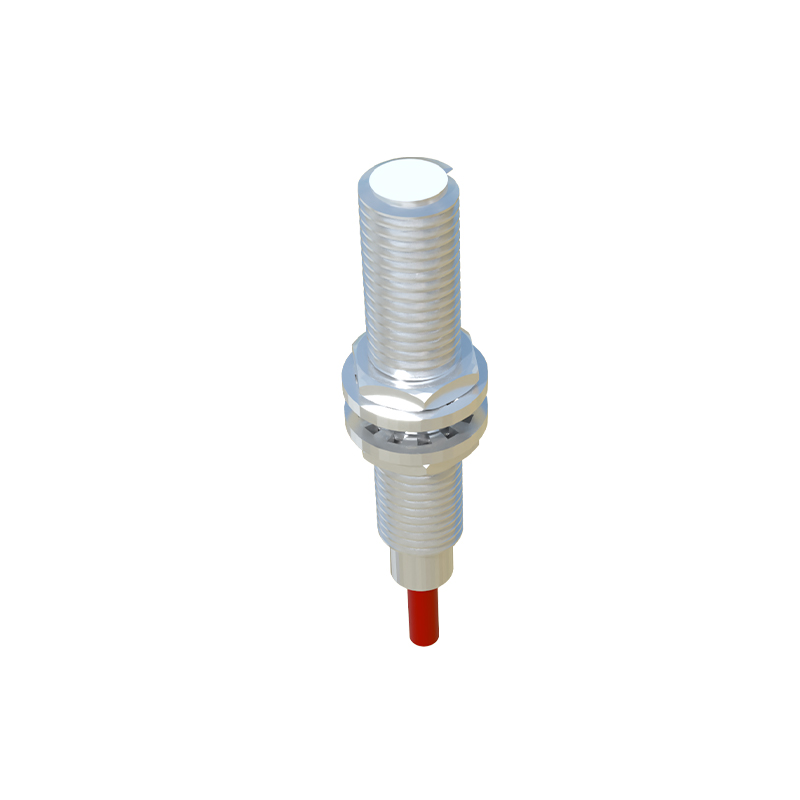
Wiring and installation practice is non-negotiable. Trainees must become fluent in connecting both 2-wire and 3-wire DC sensors, as well as AC models, to programmable logic controllers (PLCs) or other control systems. A practical station should include a power supply, a variety of sensors, a PLC input module, and indicator lights. The exercise involves correctly wiring sensors in sinking (NPN) and sourcing (PNP) configurations, observing the PLC input status change when a target is presented, and wiring the output to activate a pilot light or a small relay. Common mistakes like incorrect polarity, improper load placement, or ignoring shield grounding for cables in electrically noisy environments should be deliberately introduced and corrected.
Parameter configuration and sensing adjustment form the next critical phase. Many modern sensors feature adjustable sensing distances, hysteresis, and output delay timers. A key exercise involves setting up a sensor to detect objects on a conveyor belt. Trainees must physically adjust the sensor's sensitivity or potentiometer to achieve a reliable detection zone, avoiding false triggers from the belt itself or background objects. Another task involves using a teach-in function on a capacitive sensor to ignore a container wall and detect the material inside. Understanding the concept of "repeatability" – the sensor's ability to consistently detect an object at the same point – should be demonstrated through repeated target presentation and measurement.
Integration into a functional system elevates the training. A simple pick-and-place simulation station using a pneumatic cylinder and a sensor is an excellent project. The objective is to program a PLC so that an inductive sensor confirms the cylinder is in the retracted "home" position before allowing a new cycle to start. A second photoelectric sensor might be used to confirm the part is present in the gripper. Trainees write the basic ladder logic, wire the sensors and solenoid valve, and debug the sequence. This reinforces how sensors provide essential feedback for automated sequences.
No training is complete without systematic troubleshooting. A fault-insertion panel allows instructors to simulate common field problems: a sensor with a damaged sensing face, excessive supply voltage fluctuation, extreme temperature exposure affecting performance, or electrical interference from nearby motors. Trainees use a multimeter to measure voltage at the sensor terminals, check output status with and without a target, and inspect for physical damage or misalignment. They follow a logical diagnostic tree: Is there power? Is the output switching? Is the sensing range correct? Is the environment affecting performance?
Finally, safety and maintenance practices must be ingrained. Exercises include implementing a safety interlock using a sensor to prevent machine door access, understanding fail-safe output types, and performing routine maintenance checks like cleaning the sensing face of oil and debris, checking for loose connections, and verifying mounting stability. Trainees should review datasheet specifications for temperature ratings, shock and vibration resistance, and IP protection codes to select the right sensor for harsh environments.
Consistent, hands-on practice across these areas transforms theoretical knowledge into reliable skill. The goal is to develop technicians who can not only replace a faulty sensor but also optimize sensor placement for efficiency, diagnose complex system interactions, and contribute to the design of robust automated systems. Mastery of proximity switches is a cornerstone of industrial maintenance and engineering expertise.