Infrared proximity sensors have become indispensable components across a wide spectrum of industries, from advanced robotics and automotive systems to consumer electronics and industrial automation. Their core function is to detect the presence, absence, or distance of an object without any physical contact, utilizing the properties of infrared light. This non-contact detection principle offers significant advantages, including enhanced reliability, reduced mechanical wear, and the ability to operate in challenging environments where contaminants, dust, or moisture are present.
The fundamental operation of an infrared (IR) proximity sensor involves an emitter and a receiver. The emitter, typically an infrared LED, transmits a beam of IR light. When this beam encounters an object within its detection range, it is reflected back towards the sensor. The receiver, often a phototransistor or photodiode, detects this reflected radiation. The sensor's internal circuitry then processes this signal. By analyzing the intensity of the reflected light or, in more sophisticated versions, the phase shift of a modulated signal, the sensor can determine not only the presence of an object but also its approximate distance. This simple yet effective mechanism forms the basis for countless applications.
In the realm of industrial automation, IR proximity sensors are workhorses. They are deployed on assembly lines for precise object counting, jam detection, and part positioning. Their fast response time and immunity to ambient visible light interference make them ideal for high-speed sorting machines and packaging equipment. For instance, they can reliably detect transparent bottles or glossy packages that might confuse standard optical sensors. In robotic systems, these sensors provide crucial input for navigation, obstacle avoidance, and object manipulation, enabling collaborative robots (cobots) to work safely alongside human operators.
The automotive industry heavily relies on IR proximity technology for both safety and convenience features. They are integral to systems like automatic door opening/closing in vehicles and public transportation, preventing accidents by ensuring doors do not close on passengers. Parking assistance systems utilize arrays of IR sensors to measure the distance to obstacles, providing audible or visual cues to the driver. Furthermore, they contribute to driver monitoring systems, detecting the driver's presence in the seat or the position of their head to enhance safety protocols.
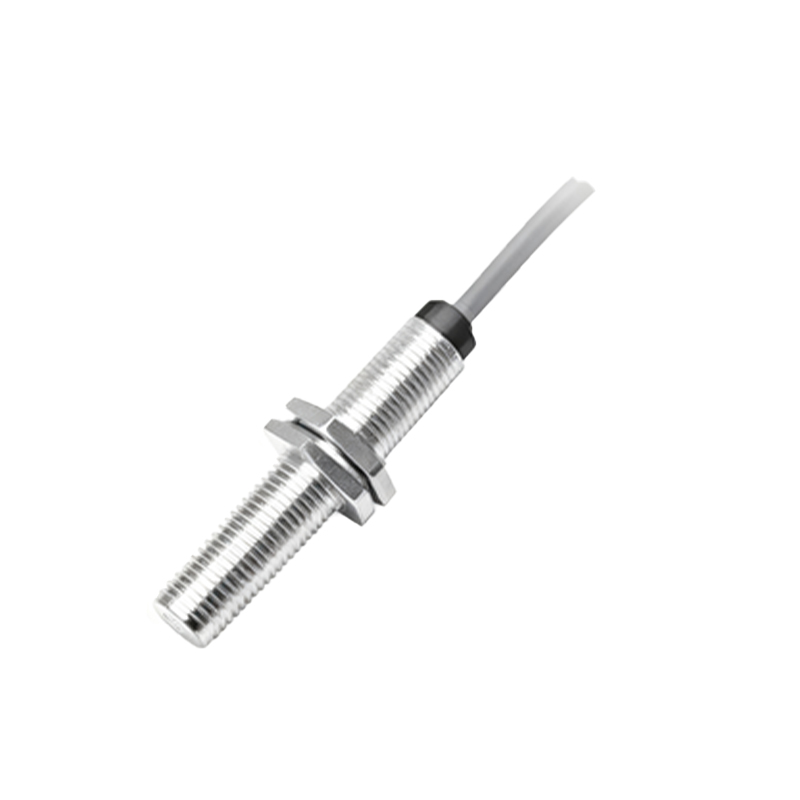
Consumer electronics represent another major domain for IR proximity sensors. A ubiquitous example is the smartphone, where a small IR sensor near the earpiece detects when the phone is held to the user's face during a call. This triggers the screen to turn off, preventing accidental touch inputs and conserving battery power. Similarly, in smart home devices like automatic faucets, soap dispensers, and paper towel dispensers, IR sensors provide hygienic, hands-free operation by detecting the presence of a user's hand. They also play a role in energy-saving systems by controlling lighting and HVAC systems based on room occupancy.
When selecting an IR proximity sensor for a specific application, several key parameters must be considered. The sensing range, which can vary from a few centimeters to several meters, must match the operational requirement. The response time is critical for high-speed applications. Environmental factors such as the target object's material, color, and surface texture (all of which affect reflectivity), as well as ambient conditions like sunlight or other IR sources, must be evaluated. Modern sensors often incorporate features to compensate for background light and are housed in rugged enclosures with ingress protection (IP) ratings for durability.
Looking ahead, the evolution of IR proximity sensing continues. The integration of these sensors with microcontrollers and IoT platforms is enabling smarter, more connected systems. Advances in miniaturization and power efficiency are expanding their use into wearable technology and portable medical devices. Furthermore, the development of multi-element arrays and sensors with integrated signal processing is enhancing resolution and functionality, paving the way for more sophisticated gesture recognition and precise spatial mapping applications.
In conclusion, the infrared proximity sensor is a quintessential example of a simple, robust technology that delivers profound functionality. Its ability to provide reliable, non-contact detection has cemented its role as a fundamental building block in modern electromechanical design. From ensuring the smooth flow of industrial production to enhancing everyday convenience and safety, the silent, unseen operation of IR proximity sensors continues to drive innovation and efficiency across countless facets of technology and daily life.