In the realm of industrial automation, reliability and precision are paramount. Among the myriad of components that ensure seamless operation, inductive proximity sensors stand as a cornerstone technology for non-contact metal detection. Specifically, the widely adopted "Type 40" cylindrical housing design represents a workhorse in countless applications. This article delves into the operational principles, key specifications, and practical considerations for employing metal-sensing inductive proximity sensors, with a focus on the common 40mm form factor.
Fundamental Operating Principle
An inductive proximity sensor is a solid-state electronic device. Its core component is a coil wound around a ferrite core, which, along with an oscillator circuit, forms a tuned electromagnetic field at the active face of the sensor. When a metallic object enters this oscillating field, eddy currents are induced on the surface of the target. These eddy currents draw energy from the sensor's oscillator, resulting in a measurable amplitude reduction or frequency shift. An integrated evaluation circuit detects this change and triggers a switching signal—typically a solid-state PNP or NPN output. It is crucial to note that these sensors are designed specifically for detecting metals; non-metallic materials like plastic, wood, or liquids generally do not affect the electromagnetic field and thus cannot be detected.
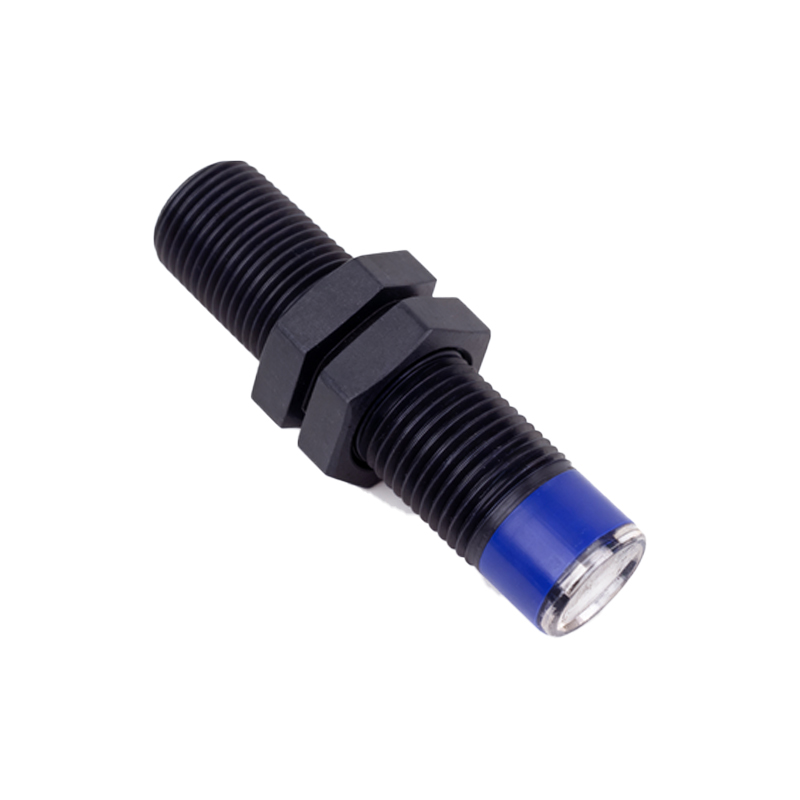
Key Specifications of Type 40 Inductive Sensors
The designation "40" often refers to the cylindrical housing's diameter, commonly M30 (30mm thread) with a 40mm overall body length or similar robust form factors. Key performance parameters include:
Sensing Distance (Sn): For a standard 40mm-diameter mild steel target, the nominal sensing range typically falls between 15mm and 40mm, depending on the specific model. It is vital to consult the datasheet, as the effective sensing distance varies with the target material.
Material Factor: Different metals affect the sensing range. Mild steel (St37) is the reference with a factor of 1.0. Stainless steel reduces the range (factor ~0.7-0.9), while brass, aluminum, and copper reduce it further (factor ~0.3-0.5). Always derate the nominal sensing distance accordingly.
Output Configuration: Available in DC 3-wire (PNP normally open/closed or NPN), 4-wire (complementary outputs), or even analog (4-20mA, 0-10V) and IO-Link versions for smart factory integration.
Switching Frequency: Defines how quickly the sensor can respond, often ranging from 100 Hz to 5 kHz, suitable for high-speed counting or positioning tasks.
Environmental Ratings: A robust Type 40 sensor typically boasts an IP67, IP68, or IP69K ingress protection rating, making it resistant to dust, washdowns, and temporary immersion. Many are also designed to withstand significant mechanical shock and vibration common in industrial settings.
Installation and Application Best Practices
Proper installation is critical for optimal performance and longevity. Maintain the recommended lateral and axial spacing between multiple sensors to prevent mutual interference. Ensure the target approaches the active face perpendicularly for the most consistent switching point. Be mindful of the sensing field's shape; it extends slightly to the sides, so nearby metal brackets or machine frames (ferrous "background") can influence operation. In environments with heavy metallic dust or chips, regular cleaning of the sensor face is necessary to prevent false triggers or reduced sensitivity.
Typical Industrial Applications
The robustness and reliability of Type 40 inductive sensors make them ubiquitous across sectors:
Position Verification: Confirming the presence of a metal part at a specific station in an assembly line, robotic cell, or conveyor system.
End-of-Travel Detection: Serving as limit switches on linear actuators, cylinders, or sliding gates.
Counting and Sorting: Detecting metal objects or parts on a fast-moving conveyor for inventory control or sorting operations.
Machine Tool Monitoring: Verifying tool presence, detecting broken tools, or confirming workpiece clamping in CNC machining centers.
Safety Interlocks: Used in non-critical safety functions, such as confirming a guard door is closed before machine initiation (note: not for primary safety circuits, which require certified safety devices).
Advancements and Selection Criteria
Modern inductive sensors offer enhanced features. Temperature-compensated models provide stable performance across wide thermal swings. Welding-field immune versions are essential for robotic welding cells. The integration of IO-Link enables detailed diagnostics, parameter setting, and process data reporting, aligning with Industry 4.0 initiatives. When selecting a sensor, define the target metal, required sensing distance, electrical interface (DC voltage, output type), environmental conditions (temperature, chemicals), and mounting constraints.
In