In the realm of industrial automation, process control, and robotics, the accurate and reliable measurement of distance is a fundamental requirement. Two prominent technologies that have revolutionized this capability are distance sensors and laser sensors. While the terms are sometimes used interchangeably, they represent distinct principles and applications. This guide delves into the workings, types, advantages, and key considerations for selecting and implementing these critical sensing technologies.
Distance sensors, also known as proximity sensors or displacement sensors, encompass a broad category of devices that detect the presence or measure the distance to an object without physical contact. They operate on various physical principles, including ultrasonic, inductive, capacitive, and photoelectric (optical) methods. Ultrasonic sensors, for instance, emit high-frequency sound waves and calculate distance based on the time-of-flight (ToF) of the reflected echo. They are robust, cost-effective for many applications, and can detect a wide range of materials, but their accuracy can be affected by temperature, humidity, and the object's surface texture. Inductive sensors are limited to detecting metallic objects, while capacitive sensors can detect both metallic and non-metallic materials and are sensitive to factors like material composition and moisture.

Laser sensors are a specific, high-precision subset of distance sensors that utilize laser light. The most common principle is laser triangulation. In this method, a laser diode projects a visible or invisible spot onto the target object. The reflected light is focused onto a position-sensitive detector (like a CCD or CMOS array). As the target's distance changes, the position of the reflected spot on the detector shifts. By calculating this shift, the sensor's electronics precisely determine the distance. Another advanced method is laser interferometry, which offers nanometer-level precision by analyzing the interference pattern of split laser beams.
The advantages of laser sensors are significant. They offer exceptional resolution, accuracy, and repeatability, often in the micron or even sub-micron range. Their response time is extremely fast, enabling high-speed inspection and measurement on production lines. The focused laser spot allows for precise measurement of small features or objects. Furthermore, many laser sensors are less susceptible to the color, reflectivity, or surface finish of the target compared to standard photoelectric sensors, especially those with advanced background suppression or taught-in reference capabilities.
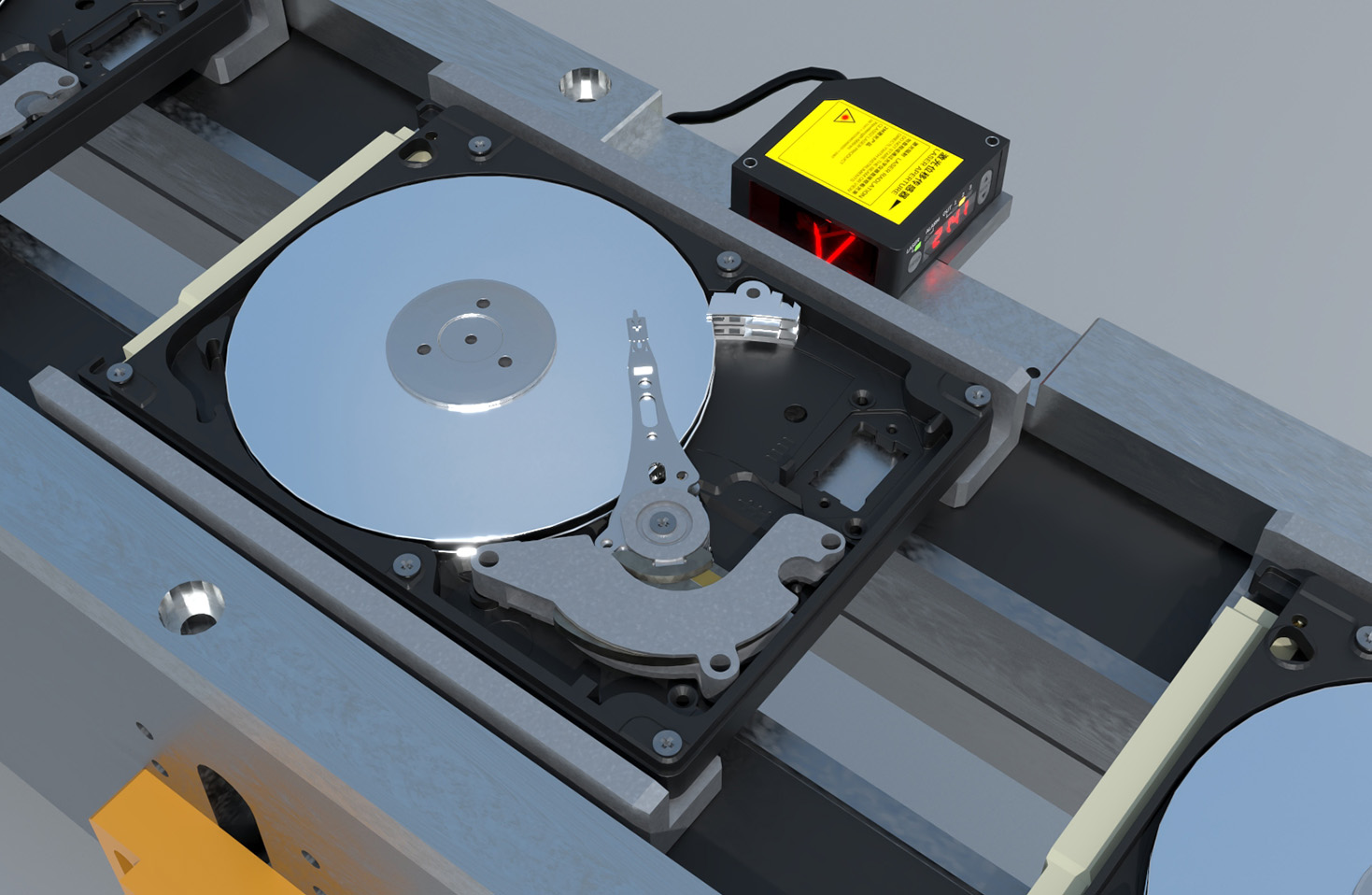
Choosing between a general distance sensor and a laser sensor depends entirely on the application's requirements. For tasks like simple object detection, level monitoring in tanks (with non-transparent walls), or detecting metallic parts on a conveyor, ultrasonic or inductive sensors are often perfectly adequate and more economical. However, when the application demands high precision—such as measuring the thickness of materials, verifying component dimensions, controlling robot arm positioning, or conducting 3D profiling—a laser sensor is invariably the superior choice. Applications include semiconductor manufacturing, automotive assembly (e.g., gap and flush measurement), electronics production, and precision machining.
Key specifications to evaluate include measuring range, resolution, accuracy, linearity, sampling rate, and the type of output (analog voltage/current, digital IO, or serial communication like RS-485 or Ethernet/IP). Environmental factors are crucial; industrial environments may contain dust, smoke, vibration, or ambient light interference. Many modern laser sensors are housed in rugged, IP-rated enclosures and feature filters or algorithms to mitigate optical noise. The choice of a red visible laser versus an infrared laser can also be important for alignment purposes or for measuring specific materials.
In conclusion, both distance sensors and laser sensors are indispensable tools in modern industry. Distance sensors provide versatile, robust solutions for a multitude of presence detection and medium-accuracy measurement tasks. Laser sensors, leveraging the coherence and focus of laser light, deliver the pinnacle of precision for demanding measurement and inspection challenges. Understanding their underlying technologies, capabilities, and limitations is essential for engineers and system integrators to design efficient, reliable, and high-performance automated systems. The ongoing evolution in sensor technology, including the miniaturization of components and the integration of smarter onboard processing, continues to expand the possibilities for non-contact measurement across all sectors of manufacturing and beyond.
