In the rapidly evolving landscape of industrial automation and smart systems, distributed proximity sensors have emerged as a foundational technology, enabling precise, non-contact detection and measurement across complex environments. Unlike traditional, centralized sensing units, a distributed proximity sensor system comprises multiple sensing nodes strategically positioned throughout a defined space or along a process line. These nodes operate semi-autonomously or in a coordinated network, communicating data to a central control unit. This architecture fundamentally shifts the paradigm from point-based detection to area-based or volumetric sensing, offering unparalleled flexibility and intelligence.
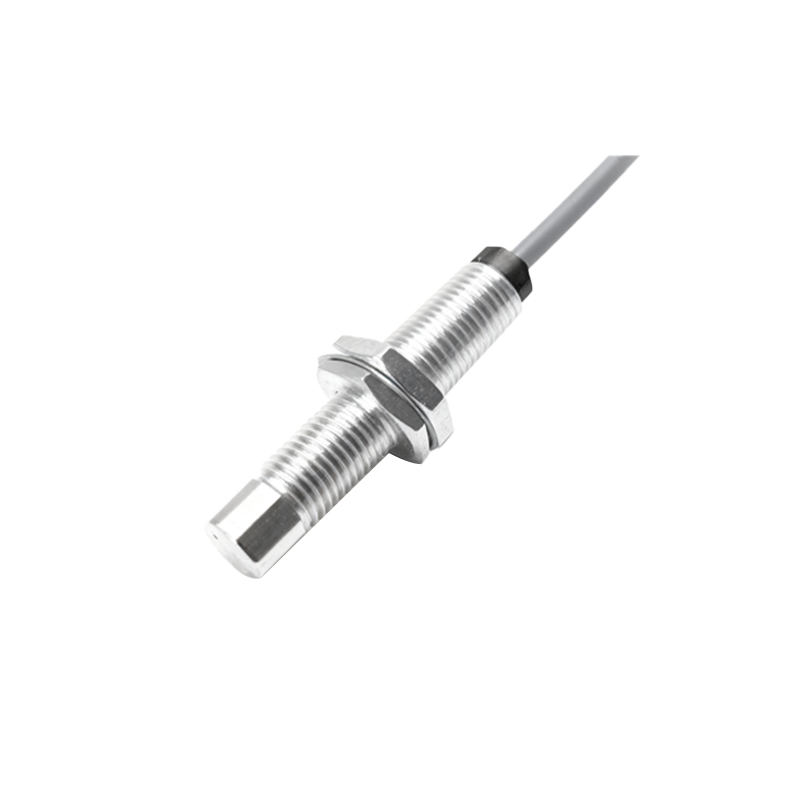
At its core, a distributed proximity sensor system integrates three key components: the sensing nodes, the communication network, and the central processing unit. Each sensing node typically contains a sensor element (such as inductive, capacitive, ultrasonic, or photoelectric), local signal conditioning circuitry, and a communication module. The choice of sensor technology depends on the target material and environmental conditions. Inductive sensors are ideal for detecting metallic objects, capacitive sensors can detect both metallic and non-metallic materials, ultrasonic sensors are effective for longer ranges and harsh environments, while photoelectric sensors offer high precision for a variety of surfaces.
The communication network is the backbone of the system. Wired protocols like IO-Link, PROFINET, or EtherNet/IP provide robust, high-speed data exchange, often integrating power and data on a single cable (PoE or similar). Wireless technologies, including Bluetooth Mesh, Zigbee, or proprietary industrial wireless protocols, offer exceptional flexibility for retrofitting or applications where cabling is impractical. This networked approach allows for real-time data aggregation from dozens or even hundreds of sensing points.
The advantages of deploying a distributed proximity sensing system are substantial. Firstly, it enhances system resilience. The failure of a single node does not cripple the entire system; the network can often reconfigure or flag the specific fault, enabling predictive maintenance. Secondly, it enables sophisticated data analytics. By correlating data from multiple points, the system can infer object speed, direction, size, and even orientation—transforming simple presence/absence signals into rich contextual information. For instance, on a conveyor line, a distributed array of sensors can track a product's exact position, detect jams, and verify assembly completeness without dedicated vision systems.
Thirdly, installation and scalability are significantly simplified. Adding a new sensing point often involves connecting a node to the existing network trunk, rather than running individual cables back to a central cabinet. This reduces wiring complexity, lowers installation costs, and minimizes downtime during system expansion. Furthermore, parameters for each sensor node (e.g., sensing range, output delay, switching logic) can be configured and monitored remotely via software, streamlining commissioning and troubleshooting.
Practical applications are vast and growing. In automated warehousing, distributed proximity sensors guide autonomous mobile robots (AMRs), manage inventory by monitoring bin levels, and ensure safety in human-robot collaborative spaces. In automotive assembly, they provide precise tool positioning feedback and verify component placement in hard-to-reach areas of a vehicle chassis. In food and beverage processing, wash-down resistant sensor networks monitor packaging lines and control valve positions. The integration with Industrial Internet of Things (IIoT) platforms further unlocks potential, allowing sensor data to feed into higher-level systems for process optimization, energy management, and digital twin simulations.
However, engineers must consider several critical factors during design and implementation. Network latency must be evaluated to ensure the system meets the required response times for the application. Electromagnetic compatibility (EMC) is crucial, especially in environments with variable frequency drives or welding equipment. For wireless systems, battery life for nodes and network security are paramount concerns. Proper node enclosure selection (IP ratings, NEMA ratings) is essential to withstand environmental challenges like dust, moisture, and temperature extremes.
Looking ahead, the convergence of smarter, more energy-efficient sensor nodes with advanced edge computing and AI algorithms will push the boundaries further. Future distributed proximity systems will likely possess greater local intelligence, enabling nodes to perform preliminary data analysis and make basic decisions autonomously, reducing the load on central controllers and enabling even faster system responses.
In conclusion, distributed proximity sensors represent a significant leap forward from conventional sensing. By leveraging a networked architecture, they provide a more resilient, intelligent, and flexible solution for modern industrial automation challenges. For electrical engineers designing the next generation of smart factories and processes, a deep understanding of this technology's principles, components, and implementation strategies is no longer optional—it is essential for building efficient, reliable, and future-proof systems.