Laser rangefinder sensors, often referred to as LiDAR (Light Detection and Ranging) sensors in broader contexts, are sophisticated devices that measure distance with exceptional precision. They operate on a fundamental principle: emitting a pulse or beam of laser light towards a target and calculating the distance based on the time it takes for the reflected light to return to the sensor. This time-of-flight (ToF) measurement, multiplied by the speed of light, yields the distance. This core technology enables non-contact, high-accuracy measurements over considerable ranges, from a few centimeters to several kilometers, depending on the sensor's design and power.
The operation of a laser rangefinder hinges on several key components. A laser diode generates the coherent light pulse. Optics, including lenses, shape and direct this beam. A highly sensitive photodetector, such as an avalanche photodiode (APD), captures the faint return signal. Finally, sophisticated timing circuitry and signal processing algorithms calculate the elapsed time with nanosecond precision, filtering out ambient light and noise to ensure reliable readings. Modern sensors often employ multiple pulses and statistical methods to enhance accuracy and reliability.

Several types of laser rangefinder sensors cater to diverse needs. Pulse-based ToF sensors are the most common for long-range applications like topography and defense. Phase-shift measurement sensors, which modulate a continuous laser beam, offer higher accuracy for shorter ranges, ideal for industrial metrology and construction. A critical distinction lies between 1D, 2D, and 3D sensors. A standard rangefinder provides a single-point (1D) distance measurement. By scanning the laser beam mechanically or using a rotating mirror, 2D LiDAR creates a line of distance points, forming a profile. Full 3D LiDAR systems, essential for autonomous vehicles and advanced mapping, scan in multiple planes to generate a detailed point cloud representing the three-dimensional environment.
The applications of laser rangefinder sensors are vast and transformative. In robotics and autonomous vehicles, they are indispensable for real-time environment perception, obstacle detection, and navigation, providing crucial data for safe operation. The surveying, mapping, and geospatial industries rely on airborne and terrestrial LiDAR for creating highly accurate digital elevation models and 3D maps of terrain and infrastructure. In industrial automation, these sensors guide robots, measure parts, and manage inventory. The construction sector uses them for site planning, volume calculations, and alignment. Consumer electronics have also adopted miniaturized versions for features like camera autofocus and gesture recognition. Furthermore, they play roles in sports (golf, archery), forestry management, and archaeology.
Selecting the appropriate laser rangefinder requires careful consideration of key parameters. Measurement range defines the minimum and maximum distances the device can handle. Accuracy and resolution indicate how close the reading is to the true value and the smallest detectable change in distance, respectively. Measurement speed or frequency is vital for dynamic applications like tracking moving objects. The laser's wavelength, often in the near-infrared spectrum, affects performance in different environmental conditions. Environmental robustness, including resistance to dust, water (IP rating), and temperature extremes, is crucial for outdoor or harsh industrial use. Finally, the output interface (analog, digital, CAN bus, Ethernet) must integrate seamlessly with the broader system.

Despite their advantages, laser rangefinders face challenges. Performance can degrade in adverse weather conditions such as heavy fog, rain, or snow, which scatter the laser beam. Highly reflective or absorbent surfaces can also cause erroneous readings. Eye safety is a paramount concern; all commercial devices must comply with strict laser safety classes (e.g., Class 1) to ensure they are harmless under normal operating conditions. Cost can be a barrier for high-performance models, though prices are decreasing with technological advancement and mass adoption in sectors like automotive.
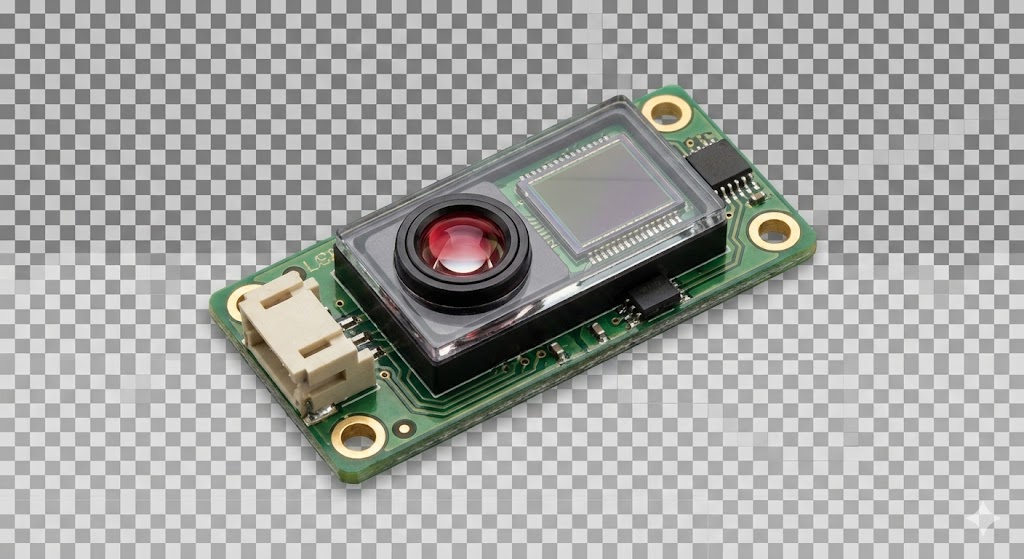
The future of laser rangefinder sensor technology points toward greater miniaturization, reduced cost, and enhanced performance. Solid-state LiDAR, which eliminates moving parts, promises more compact, reliable, and cheaper sensors for widespread use in consumer and automotive applications. Improvements in signal processing and the use of multiple wavelengths will help mitigate environmental interference. Integration with other sensing modalities like cameras and radar in sensor fusion systems will provide more robust and comprehensive perception for autonomous systems. As the technology continues to evolve, laser rangefinder sensors will undoubtedly unlock new possibilities across an ever-expanding array of fields, solidifying their role as a cornerstone of modern measurement and perception systems.