In the world of automation and smart technology, proximity sensors are the silent, unseen workhorses. These devices detect the presence or absence of an object within a specific range without any physical contact. Their ability to perform this task reliably, quickly, and without wear and tear makes them indispensable in countless industrial, commercial, and consumer applications. From the smartphone in your pocket that turns off the screen during a call to the complex robotic assembly line in a factory, proximity sensors are everywhere.
At their core, proximity sensors operate by emitting a field or beam of electromagnetic radiation or by using an electrostatic field. The sensor then looks for changes or disturbances in that field caused by a target object entering its sensing range. The key advantage here is the non-contact nature of detection. This eliminates mechanical wear, allows for high-speed operation, and enables sensing of objects that might be fragile, hot, or otherwise unsuitable for physical touch.
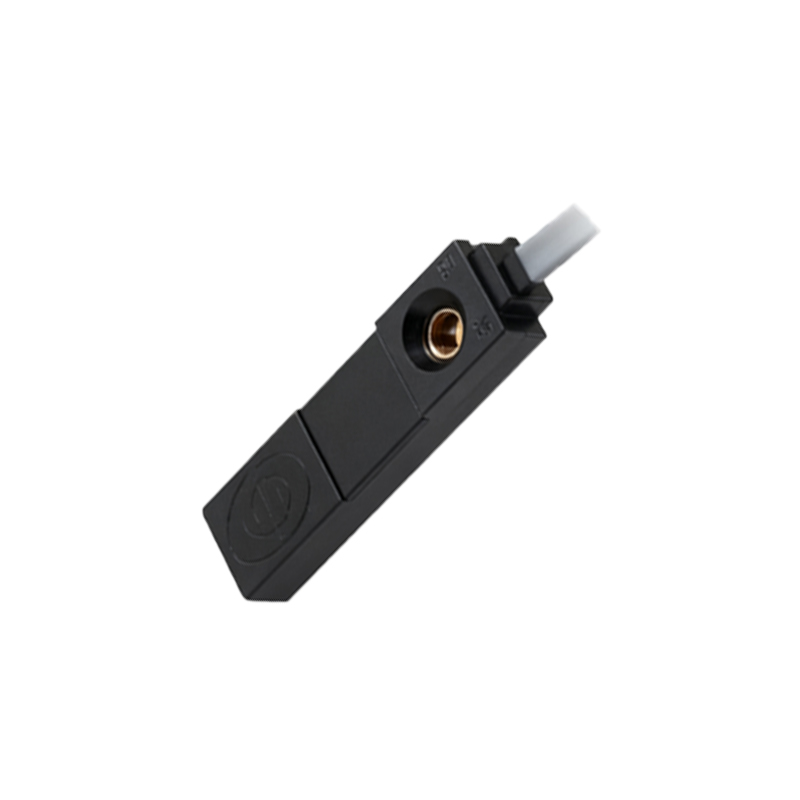
Several primary technologies dominate the proximity sensor landscape, each with its own strengths and ideal use cases. Inductive proximity sensors are one of the most common types. They generate an oscillating electromagnetic field and detect the eddy current losses caused when a metallic object enters this field. Consequently, they are perfect for industrial environments to detect metal parts—think of counting cans on a conveyor belt or verifying the position of a machine tool. They are robust, resistant to environmental factors like dust and moisture, and have a relatively short sensing range.
Capacitive proximity sensors, on the other hand, can detect both metallic and non-metallic materials, including liquids, powders, and plastics. They work by measuring changes in capacitance between the sensor and the target object. This makes them versatile for applications like liquid level detection in tanks, monitoring material levels in hoppers, or detecting the presence of a glass or plastic bottle. Their sensing range can be adjusted, but they can be influenced by environmental factors like humidity.
Ultrasonic proximity sensors use sound waves beyond the range of human hearing. They emit ultrasonic pulses and measure the time it takes for the echo to return from an object. This time-of-flight principle allows them to detect objects of virtually any material, color, or transparency, and they are effective over longer distances. You'll find them in parking assist systems, collision avoidance on mobile robots, and precise level measurement for bulk solids.
Photoelectric sensors, sometimes grouped under proximity sensing, use light beams. A transmitter emits a beam of light (often infrared, visible red, or laser), and a receiver detects it. An object is sensed when it interrupts or reflects this beam. While excellent for long-range detection and small object sensing, their performance can be affected by environmental conditions like dust, fog, or ambient light.
Selecting the right proximity sensor requires careful consideration of several factors. The material of the target object is paramount—is it metal, plastic, liquid, or transparent? The required sensing distance is next; inductive sensors work at short ranges (a few millimeters to tens of millimeters), while ultrasonic sensors can work over several meters. The operating environment is critical too. Will the sensor face extreme temperatures, washdown conditions, oil, or heavy vibration? Industrial-grade sensors come with specific Ingress Protection (IP) ratings for such challenges. Finally, the output type needed—digital (on/off) or analog (proportional to distance)—and the electrical connection must match the control system, typically a Programmable Logic Controller (PLC).
The applications are vast and growing. In manufacturing, they provide precise position feedback for robotics, ensure parts are present for assembly, and control automated guided vehicles (AGVs). In the automotive sector, they enable touchless trunk opening and parking sensors. In consumer electronics, they manage display on/off functions and enable gesture control. Even in everyday appliances like automated faucets and soap dispensers, a small capacitive or infrared proximity sensor is at work.
As industries move towards greater connectivity and the Industrial Internet of Things (IIoT), proximity sensors are evolving. Modern sensors offer integrated IO-Link communication, providing not just a simple switch signal but detailed diagnostic data like operating temperature, signal strength, and even predictive maintenance alerts. This intelligence transforms a simple detection device into a valuable data point for optimizing entire production processes.
In conclusion, proximity sensors are a fundamental enabling technology for automation. Understanding the different operating principles—inductive, capacitive, ultrasonic, and photoelectric—is the first step to leveraging their capabilities. By carefully matching the sensor type to the target material, required range, and environmental conditions, engineers and designers can build more reliable, efficient, and intelligent systems. From heavy industry to the smart home, these devices continue to push the boundaries of what machines can perceive and how they interact with the physical world.