In the realm of industrial automation and precision measurement, laser proximity sensors have emerged as a cornerstone technology. These devices provide non-contact, highly accurate detection and measurement of objects, revolutionizing processes across manufacturing, robotics, and safety systems. Unlike traditional mechanical or ultrasonic sensors, laser proximity sensors utilize a focused beam of light to deliver unparalleled performance in challenging environments.
The fundamental operating principle is based on the time-of-flight (ToF) or triangulation method. In the ToF approach, the sensor emits a short pulse of laser light towards a target. A high-speed receiver within the sensor then detects the reflected light. By precisely calculating the time difference between the emission and reception of the laser pulse, the sensor's internal processor can determine the distance to the object with extreme accuracy. Triangulation-based sensors, often used for shorter ranges and higher precision, project a laser spot onto the target. The reflected light is focused onto a position-sensitive detector. As the target distance changes, the position of the reflected spot shifts on the detector, allowing for precise distance calculation through geometric principles.
The advantages of laser proximity sensors are numerous and significant. Their primary benefit is high precision, capable of achieving micrometer-level resolution. This makes them indispensable in applications like wafer handling in semiconductor fabrication or precise part positioning in assembly lines. They offer a long sensing range compared to other optical sensors, with some models capable of detecting objects several hundred meters away. The focused laser beam provides excellent resolution, allowing them to detect very small objects or ignore background interference. Furthermore, they are largely unaffected by the color or surface material of the target object, though highly reflective or absorbent surfaces can pose challenges that modern sensors are engineered to compensate for.
Applications for laser proximity sensors are vast and varied. In factory automation, they are used for object detection on conveyor belts, precise bottle filling level control, and robot guidance for pick-and-place operations. The automotive industry relies on them for crash testing, vehicle dimension verification, and assembly robot positioning. They play a critical role in unmanned aerial vehicles (UAVs) and autonomous mobile robots (AMRs) for obstacle avoidance and navigation. In packaging machinery, they ensure correct box size and flap detection. Safety is another critical domain, where laser scanners create invisible protective fields around hazardous machinery, instantly halting operation if a person or object breaches the zone.
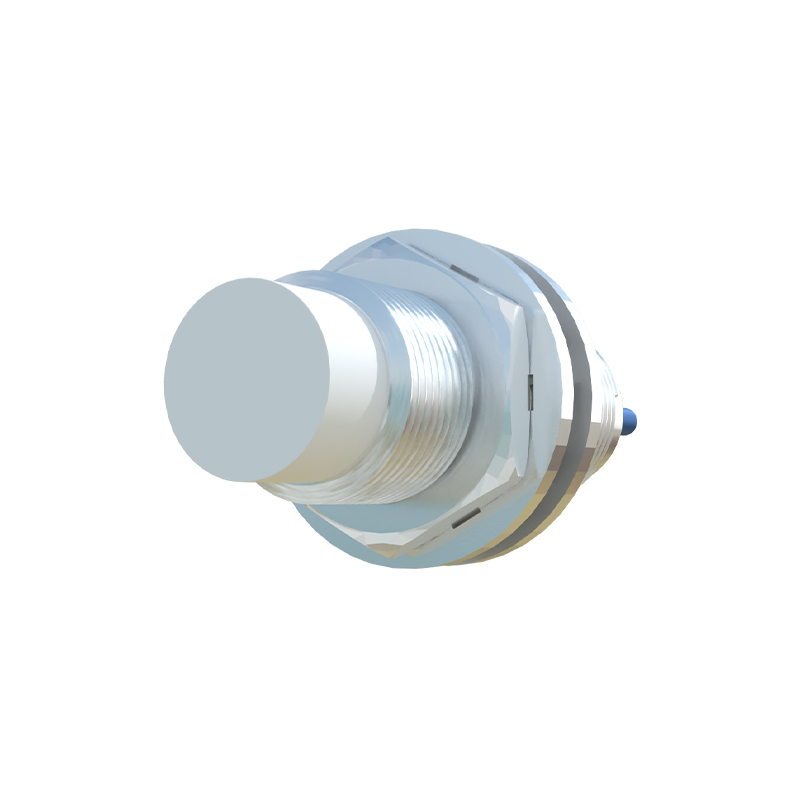
Selecting the right laser proximity sensor requires careful consideration of several key parameters. The sensing range must match the application's needs. Resolution and repeatability define how small a distance change the sensor can detect and how consistently it can do so. The response time determines how quickly the sensor can output a signal after detection, crucial for high-speed production lines. Environmental factors like ambient light, dust, fog, or temperature extremes must be considered, with many sensors boasting high Ingress Protection (IP) ratings for durability. Finally, the output type—analog (4-20 mA, 0-10 V), digital (PNP/NPN), or serial communication (IO-Link, Ethernet/IP)—must be compatible with the existing control system.
Modern advancements continue to push the boundaries of this technology. The integration of background suppression techniques allows sensors to ignore objects beyond a set distance. CMOS and CCD array receivers have enhanced speed and accuracy. The development of Class 1 laser products ensures eye-safe operation without requiring special safety enclosures in most industrial settings, simplifying integration. Furthermore, smart sensors with integrated diagnostics and communication protocols enable predictive maintenance and seamless data integration into Industry 4.0 frameworks.
Despite their robustness, optimal performance depends on correct installation and understanding of limitations. Ensuring a stable mounting platform to minimize vibration is essential. The laser beam must be aligned perpendicular to the target surface for most accurate results. Users should be aware that transparent objects like glass or clear plastic may allow the beam to pass through, and very dark, matte surfaces may absorb too much light, requiring sensors with higher output power or special calibration.
In conclusion, laser proximity sensors represent a mature yet continuously evolving technology that provides a critical link between the physical world and automated control systems. Their ability to deliver precise, reliable, and non-contact measurement solutions makes them a fundamental component in building smarter, safer, and more efficient industrial operations. As demands for precision and automation intensity, the role of the laser proximity sensor will only become more central, driving innovation in measurement and detection for years to come.