In the realm of industrial process control, environmental monitoring, and advanced material science, the accurate measurement of particle size distribution is paramount. Among the various technologies available, laser particle size sensors have emerged as a dominant and highly reliable solution. This article delves into the operational principles, key applications, and critical factors for selecting the right sensor for specific needs.
At its core, a laser particle size sensor operates on the principle of laser diffraction, also known as static light scattering. A monochromatic, coherent laser beam is directed through a sample containing dispersed particles. As the light encounters these particles, it is scattered at angles inversely proportional to the particle size. Smaller particles scatter light at wider angles, while larger particles scatter light at narrower angles. A specialized multi-element photodetector array surrounding the sample measures the intensity pattern of this scattered light. Sophisticated algorithms, often based on Mie or Fraunhofer scattering theories, then analyze this angular intensity distribution to calculate the size distribution of the particle population. This method allows for rapid, non-contact measurement of a wide range of particle sizes, typically from sub-micron to several millimeters, with high repeatability.
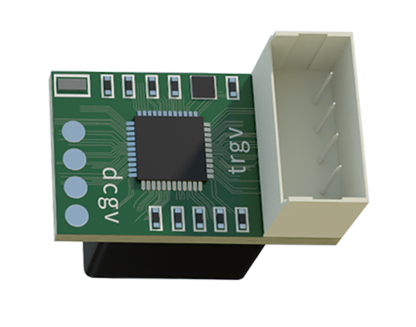
The applications for laser particle size sensors are vast and span numerous industries. In pharmaceutical manufacturing, they are indispensable for quality control of active pharmaceutical ingredients (APIs) and excipients, ensuring consistent particle size for proper drug dissolution, bioavailability, and tablet compaction. The chemical industry relies on them to monitor catalysts, pigments, and polymer powders, where particle size directly influences product performance and reaction kinetics. In the field of additive manufacturing (3D printing), precise powder size analysis is critical for layer uniformity and final part density. Environmental monitoring stations use these sensors to analyze airborne particulate matter (PM2.5, PM10), providing essential data for air quality assessments. Furthermore, they play a crucial role in food processing for controlling the texture of powders like flour, cocoa, and milk powder, and in ceramics for managing raw material consistency.
Selecting an appropriate laser particle size sensor requires careful consideration of several technical parameters. The primary specification is the measurement range, which must encompass the smallest and largest particles expected in the sample. Related to this is the sensor's resolution and accuracy. The required sample dispersion method is another key factor; dry powder dispersion is common for free-flowing materials, while wet dispersion using a liquid circulator is necessary for cohesive powders or to prevent particle destruction. The optical model (Mie theory requires knowledge of the material's refractive index, while Fraunhofer approximation is simpler) must be suitable for the application. Data reporting capabilities, such as the ability to generate volume-based, number-based, or intensity-based distributions, along with standard metrics like D10, D50 (median), and D90, are essential for analysis. Integration features, including digital communication protocols (e.g., Modbus, Profinet, 4-20mA outputs), determine how easily the sensor can be incorporated into a process control system. Finally, robustness factors like ingress protection (IP) rating for harsh environments and compliance with industry-specific standards (e.g., FDA, cGMP for pharmaceuticals) may be decisive.
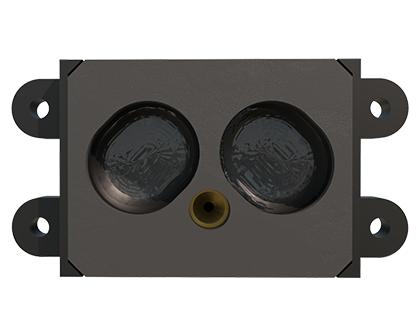
Modern advancements continue to enhance laser particle size sensor technology. Improvements in laser sources and detector sensitivity allow for analysis of more dilute or concentrated samples. Enhanced software algorithms provide more accurate results for complex, non-spherical particles. The integration of automated sampling systems enables real-time, in-line process monitoring, moving beyond traditional off-line laboratory analysis. This shift towards Industry 4.0 and smart manufacturing allows for immediate feedback and control, minimizing product waste and ensuring consistent quality.
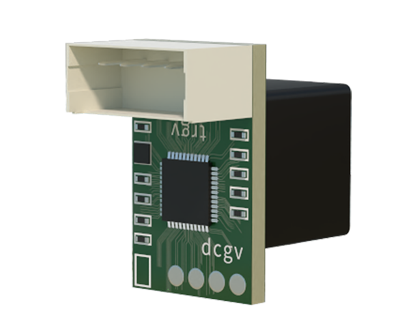
In conclusion, laser particle size sensors represent a sophisticated and versatile tool for particle characterization. Their non-invasive nature, speed, and broad measurement range make them superior to older sieve analysis or sedimentation methods. By understanding the fundamental light scattering principles, recognizing the diverse industrial applications, and meticulously evaluating selection criteria based on material properties and process requirements, engineers and scientists can effectively leverage this technology to optimize products, control processes, and ensure quality and safety across countless sectors.