In the modern built environment, the integration of intelligent systems has become paramount for enhancing hygiene, convenience, and energy efficiency. Among these systems, proximity sensors, specifically designed for bathroom applications, play a crucial role. This article delves into the technology, primarily focusing on inductive proximity sensors often configured in a ring or annular form factor, their operational principles, key applications, and essential selection criteria for engineers and specifiers.
At its core, a bathroom proximity sensor is a non-contact detection device. Unlike mechanical switches or push-buttons, it operates by generating an electromagnetic field. The most common technology employed is the inductive proximity sensor. This sensor contains an oscillator circuit that creates a high-frequency alternating magnetic field emanating from its active face, which is typically arranged in a circular or ring shape to maximize detection coverage. When a conductive object—most commonly a human hand—enters this field, eddy currents are induced on the object's surface. This causes a change in the oscillation amplitude within the sensor. An evaluation circuit within the sensor detects this change and triggers a solid-state switching output. This entire process occurs without any physical contact, making it ideal for sanitary environments.
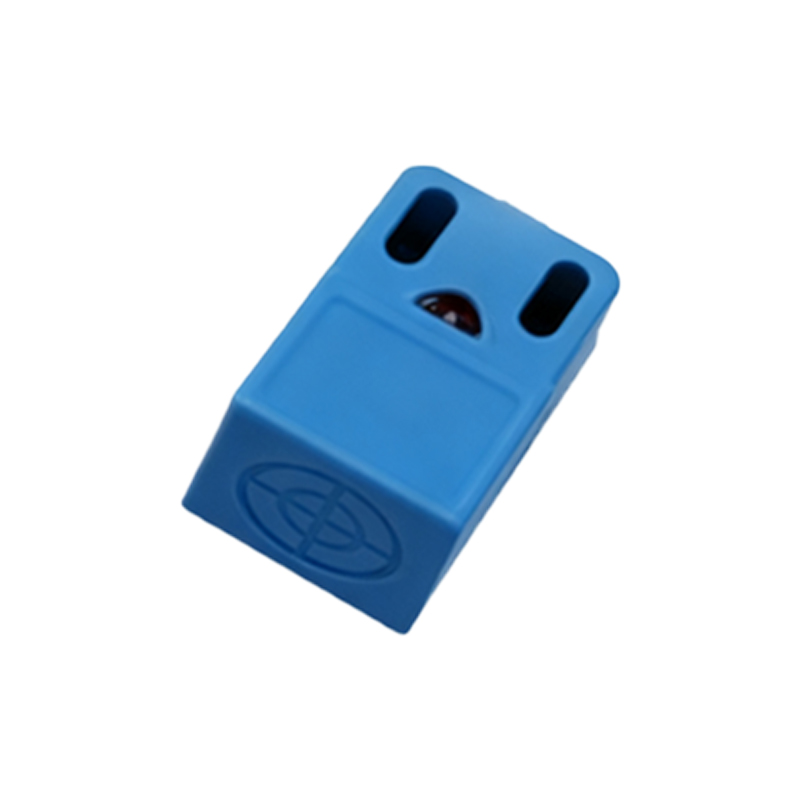
The annular or ring-shaped design is particularly significant for bathroom fixtures. This form factor allows the sensor to be integrated around the spout of an automatic faucet or the dispensing point of a soap dispenser, creating a 360-degree detection zone. This ensures reliable activation regardless of the approach angle of the user's hand. The sensing range for such applications is typically short, often between 30mm to 100mm, to prevent false triggering from incidental movement while ensuring prompt and intuitive operation.
The primary applications for these环形接近传感器 in bathrooms are diverse and impactful. The most prevalent is in automatic faucets or taps. Here, the sensor detects the presence of hands beneath the spout, activating the water flow for a pre-set duration. This promotes water conservation by eliminating wastage from taps left running and enhances hygiene by removing the need to touch potentially contaminated handles. Similarly, automatic soap dispensers and hand dryers utilize the same principle. The sensor detects a hand placed in the dispensing area, triggering the release of soap or initiating the drying cycle. Beyond these, proximity sensors are increasingly used in flushometers for toilets and urinals, providing touchless flushing to maintain cleanliness. Some advanced systems even integrate sensors for controlling lighting or ventilation based on occupancy, further contributing to energy savings.
For engineers and system integrators, selecting the right bathroom proximity sensor requires careful consideration of several technical and environmental parameters. First, the housing material is critical. Sensors must be constructed from materials like high-grade plastics (e.g., PPS) or stainless steel that can withstand constant exposure to moisture, humidity, and a wide range of cleaning chemicals without corroding or degrading. The Ingress Protection (IP) rating is a key specification; a minimum of IP65 is standard, indicating dust-tight and protection against low-pressure water jets, with IP67 or IP69K being preferable for areas subject to direct cleaning or high-pressure hosing.
Electrical characteristics are equally important. Operating voltage (commonly 12-24V DC or 110-240V AC), output type (typically NPN or PNP transistor, or a relay), and load capacity must match the control system of the fixture. The sensing range and response time must be tuned to the application—too sensitive, and it may cause false activations; too slow, and it frustrates users. Furthermore, immunity to environmental interference is vital. The sensor must be designed to ignore background electromagnetic noise from other equipment and should not be affected by different water temperatures or the presence of non-conductive materials like soap or lotion on hands.
Installation and maintenance considerations round out the selection process. Sensors should be designed for easy integration into fixture housings with secure mounting options. Many modern sensors feature LED indicators for operational status and diagnostic purposes. While these sensors are solid-state and generally maintenance-free, their placement must avoid direct, forceful water impact on the sensing face unless specifically rated for it. Regular cleaning with non-abrasive, non-corrosive cleaners is recommended to prevent buildup that could attenuate the sensing field.
In conclusion,环形接近传感器 represent a mature yet continually evolving technology that is fundamental to modern, intelligent bathroom design. By understanding the inductive sensing principle, the rationale behind the annular form factor, and the critical selection parameters related to durability, performance, and environment, professionals can specify and implement systems that reliably deliver the trifecta of benefits: improved hygiene, user convenience, and significant resource conservation. As the Internet of Things (IoT) expands, future iterations may include enhanced diagnostics, connectivity for usage data analytics, and even more sophisticated presence detection, further solidifying their role in sustainable building management.