Capacitive Displacement and Proximity (CDC) sensors represent a cornerstone technology in modern industrial automation and precision measurement. Operating on the fundamental principle of capacitive coupling, these sensors detect and measure the presence, absence, or position of both conductive and non-conductive targets without physical contact. A typical CDC sensor system comprises a sensing electrode (the active surface), an oscillator circuit, a signal conditioner, and an output stage. When a target object enters the sensor's electrostatic field, it alters the capacitance between the electrode and the ground. This minute change in capacitance is detected by the oscillator circuit, converted into a measurable signal, and processed to provide a reliable switching output or an analog displacement value.
The versatility of CDC sensors is one of their most significant advantages. Unlike inductive sensors, which only detect metals, capacitive sensors can sense a vast array of materials, including plastics, glass, wood, ceramics, and liquids. This makes them indispensable in applications like fill level detection in non-metallic containers, monitoring of film or paper thickness, and presence verification of plastic caps or glass vials on production lines. Their ability to see through certain non-conductive materials also allows for unique applications, such as detecting the liquid level inside a plastic tank from the outside.
In terms of performance, key specifications include sensing range, repeatability, response time, and environmental robustness. Sensing ranges vary from a few millimeters for ultra-precise displacement tasks to several tens of millimeters for general proximity detection. High-end models offer exceptional linearity and repeatability in the micrometer range for demanding displacement measurement tasks in semiconductor manufacturing or precision assembly. Response times are typically in the microsecond to millisecond range, suitable for high-speed production environments. Furthermore, many industrial-grade CDC sensors are built with robust housings (often in IP67 or IP69K ratings) to withstand harsh conditions involving dust, moisture, oils, and chemical vapors.
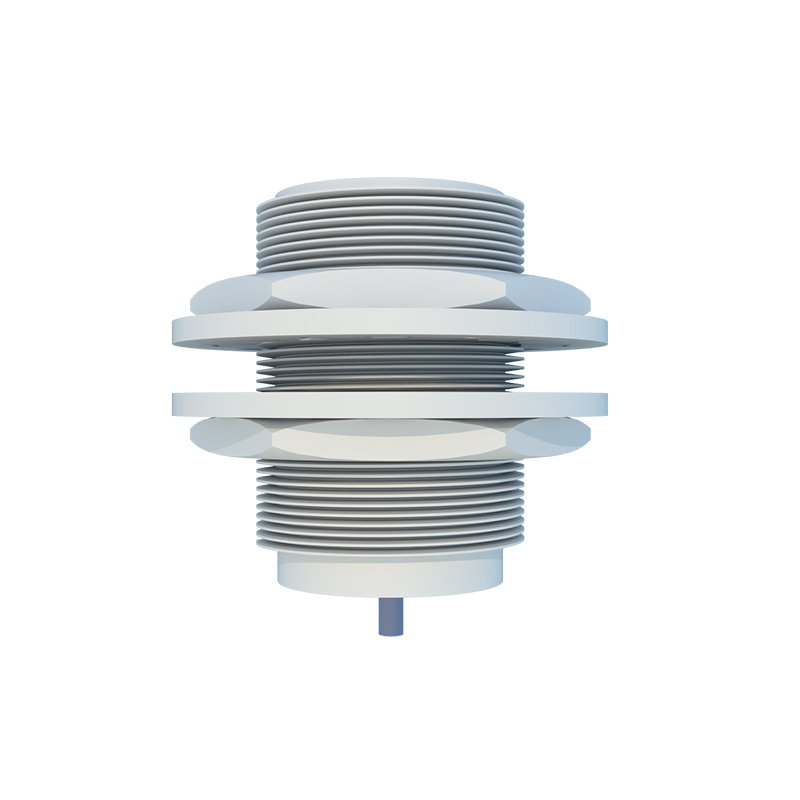
Integrating CDC sensors into a control system requires careful consideration of several factors. The dielectric constant of the target material directly influences the effective sensing range; materials with a higher constant (like water) are detected more easily than those with a lower one (like certain plastics). Installation is critical—the sensor must be mounted securely, and the influence of the surrounding mounting material (the "flush mountable" design mitigates this) and any stray capacitance must be minimized. Shielding techniques are employed to create a focused field, preventing false triggers from adjacent machinery or objects. Standard output options include NPN/PNP discrete signals, analog current (4-20 mA), or voltage (0-10V), and increasingly, IO-Link digital communication for advanced diagnostics, parameterization, and process data integration into Industry 4.0 frameworks.
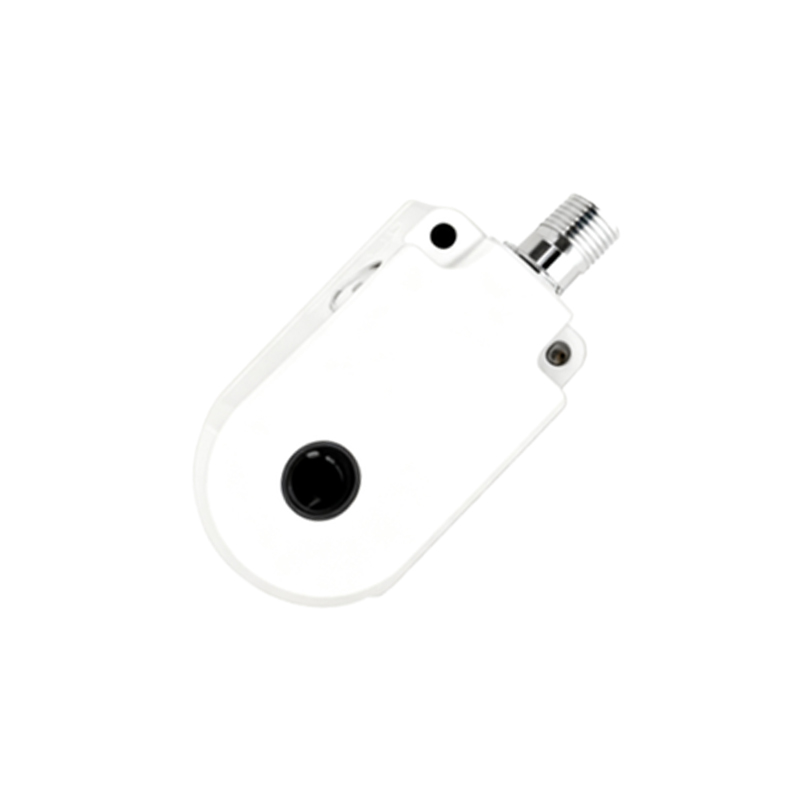
Looking ahead, the evolution of CDC sensor technology is tightly coupled with trends in smart manufacturing. The integration of microprocessors and advanced diagnostics enables predictive maintenance, alerting operators to conditions like sensor fouling or gradual drift before they cause downtime. Miniaturization continues, allowing for installation in increasingly compact machinery. Furthermore, the development of sensors with enhanced immunity to electromagnetic interference (EMI) and extreme temperatures expands their applicability in challenging sectors like automotive, food and beverage, and renewable energy. In conclusion, with their unique material-agnostic sensing capability, precision, and adaptability, CDC sensors will remain a vital and evolving tool for engineers seeking reliable, non-contact solutions for countless automation and quality control challenges.