In the rapidly evolving landscape of industrial automation and precision measurement, selecting the right laser sensor is a critical decision that directly impacts operational efficiency, accuracy, and cost-effectiveness. With a myriad of options available, from triangulation and time-of-flight sensors to confocal and laser line sensors, determining "which laser sensor is good" is not a one-size-fits-all answer. It hinges on a thorough understanding of your specific application requirements, environmental conditions, and performance expectations.
First and foremost, define the core parameters of your task. What are you measuring—displacement, thickness, profile, or presence detection? For high-precision, non-contact displacement or thickness measurements at short to medium ranges (typically up to a few meters), laser triangulation sensors are often the superior choice. They offer sub-micron resolution and are excellent for applications like wafer inspection, electronic component profiling, or controlling roll gaps in manufacturing. However, their accuracy can be influenced by the target's surface color, texture, and reflectivity. For uniformly colored, matte surfaces, they perform optimally.
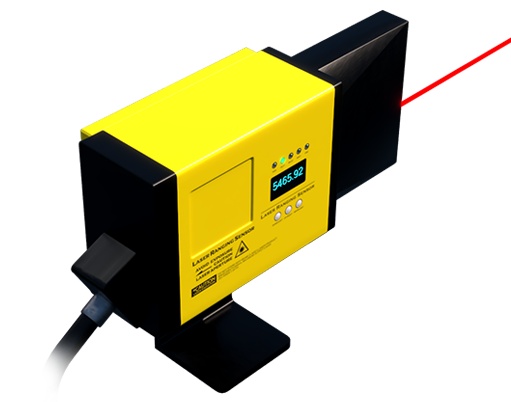
For applications requiring long-range distance measurement, such as level monitoring in large silos, vehicle detection, or crane positioning, time-of-flight (ToF) or phase-shift laser sensors are more suitable. These sensors measure the time it takes for a laser pulse to reflect back, enabling reliable operation over distances of tens to hundreds of meters. While their absolute accuracy might be lower than triangulation sensors (often in the millimeter range), they provide robust performance in varied industrial environments and are less sensitive to surface properties.
When dealing with highly reflective, mirror-like, or transparent surfaces—common challenges in glass, semiconductor, or metal finishing industries—confocal chromatic sensors excel. They use white light split into a spectrum, and their measurement principle makes them virtually immune to material and angle dependencies, providing nanometer-level accuracy. Conversely, for 2D or 3D contouring and inspection, such as verifying weld seams, inspecting tire treads, or reverse engineering, a laser line profiler or scanner is indispensable. It projects a laser line onto an object and uses a camera to capture the deformation of that line, constructing a detailed height map.
Environmental factors are non-negotiable in the selection process. Consider the presence of dust, steam, vibration, or ambient light. Sensors with high IP ratings (e.g., IP67, IP69K) are essential for washdown or outdoor use. For environments with significant interference from ambient light, sensors with modulated laser light and narrow-band optical filters provide superior stability. Additionally, the required measurement speed (often in kHz) must align with production line speeds. A high-speed triangulation sensor might be necessary for inspecting fast-moving bottles on a conveyor, while a slower, high-accuracy confocal sensor might be perfect for laboratory-grade quality control.

Integration and connectivity are equally important. Modern laser sensors offer various outputs (analog, digital, IO-Link, Ethernet) and software suites for easy setup and data analysis. Compatibility with existing PLCs or control systems can streamline implementation. Finally, consider total cost of ownership, which includes not just the initial purchase price but also calibration, maintenance, and potential downtime costs. A sensor from a reputable manufacturer with strong technical support and a proven track record in your industry often proves more valuable in the long run.
In conclusion, the "best" laser sensor is the one that delivers the required precision, speed, and reliability for your unique application within its operational environment. There is no universal winner. By systematically evaluating measurement tasks, target properties, environmental challenges, and integration needs, engineers can make an informed choice that optimizes their system's performance and drives productivity forward. Always consult detailed datasheets and engage with application engineers from sensor suppliers to validate your selection through testing with actual samples.
