In the world of industrial automation, the ability to detect the presence or absence of an object without physical contact is fundamental. Among the various technologies that enable this, the inductive proximity sensor stands out for its reliability, durability, and versatility in harsh environments. This non-contact electronic device is a cornerstone of modern manufacturing, packaging, and material handling systems.
At its core, an inductive proximity sensor operates on the principle of electromagnetic induction. The key component is a coil wound around a ferrite core, which is part of an oscillator circuit. When an alternating current is passed through this coil, it generates a high-frequency oscillating electromagnetic field at the active face of the sensor. In the absence of a target, this oscillation maintains a constant amplitude.
The detection mechanism is triggered when a conductive metal object enters this electromagnetic field. The field induces small circulating currents, known as eddy currents, on the surface of the target object. These eddy currents draw energy from the sensor's oscillator circuit, causing a reduction in the amplitude of the oscillations. The sensor's internal circuitry continuously monitors this amplitude. When the amplitude drop exceeds a predefined threshold—corresponding to the object being within the specified sensing range—the sensor's output state switches. This output is typically a solid-state switch (like an NPN or PNP transistor) that can control a relay, PLC input, or other load.
A critical specification is the sensing distance, or nominal range, which is defined for a standard target of mild steel. This range is typically short, from 1 to 60 millimeters, depending on the sensor's size and design. It's important to note that the effective sensing distance can vary with different metals. Factors such as the target's material, size, shape, and even temperature can influence performance. For instance, sensors detect ferrous metals like steel and iron at the nominal range, while non-ferrous metals like aluminum, copper, or brass are detected at a reduced range, often 30-60% of the nominal value. This is due to differences in electrical conductivity and magnetic permeability.
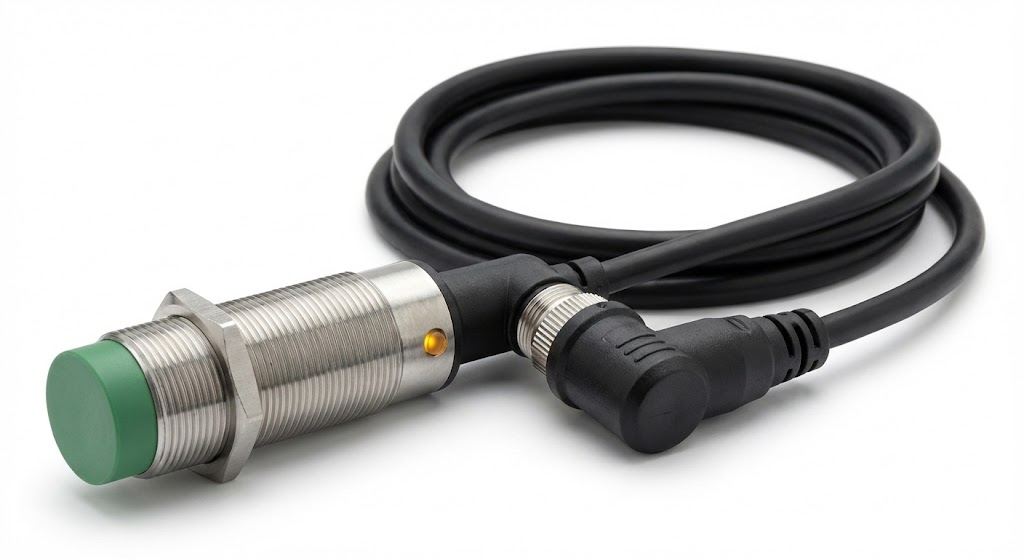
The design of these sensors prioritizes robustness. They are usually housed in metal (often stainless steel) or high-grade plastic bodies, making them resistant to physical impact, dust, washdowns, and common industrial chemicals. Many carry high Ingress Protection (IP) ratings like IP67 or IP69K, allowing them to function in demanding conditions where capacitive or optical sensors might fail.
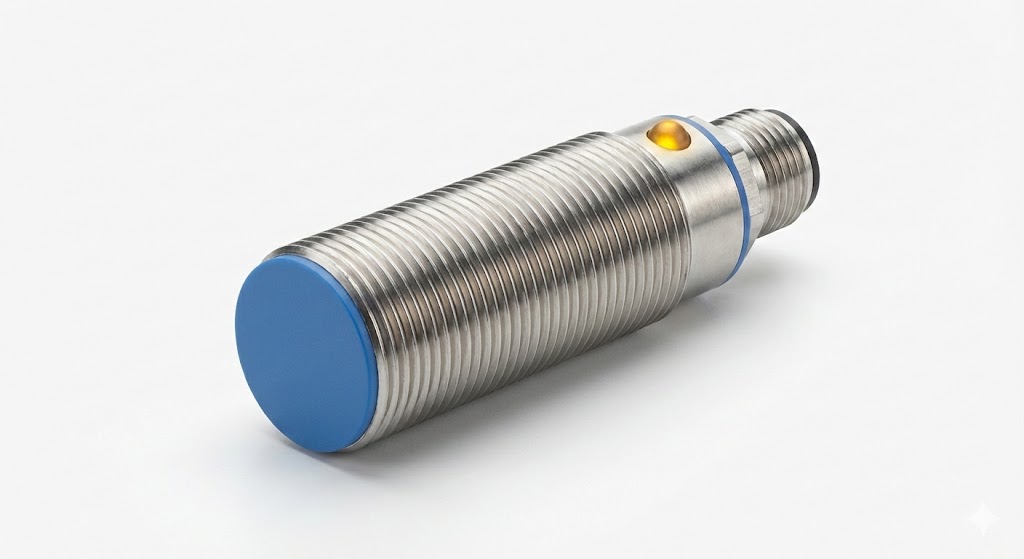
Inductive sensors offer several distinct advantages. Their non-contact nature eliminates mechanical wear and tear, leading to a long operational life. They provide high switching speeds, capable of detecting thousands of objects per minute. They are immune to ambient light, dust, oil, and non-metallic contaminants, making them exceptionally stable. Furthermore, they are simple to install and require minimal maintenance.
The applications are vast and integral to automated processes. They are ubiquitously used for position sensing, such as verifying if a cylinder is extended or retracted, or if a machine part is in the correct home position. They serve as vital components in counting systems on conveyor belts, detecting metal parts or containers. In assembly lines, they ensure components are present before a robotic operation begins. They are also used for end-of-travel detection, monitoring rotational speed by detecting gear teeth or bolts, and in safety interlock systems to confirm guards are closed.
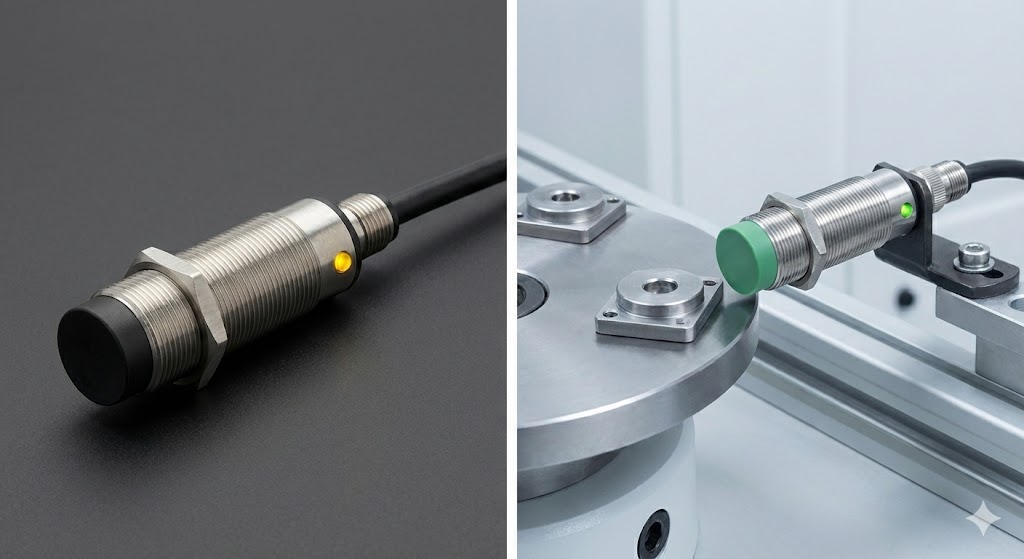
When selecting an inductive proximity sensor, engineers must consider several parameters: the required sensing distance, the target material, the output type (NPN sinking or PNP sourcing) compatible with the control system, the supply voltage, housing style (barrel, rectangular, or ring-shaped), and the required environmental protection rating. Proper installation is also crucial; sensors should be mounted to avoid interference from surrounding metal, a condition known as flanking or shielding, which can reduce the effective sensing range.
In summary, the inductive proximity sensor is a workhorse of industrial sensing. Its elegant working principle, based on electromagnetic fields and eddy currents, translates into a device that is both simple and extraordinarily effective for metallic object detection. By providing a reliable, solid-state switching signal without physical contact, it enhances machine efficiency, ensures process reliability, and reduces maintenance costs, solidifying its indispensable role in the landscape of factory automation.