Capacitive proximity sensors are versatile non-contact detection devices that have become integral to modern automation and interface design. Unlike their inductive counterparts that detect only metals, capacitive sensors can detect a wide range of materials, including liquids, plastics, glass, wood, and granular substances, by measuring changes in capacitance. The core principle revolves around the sensor acting as one plate of a capacitor, with the target object acting as the other plate or altering an existing electrostatic field. When an object enters the sensing field, it changes the dielectric constant and thus the capacitance of the system. The sensor's internal oscillator circuit detects this change, triggering a solid-state output switch.
The basic construction involves an active electrode housed in a probe, which generates an electrostatic field. This field is typically focused at the sensor's face but can also be shaped for side-sensing applications. A key feature is the adjustable sensitivity, often via a potentiometer, which allows engineers to tune the sensing range and ignore interfering backgrounds like container walls. This makes them ideal for level detection of liquids or powders through non-metallic tanks. Their ability to sense through certain barriers enables innovative and hygienic designs, such as touch-sensitive controls behind glass or plastic panels in appliances and industrial HMIs.
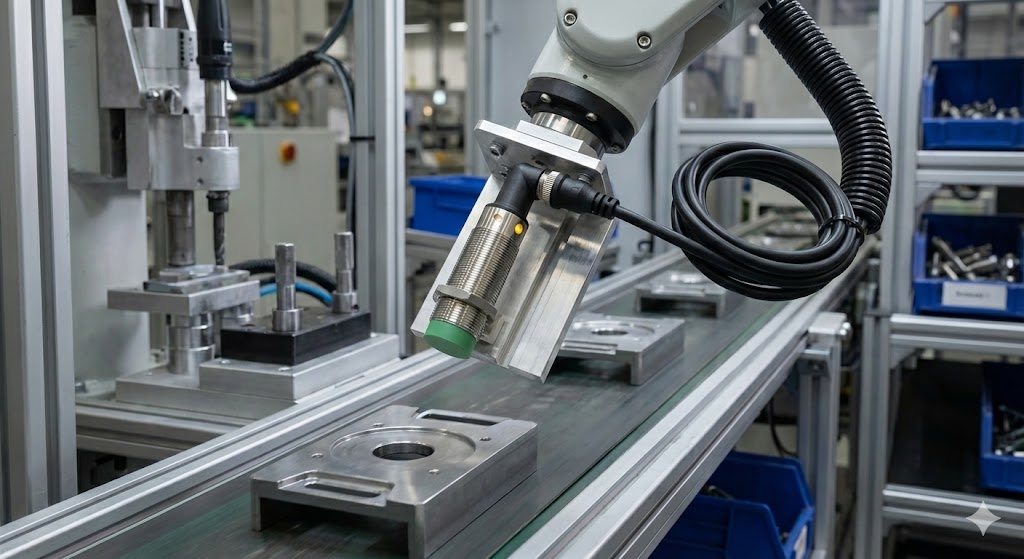
Industrial applications are vast and critical. They are extensively used for liquid level control in tanks, monitoring fill levels of bottles or packages on production lines, and detecting the presence of non-metallic objects like plastic caps or wood blocks. In the packaging industry, they ensure proper carton flap closure. Their robustness in dirty environments—provided the sensing face is kept clean from conductive buildup—makes them suitable for harsh conditions where optical sensors might fail due to dust or fog.
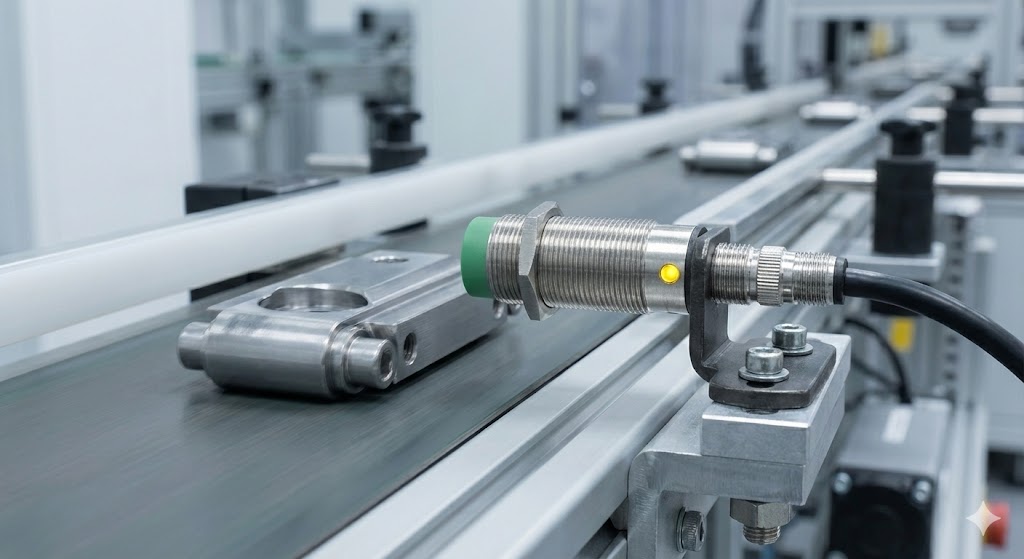
Beyond industry, capacitive sensing is the foundational technology behind the multi-touch screens of smartphones and tablets. It enables gesture recognition and proximity detection, such as turning off a phone's screen when held to the ear. In consumer electronics, it creates sleek, sealable interfaces for appliances. Automotive applications include touch-sensitive interior controls and occupancy detection for airbag systems.
Selecting the right capacitive sensor requires careful consideration of several factors. First, the target material and its dielectric constant; materials with higher constants (like water) are easier to detect than those with lower constants (like some plastics). The required sensing distance is typically shorter than for inductive sensors and must be derated for different materials. Environmental conditions are crucial: temperature extremes, humidity, and the presence of contaminants like foam or dust can affect performance. The output type (PNP/NPN, NO/NC) must match the control system's PLC or input card. Finally, the housing material (typically PTFE, PVC, or stainless steel) must be chosen for chemical resistance and mechanical durability.
Installation and shielding are paramount for reliable operation. Capacitive sensors are susceptible to false triggers from stray capacitance, such as a hand or a metal bracket near the active face. Proper mounting, often in a non-metallic holder with adequate clearance from surrounding metal, is essential. Many models feature shielding that confines the field radially, making them less sensitive to adjacent installation but limiting their range to a frontal lobe. Unshielded types offer longer ranges but require more careful mounting isolation.
In summary, capacitive proximity sensors offer a unique solution for detecting diverse materials without physical contact. Their flexibility drives innovation in both heavy industry and consumer technology. Successful implementation hinges on understanding the detection principle, meticulously selecting the sensor for the specific target and environment, and following rigorous installation guidelines to ensure stable, long-term operation.