In the realm of industrial automation and control systems, proximity sensors stand as fundamental components, enabling machines to "sense" the presence or absence of objects without physical contact. These non-contact detection devices are pivotal for enhancing efficiency, safety, and reliability in countless applications. This article delves into the core principles, primary types, key applications, and essential selection criteria for proximity sensors.
At its heart, a proximity sensor detects the presence of a nearby object, typically referred to as the target. It does so by emitting an electromagnetic field, beam of electromagnetic radiation (like infrared light), or ultrasonic sound waves, and then looking for changes in the field or return signal. The key advantage is the absence of mechanical contact, which eliminates wear and tear, reduces maintenance, and allows for high-speed operation.
The most common types of proximity sensors can be categorized by their underlying technology:
1. Inductive Proximity Sensors: These sensors generate an oscillating electromagnetic field. When a metallic target (ferrous or non-ferrous) enters this field, it induces eddy currents within the target, causing a change in the oscillation amplitude. This change is detected by the sensor's circuitry, triggering an output signal. Inductive sensors are robust, reliable, and exclusively detect metals. They are widely used in machine tools, automotive assembly, and material handling for tasks like counting metal parts, detecting piston position, or limit switching.
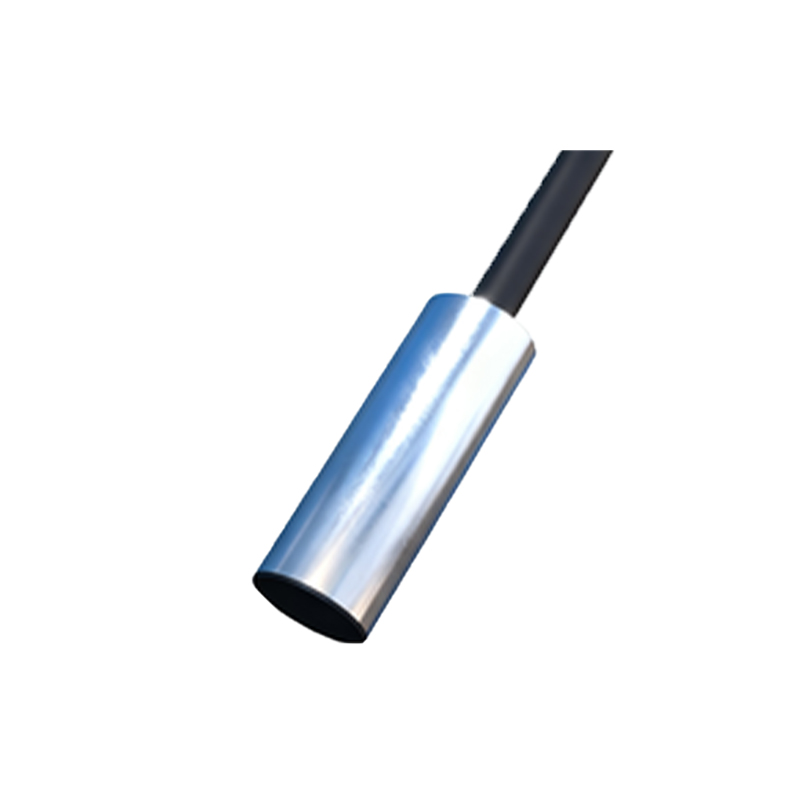
2. Capacitive Proximity Sensors: These sensors can detect both metallic and non-metallic targets—liquids, plastics, wood, glass, etc. They function by generating an electrostatic field. Any object that enters this field alters the capacitance of the sensor's circuit. This change is measured to detect the object. Capacitive sensors are ideal for level detection of liquids or granular materials, presence detection of non-metallic objects on conveyor belts, and touch-sensitive control panels.
3. Photoelectric Sensors: Operating on the principle of light transmission, these sensors use a light emitter (usually LED) and a receiver. They are further divided into three main modes: Through-beam (separate emitter and receiver), Retro-reflective (emitter and receiver in one housing, using a reflector), and Diffuse (emitter and receiver in one housing, detecting light reflected directly from the target). Photoelectric sensors offer long sensing ranges and can detect objects of almost any material. They are prevalent in packaging, pharmaceutical, and food & beverage industries for object counting, web break detection, and color registration.
4. Ultrasonic Sensors: These sensors measure distance by emitting high-frequency sound waves and calculating the time taken for the echo to return. They are excellent for detecting objects of any material, shape, or color, and are largely unaffected by environmental factors like dust, smoke, or light. Common applications include liquid level control, distance measurement, pallet detection, and loop control in winding machines.
5. Magnetic Proximity Sensors (Reed Switches/Hall Effect): These detect the presence of a permanent magnet. Reed switches use hermetically sealed ferromagnetic reeds that close in the presence of a magnetic field. Hall Effect sensors produce a voltage output proportional to the magnetic field strength. They are frequently used for detecting cylinder piston position, door/window position sensing, and in low-speed rotational sensing.
Selecting the appropriate proximity sensor for an application requires careful consideration of several parameters:
Target Material: Is it metal, plastic, liquid, or transparent? This dictates the choice between inductive, capacitive, or photoelectric types.
Sensing Distance: The required operating or switching distance. Always consider a safety margin.
Output Type: Digital (PNP/NPN) or analog (4-20mA, 0-10V). The output must be compatible with the controller (PLC, relay).
Environmental Conditions: Factors like temperature extremes, humidity, washdown requirements (IP rating), and the presence of chemicals, dust, or vibrations.
Response Frequency/Speed: How quickly the sensor can detect objects passing by, critical for high-speed production lines.
Mounting and Size: Physical constraints of the installation space.
In conclusion, proximity sensors are indispensable eyes of modern automation. Their ability to provide reliable, non-contact detection drives precision, safety, and productivity across manufacturing, packaging, automotive, and material handling sectors. A thorough understanding of their operating principles and a methodical approach to selection—considering the target, environment, and performance needs—ensures optimal integration and long-term system performance. As Industry 4.0 and smart factories evolve, the role of these sensors, especially with integrated IO-Link communication for diagnostics and parameterization, will only become more central to interconnected and intelligent manufacturing ecosystems.