In industrial automation and material handling systems, conveyor cylinders are critical components that facilitate linear motion, often in hydraulic or pneumatic applications such as concrete pumps, manufacturing lines, and packaging machinery. To ensure precise control, safety, and efficiency in these systems, proximity switch sensors play an indispensable role. These sensors detect the presence or position of the cylinder piston or rod without physical contact, providing reliable feedback for control units. This article delves into the technical aspects, selection criteria, and best practices for implementing proximity switch sensors in conveyor cylinder applications.
Proximity switches, commonly referred to as proximity sensors, are non-contact devices that detect metallic objects within their sensing range. They operate based on electromagnetic principles, typically using inductive, capacitive, or magnetic technologies. For conveyor cylinders, inductive proximity sensors are most prevalent due to their ability to detect ferrous metals like steel or iron, which are common in cylinder construction. These sensors generate an oscillating electromagnetic field; when a metal target (e.g., the cylinder piston) enters this field, it induces eddy currents, causing a change in oscillation amplitude. This change triggers the sensor's output signal, which can be analog or digital, signaling the control system to initiate or halt an action, such as stopping the cylinder stroke or changing direction.
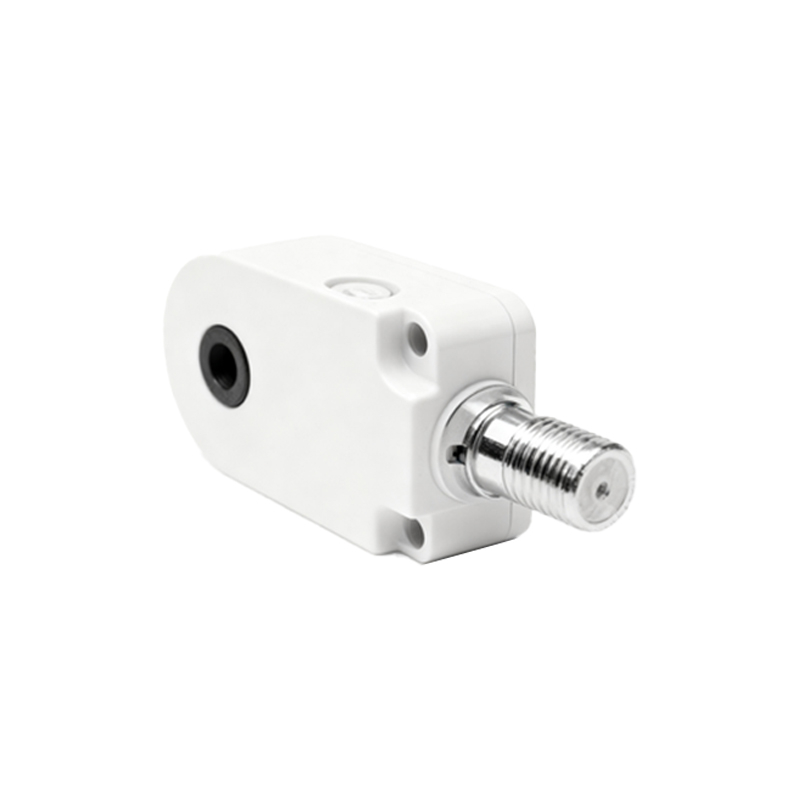
Key advantages of using proximity switches in conveyor cylinders include high reliability, long service life, and resistance to environmental factors like dust, moisture, and vibration. Unlike mechanical limit switches, which suffer from wear and tear due to physical contact, proximity sensors offer maintenance-free operation, reducing downtime and operational costs. Additionally, they provide fast response times—often in milliseconds—ensuring real-time monitoring and control, which is crucial in high-speed applications like automated assembly lines or concrete pumping where timing is critical.
When selecting a proximity sensor for a conveyor cylinder, several technical parameters must be considered. First, the sensing distance, or range, should match the application requirements; for cylinders, this typically ranges from a few millimeters to several centimeters, depending on the cylinder size and mounting constraints. It's essential to account for factors like temperature fluctuations, as extreme conditions can affect sensor performance. For instance, in outdoor concrete pumps, sensors must withstand temperature variations from -25°C to 70°C. Second, the output type—whether NPN (sinking) or PNP (sourcing)—should be compatible with the control system's input module. Many modern sensors also offer programmable outputs or IO-Link connectivity for enhanced diagnostics and integration. Third, the housing material and protection rating (e.g., IP67 or IP69K) are vital for durability in harsh environments, such as those with exposure to water, chemicals, or abrasive materials.
Installation and alignment are critical for optimal sensor performance. Proximity sensors should be mounted securely on the cylinder or adjacent structure, ensuring the target area is within the specified sensing range without interference from other metal objects. Misalignment can lead to false triggers or missed detections, compromising system safety. For example, in a hydraulic conveyor cylinder used in mining equipment, sensors are often integrated into the cylinder barrel with precise brackets to maintain alignment during operation. Regular testing and calibration, using tools like multimeters or oscilloscopes, help verify signal integrity and prevent failures.
In practice, proximity switch sensors enable various functions in conveyor cylinder systems. They can serve as end-of-stroke detectors, preventing overtravel that could damage the cylinder or machinery. In more advanced setups, multiple sensors provide positional feedback for mid-stroke control, allowing for variable speed or pressure adjustments. For instance, in a packaging line, sensors might trigger different stages of a cylinder's motion to coordinate with other actuators, optimizing throughput. Troubleshooting common issues, such as sensor drift or electrical noise, involves checking wiring connections, shielding cables, and ensuring proper grounding to minimize electromagnetic interference.
Looking ahead, trends in proximity sensor technology are enhancing their application in conveyor cylinders. Smart sensors with embedded diagnostics can predict maintenance needs by monitoring parameters like temperature or signal strength, aligning with Industry 4.0 initiatives for predictive maintenance. Additionally, miniaturization allows for compact designs suitable for space-constrained installations, while improved materials increase resistance to corrosion and impact. As industries push for higher automation and energy efficiency, the role of proximity switches in conveyor cylinders will continue to evolve, driving innovations in sensor accuracy and connectivity.
In summary, proximity switch sensors are vital components for the reliable operation of conveyor cylinders in diverse industrial settings. By understanding their working principles, selection criteria, and implementation best practices, engineers can design robust systems that maximize productivity and safety. Whether in construction, manufacturing, or logistics, these sensors provide the precision needed to keep automated processes running smoothly, underscoring their importance in modern engineering.