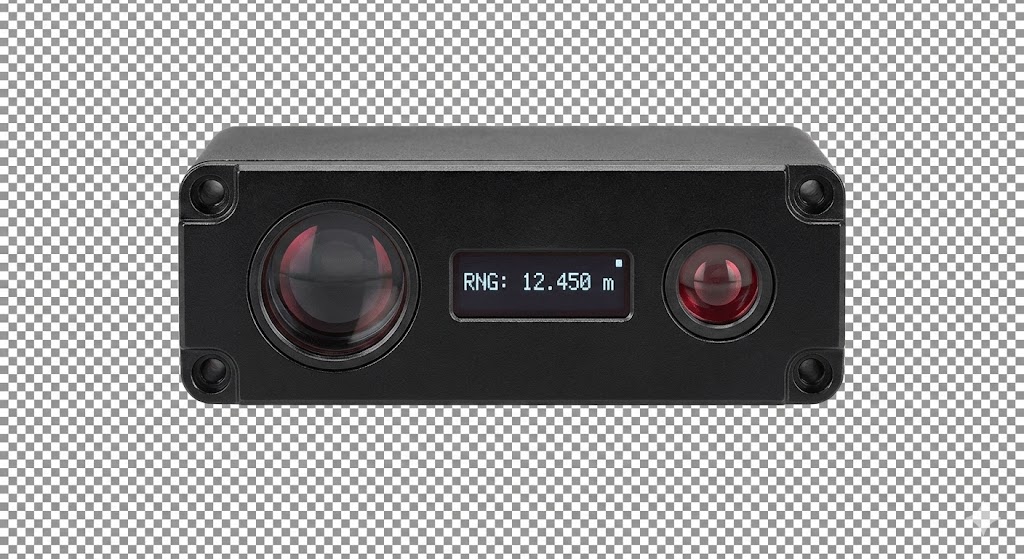
In the realm of industrial automation and precision measurement, Japan's laser distance sensors stand as a testament to the nation's engineering excellence. These devices, leveraging advanced optical technologies, have become indispensable across sectors such as manufacturing, robotics, construction, and logistics. Japanese manufacturers like KEYENCE, Panasonic, and OMRON lead the market with sensors that offer unparalleled accuracy, often achieving sub-millimeter resolution even at extended ranges. The core technology hinges on time-of-flight (ToF) or phase-shift principles, where a laser diode emits pulsed or modulated light toward a target. The sensor then calculates distance based on the time or phase difference of the reflected beam, ensuring rapid, non-contact measurements.
One key advantage of Japanese laser distance sensors is their robustness in challenging environments. Engineered to withstand vibrations, temperature fluctuations, and dust, they maintain reliability in factories or outdoor settings. For instance, in automotive assembly lines, these sensors precisely gauge component gaps or inspect weld quality, enhancing production efficiency. Similarly, in robotics, they enable accurate positioning and obstacle detection, crucial for autonomous guided vehicles (AGVs) and collaborative robots. The integration of smart features, such as Ethernet/IP or IO-Link connectivity, allows seamless data transmission to control systems, supporting Industry 4.0 initiatives.
Moreover, Japan's focus on miniaturization has yielded compact sensors that fit into space-constrained applications without compromising performance. Innovations like background suppression algorithms filter out interfering signals, ensuring stable readings even with reflective or dark surfaces. In construction, laser distance sensors facilitate land surveying and structural monitoring, while in logistics, they optimize warehouse inventory management by measuring package dimensions. The emphasis on energy efficiency also aligns with global sustainability trends, with low-power designs extending operational lifespans.
Looking ahead, Japanese firms are pioneering advancements in multi-function sensors that combine distance measurement with 2D/3D imaging or color detection. As artificial intelligence and IoT ecosystems expand, these sensors will evolve into smarter nodes, providing real-time analytics for predictive maintenance and quality control. For global industries seeking precision, durability, and innovation, Japan's laser distance sensors remain a benchmark, driving progress through meticulous engineering and adaptive design. Their continued evolution promises to redefine measurement standards, empowering smarter, more efficient operations worldwide.