Proximity sensors are indispensable components in modern industrial automation, providing non-contact detection of objects within their sensing range. Programming these sensors effectively is crucial for optimizing machine performance, ensuring safety, and enhancing process reliability. This article presents practical programming examples for various types of proximity sensors, including inductive, capacitive, and ultrasonic models, within common industrial control environments.
A fundamental example involves integrating an inductive proximity sensor with a Programmable Logic Controller (PLC) for basic object detection on a conveyor line. The sensor, typically configured for Normally Open (NO) or Normally Closed (NC) operation via hardware wiring or software settings, is connected to a discrete input module. A simple ladder logic rung might use an examine-if-closed (XIC) instruction tied to the sensor's input address. When the sensor detects a metallic object, the input energizes, allowing the XIC instruction to pass logic continuity. This can trigger a downstream action, such as activating a solenoid to divert the object, incrementing a counter in a data register, or starting a timer for process sequencing. Debouncing logic, using timers to filter out signal chatter, is often added for signal stability.
For more complex applications, analog proximity sensors provide continuous distance measurement rather than a simple on/off signal. Programming these with a PLC or a dedicated controller involves scaling the analog input signal (e.g., 4-20 mA or 0-10 V) to a meaningful engineering unit, such as millimeters. This scaled value can then be used in comparison instructions. For instance, in a packaging machine, an ultrasonic analog sensor can measure the fill level of a container. The program can compare the real-time distance value against preset high and low thresholds. If the level is below the low setpoint, the "fill valve" output is energized. Once the level reaches the high setpoint, the valve is closed. Proportional-Integral-Derivative (PID) control loops can also be programmed using this analog feedback for precise positioning applications, such as controlling the gap between rollers.
Capacitive proximity sensors, capable of detecting non-metallic materials, are often used in level control. A common programming pattern involves using the sensor's discrete output to manage a pump or valve. In a tank level control system, a low-level sensor activates a pump to fill the tank, while a high-level sensor deactivates it. Implementing hysteresis in the program prevents rapid cycling. This can be done by having the pump start only when the low-level sensor is activated and the high-level sensor is deactivated, and stopping only when the high-level sensor is activated. This logic ensures stable operation even with material sloshing or sensor sensitivity fluctuations.
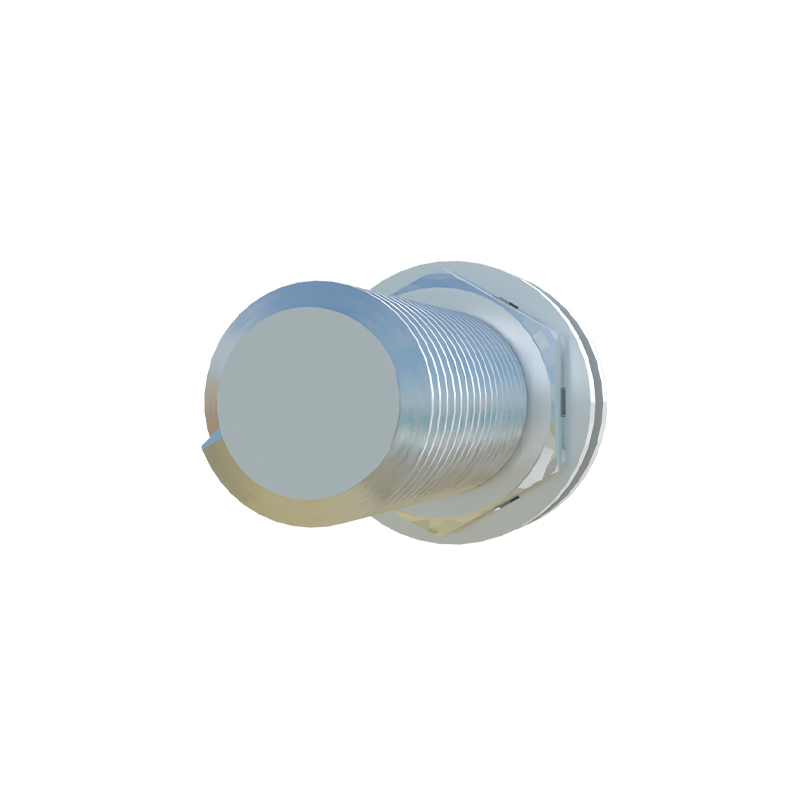
Networked sensors using protocols like IO-Link offer advanced programmability. Through the controller's software, parameters such as sensing range, output delay, and switching hysteresis can be configured remotely. An example is programming an IO-Link inductive sensor for teach-in functionality. A specific command sent from the PLC instructs the sensor to learn the position of a reference object. The sensor then automatically sets its optimal switching point. Furthermore, diagnostic data like operating temperature, signal strength, and load current can be read into the controller's data blocks. The program can monitor these values and generate a predictive maintenance alert if a parameter drifts beyond acceptable limits, preventing unplanned downtime.
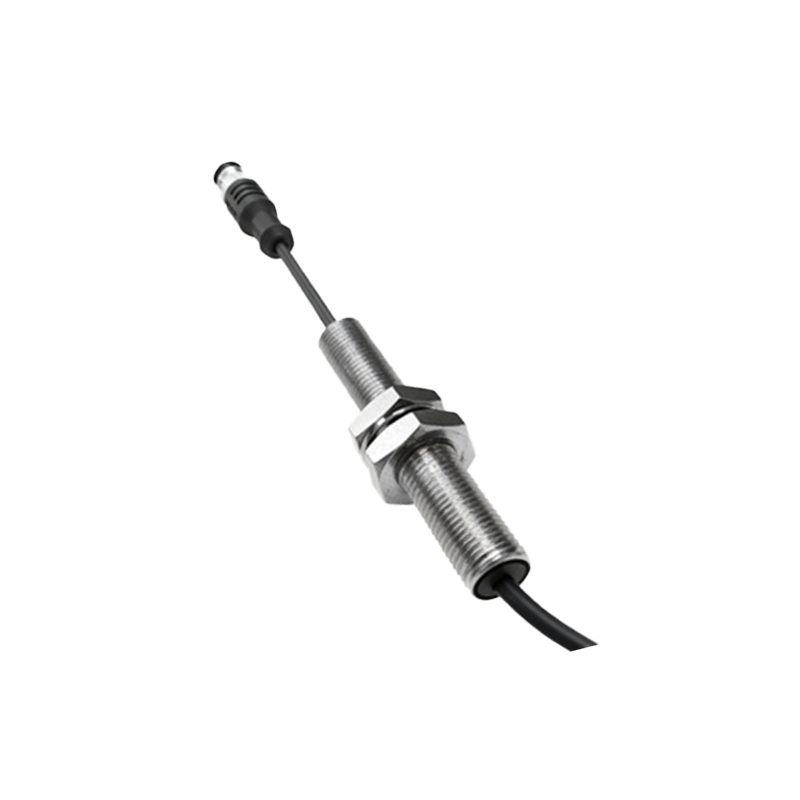
In robotic applications, interfacing a proximity sensor with a robot controller is key. For example, a cylindrical inductive sensor might be used as a "part present" verification at a gripper station. The robot's program would include a wait instruction conditioned on the sensor's digital signal. The robot arm will pause its cycle until the sensor confirms the part is correctly positioned before closing the gripper. Muting sequences for safety gates also rely on programmed logic with multiple sensors. A typical four-sensor muting curtain setup requires a specific sequence of sensor actuation (e.g., Sensor A then B, but not C then D) to be programmed to temporarily disable a safety gate interlock, allowing material to pass through without stopping production.
Finally, implementing error handling and diagnostics is a critical part of professional programming. This involves programming the controller to monitor for sensor wire breaks (e.g., by checking for a sustained "off" state when a "on" is expected during a cycle) or short circuits. When a fault is detected, the program should safely halt the machine, activate a visual or audible alarm on the Human-Machine Interface (HMI), and log a specific error code to aid technicians in rapid troubleshooting. Robust programming transforms a simple sensor into an intelligent node within a reliable and maintainable automation system.