In the realm of modern building automation, environmental control, and security systems, room laser sensors have emerged as a cornerstone technology. These devices, leveraging the principles of laser triangulation or time-of-flight (ToF) measurement, provide unparalleled accuracy in detecting presence, occupancy, counting, and even measuring distance or level within a defined space. Unlike traditional passive infrared (PIR) sensors or ultrasonic variants, laser sensors operate by emitting a focused beam of light—typically in the visible red or infrared spectrum—and analyzing the reflected signal. This fundamental approach grants them significant advantages in scenarios demanding high precision, immunity to ambient environmental factors like temperature or air currents, and the ability to function reliably in complex or cluttered environments.
The operational core of a typical room laser sensor is its optoelectronic system. A laser diode emits a coherent light pulse or modulated beam towards a target area. A photodetector, such as a position-sensitive device (PSD) or a CMOS/CCD array, then captures the reflected light. In triangulation-based sensors, the displacement of the reflected spot on the detector is geometrically calculated to determine distance. For ToF sensors, the precise time delay between emission and reception is measured, directly correlating to distance. This data is processed by an onboard microcontroller, which executes predefined logic—such as triggering an output when an object enters a zone, counting crossings, or providing a continuous analog distance signal. Advanced models incorporate background suppression algorithms, effectively ignoring static objects like furniture and focusing only on dynamic changes, which is critical for accurate occupancy sensing.
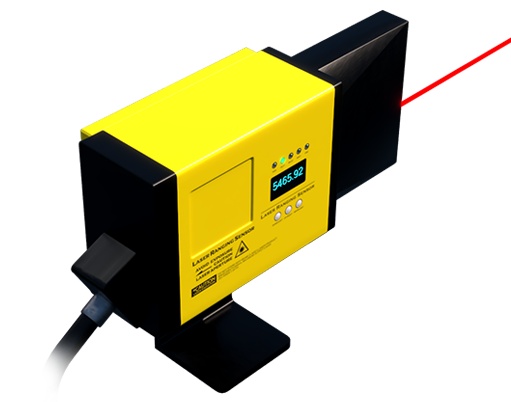
The applications for room laser sensors are vast and continually expanding. In commercial building management, they are integral to lighting and HVAC (Heating, Ventilation, and Air Conditioning) control systems, ensuring energy is consumed only when spaces are occupied. This leads to substantial reductions in operational costs and carbon footprint. In industrial settings, they facilitate precise object detection on assembly lines, robotic guidance, and inventory monitoring within warehouses. The security sector utilizes them for intrusion detection, creating invisible laser curtains or grids with extremely high resolution to detect even the slightest unauthorized entry. Furthermore, in smart homes, these sensors enable sophisticated automation, such as activating appliances upon room entry or providing fall detection for elderly care by monitoring unusual motion patterns.

Selecting the appropriate room laser sensor requires a careful analysis of several technical parameters. First, the measurement range must suit the room dimensions, with sensors available from a few centimeters up to several tens of meters. Accuracy and resolution are paramount; for instance, a people-counting application at a doorway may require millimeter-level precision to distinguish between individuals passing closely together. The response time dictates how quickly the system reacts to a change, crucial for high-speed automation tasks. Environmental ratings like IP (Ingress Protection) class are essential for durability against dust and moisture, especially in industrial or outdoor-adjacent installations. Output interfaces vary, including digital (PNP/NPN, relay), analog (0-10V, 4-20mA), and modern industrial communication protocols like IO-Link or Ethernet/IP, which facilitate integration into larger networked systems. Lastly, the laser safety class (typically Class 1 or 2) must be considered to ensure eye-safe operation in occupied spaces.
Installation and commissioning are critical phases for optimal performance. Proper alignment is essential; the sensor must be mounted securely to avoid vibration-induced errors. The field of view and beam pattern (spot, line, or grid) should be configured to cover the target zone without unwanted interference from windows, reflective surfaces, or moving machinery that could cause false triggers. Many modern sensors feature teach-in functions via push-button or software, allowing easy setting of switching thresholds or detection windows. Regular maintenance, primarily lens cleaning to prevent dust accumulation from attenuating the laser signal, ensures long-term reliability.
Looking ahead, the evolution of room laser sensors is intertwined with trends in the Industrial Internet of Things (IIoT) and miniaturization. Future sensors will likely possess enhanced embedded intelligence, capable of edge computing for basic pattern recognition (e.g., distinguishing between a person and a pet). Integration with wireless connectivity (e.g., Wi-Fi, Bluetooth Low Energy) will simplify deployment in retrofit projects. Furthermore, the development of low-power, solid-state laser components will drive their adoption in battery-operated devices, opening new avenues in mobile and temporary sensing applications. As a foundational sensing technology, room laser sensors will continue to be pivotal in creating more responsive, efficient, and intelligent automated environments, bridging the physical and digital worlds with a beam of light.
