In the rapidly evolving landscape of electrical engineering and automation, LiDAR (Light Detection and Ranging) technology has emerged as a cornerstone for precision measurement, spatial mapping, and autonomous navigation. Among the key players driving this innovation forward is Jingyeda, a company that has carved a significant niche with its advanced LiDAR sensor solutions. These sensors represent a sophisticated fusion of optics, electronics, and software, engineered to meet the rigorous demands of modern industrial and commercial applications.
At its core, a Jingyeda LiDAR sensor operates by emitting pulsed laser light and measuring the time it takes for each pulse to reflect off a target and return to the sensor. This Time-of-Flight (ToF) principle, executed with high-speed electronic circuitry and precise optical components, generates accurate distance measurements. Jingyeda's engineering prowess lies in refining this process to achieve exceptional resolution, range, and scanning frequency. Their sensors are designed to perform reliably in diverse environmental conditions, a critical factor for outdoor applications like autonomous vehicles, drones, and large-scale topographic surveys. The housing and internal architecture are often built to specific IP ratings, ensuring resistance to dust, moisture, and vibration—a testament to their industrial-grade durability.
The applications for Jingyeda LiDAR sensors are vast and transformative. In the realm of intelligent transportation systems, these sensors are integral to the perception systems of autonomous and semi-autonomous vehicles. They provide real-time, high-definition 3D point cloud data of the vehicle's surroundings, enabling accurate object detection, classification, and tracking. This data is crucial for path planning and collision avoidance algorithms. Beyond automotive, the construction and mining industries utilize Jingyeda's long-range LiDAR for site surveying, volume calculation, and monitoring structural deformations with millimeter-level accuracy, significantly enhancing safety and operational efficiency.
Furthermore, robotics and smart manufacturing represent another major frontier. Automated Guided Vehicles (AGVs) and Autonomous Mobile Robots (AMRs) equipped with Jingyeda LiDAR can navigate complex factory floors dynamically, avoiding obstacles and optimizing logistics workflows. In smart warehouses, these sensors enable precise inventory management and spatial analysis. The integration of LiDAR data with IoT platforms and AI-driven analytics software creates a powerful feedback loop for process optimization and predictive maintenance, forming the backbone of Industry 4.0 initiatives.

Jingyeda distinguishes itself through continuous R&D focused on key performance parameters. This includes enhancing angular resolution for finer detail capture, increasing frame rates for real-time processing of dynamic scenes, and developing multi-sensor fusion techniques. For instance, some of their advanced models combine LiDAR data with inputs from cameras and radar, creating a more robust and redundant perception system. This fusion mitigates the limitations of any single sensing modality, such as LiDAR's performance degradation in heavy fog or rain, by cross-referencing with other data sources.
The electrical design of these sensors is equally noteworthy. They incorporate low-noise amplifiers, high-speed analog-to-digital converters (ADCs), and powerful embedded processors to handle the massive influx of data. Power management circuits ensure efficient operation, which is vital for battery-powered applications like drones and portable mapping devices. Communication interfaces, typically including Ethernet, CAN bus, and serial protocols, allow for seamless integration into larger control networks.
Looking ahead, the trajectory for Jingyeda and LiDAR technology points toward miniaturization, cost reduction, and enhanced software intelligence. Solid-state LiDAR, which uses no moving mechanical parts, is a key area of development promising greater reliability and lower production costs. Jingyeda is actively involved in these advancements, aiming to make high-performance LiDAR more accessible for a broader range of applications, from consumer electronics to widespread smart city infrastructure.
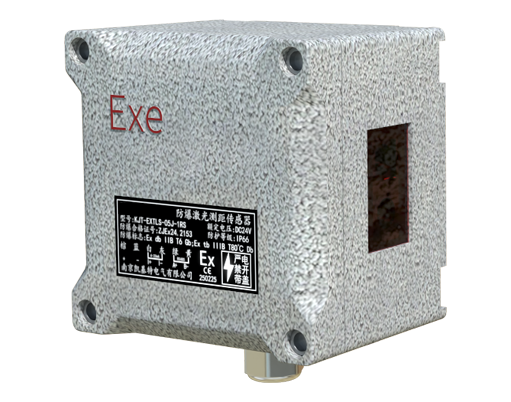
In conclusion, Jingyeda's LiDAR sensors are more than just measurement tools; they are enabling technologies for a smarter, more automated world. By delivering unparalleled accuracy, robustness, and integration capabilities, they empower engineers and developers to push the boundaries of what's possible in electrical systems design, autonomous systems, and data-driven industrial operations. As the demand for precise spatial awareness grows across sectors, Jingyeda's commitment to innovation positions its LiDAR solutions as critical components in the electrical engineer's toolkit for building the future.