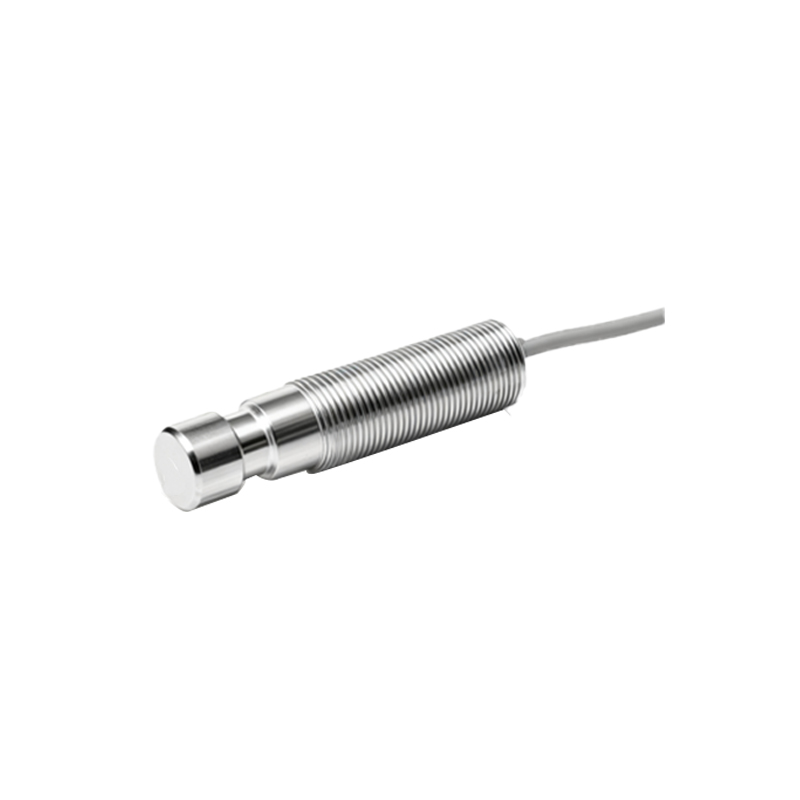
In the realm of industrial automation, proximity sensors stand as fundamental components for non-contact detection, and among them, the 3-wire M30 inductive proximity sensor is a ubiquitous workhorse. This article delves into the technical specifications, wiring configurations, operational principles, and key selection criteria for these robust sensors, providing essential knowledge for engineers and technicians.
The "M30" designation refers to the sensor's housing diameter—30 millimeters. This standardized size offers a robust mechanical form factor suitable for harsh industrial environments, providing good resistance to vibration and mechanical stress. The threaded barrel design allows for easy mounting in standard M30 nuts or mounting brackets. The "3-wire" configuration is a critical aspect that distinguishes it from 2-wire variants. This setup typically includes a brown wire for the positive DC supply voltage (often +V or 24VDC), a blue wire for the common negative or 0V, and a black wire as the switched output signal. This design allows for both NPN (sinking) and PNP (sourcing) output types, which is a primary decision point during selection. An NPN sensor switches the negative side of the load to common, while a PNP sensor switches the positive side to the load.
Operationally, inductive M30 proximity sensors generate an oscillating electromagnetic field from their sensing face. When a metallic target (typically ferrous metals like steel or iron, with specific sensing ranges for non-ferrous metals) enters this field, eddy currents are induced in the target. This causes a dampening or alteration of the oscillation amplitude, which is detected by the sensor's internal circuitry. This change triggers the solid-state output switch (the black wire) to change state, sending a signal to a programmable logic controller (PLC), counter, or other control device. A key advantage of the 3-wire system over 2-wire is its lower leakage current and more stable switching characteristics, leading to higher precision and reliability, especially with sensitive control inputs.
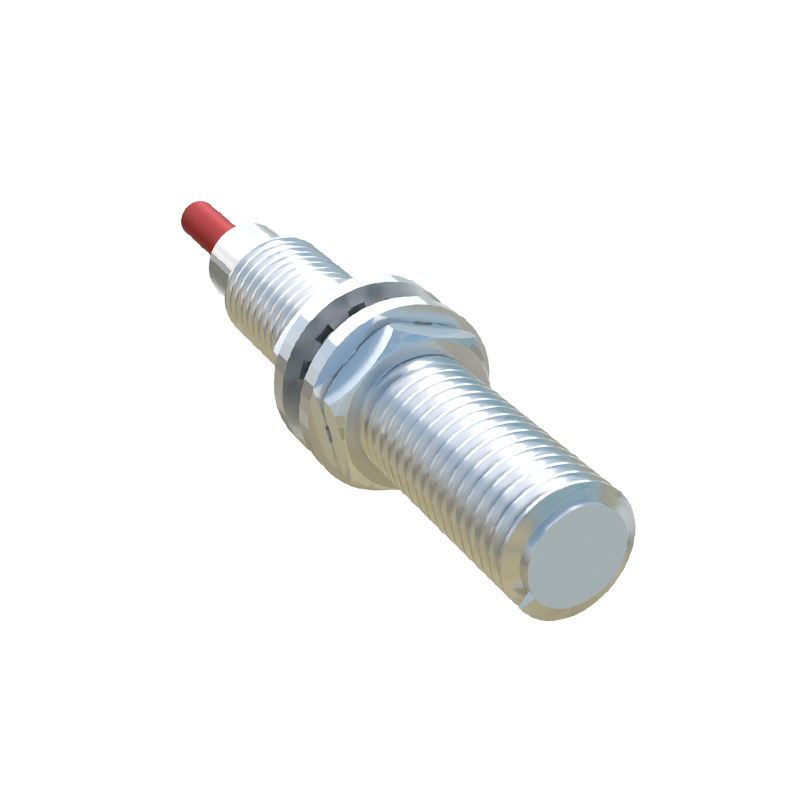
When selecting a 3-wire M30 proximity sensor, several parameters demand careful consideration. The sensing distance, or "Sn," is nominal. For a standard M30 inductive sensor, this is typically 10mm or 15mm, but it is crucial to consult the datasheet. A factor of 0.8 to 0.9 is often applied for reliable operation in real-world conditions. The output type (NPN or PNP) must match the input requirements of the controller. The supply voltage range (commonly 10-30VDC) and current rating must be compatible with the system. Environmental ratings are paramount: the Ingress Protection (IP) rating (e.g., IP67, IP68, IP69K) defines its resistance to dust and liquids, while the housing material (often nickel-plated brass or stainless steel) determines its suitability for washdown or corrosive atmospheres. Additional features like short-circuit protection, reverse polarity protection, and LED status indicators are now standard on most quality models.
Installation and wiring require attention to detail. Ensure the sensor is mounted securely without over-tightening, which can distort the housing. Maintain the specified lateral and axial clearance from metal surroundings to prevent false triggering. Always follow the manufacturer's wiring diagram. For a standard DC 3-wire sensor: connect the brown wire to the positive DC supply, the blue wire to the DC common/negative, and the black output wire to the load (e.g., a PLC input). The load is then connected to complete the circuit to the opposite supply rail, depending on whether it's an NPN or PNP configuration. Proper shielding and routing of cables away from high-power lines are recommended to minimize electrical noise interference.
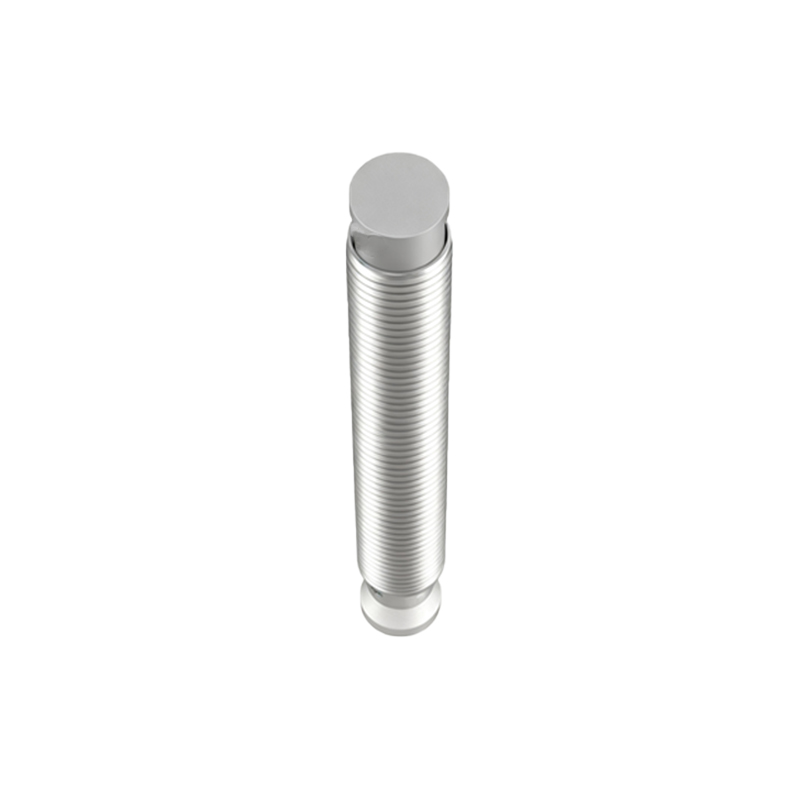
Common applications for 3-wire M30 proximity sensors are extensive. They are used for position detection of machine parts (e.g., cylinder end positions), object counting on conveyors, rotary speed monitoring, and as part of safety interlock systems. Their robustness makes them ideal for metalworking, packaging, material handling, and automotive assembly lines.
In conclusion, the 3-wire M30 inductive proximity sensor is a versatile, reliable, and critical component in modern industrial control systems. Understanding its electrical characteristics, physical specifications, and application requirements enables optimal selection and deployment. By paying close attention to output configuration, environmental ratings, and correct installation practices, engineers can ensure long-term, fault-free operation, contributing to enhanced machine efficiency and reduced downtime in automated processes. Always refer to the specific manufacturer's technical data for the final application decision.