In the dynamic landscape of industrial automation, precision, reliability, and durability are non-negotiable. Among the myriad of components that form the backbone of modern manufacturing and control systems, the M12 metal proximity sensor stands out as a critical workhorse. This comprehensive guide delves into the technology, applications, and selection criteria for these indispensable devices, tailored for engineers and system integrators.
An M12 metal proximity sensor is a non-contact sensing device designed to detect the presence or absence of metallic objects within its sensing range. The "M12" designation refers to its standardized 12mm threaded cylindrical housing, which is a prevalent form factor in industrial environments due to its robustness and ease of installation. These sensors typically operate on inductive sensing principles. An internal oscillator generates a high-frequency electromagnetic field at the active face of the sensor. When a metallic object (such as steel, aluminum, brass, or copper) enters this field, eddy currents are induced on the metal's surface. This causes a change in the oscillation amplitude or frequency within the sensor's circuit, which is then processed to trigger a solid-state output signal. This output is commonly in the form of a PNP (sourcing) or NPN (sinking) DC signal, or a push-pull configuration, compatible with programmable logic controllers (PLCs) and other control systems.
The advantages of using M12 metal proximity sensors are substantial. Their non-contact nature eliminates mechanical wear and tear, ensuring a long operational life even in high-cycle applications. They are capable of high-speed detection, often in the kilohertz range, making them ideal for counting, positioning, and speed monitoring tasks on fast-moving production lines. The sealed, all-metal or rugged polymer construction, typically rated at IP67, IP68, or IP69K, provides excellent resistance to dust, moisture, oils, and coolants. This makes them perfectly suited for harsh environments like machine tools, welding cells, and washdown areas in food and beverage processing. The standardized M12 connector system allows for quick wiring and replacement, minimizing system downtime.
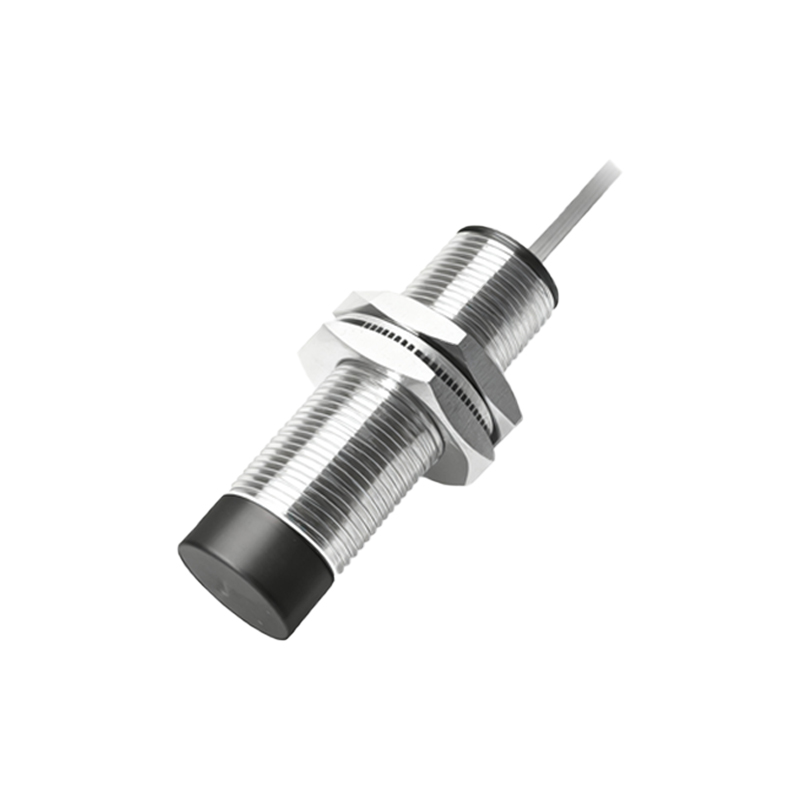
When selecting an M12 metal proximity sensor for a specific application, several key parameters must be carefully evaluated. Sensing distance, often called the "nominal range" (Sn), is fundamental. It is crucial to note that this rated distance is defined for a standard target (usually a square of mild steel). Different metals have different "reduction factors"; for instance, the effective sensing range for stainless steel or aluminum is less than that for mild steel. The sensor's housing material is another critical choice. Brass or nickel-plated brass housings offer good general resistance, while stainless steel housies (e.g., 303, 304, or 316 grades) are mandatory for highly corrosive or sanitary environments. Output configuration must match the input requirements of the controller. Engineers must also consider the electrical specifications: operating voltage (commonly 10-30V DC), current rating, and whether a normally open (NO) or normally closed (NC) output logic is required. For applications involving different metallic backgrounds, sensors with embedded background suppression or teach-in functionality are available to prevent false triggering.
The applications for M12 inductive proximity sensors are vast and varied across industries. In automotive manufacturing, they are used for part presence verification on robotic welding arms and end-of-arm tooling. In packaging machinery, they detect metal components on conveyor belts for precise filling and capping operations. In material handling, they serve as limit switches to detect the position of metal pallets or shuttle cars. They are also integral in metalworking for tool breakage detection, in assembly lines for verifying component insertion, and in automated storage and retrieval systems (AS/RS) for position feedback.
Installation and maintenance are straightforward but require attention to detail. For optimal performance, sensors should be mounted securely to avoid vibration-induced errors. It is essential to maintain the recommended clearance around the sensing face to prevent interference from surrounding metal structures (a concept known as flush or non-flush mounting specifications). Regular checks for physical damage, buildup of metallic swarf, or contamination on the sensing face will ensure consistent operation. Diagnostic features like LED status indicators are invaluable for troubleshooting.
In conclusion, the M12 metal proximity sensor is a quintessential component in the engineer's toolkit for industrial automation. Its blend of standardized form, robust construction, and reliable inductive sensing technology makes it a versatile solution for countless metal detection challenges. By understanding its operating principles, key specifications, and application nuances, engineers can deploy these sensors to enhance system efficiency, improve safety, and ensure the seamless operation of automated processes. As Industry 4.0 and smart manufacturing evolve, these sensors continue to be a fundamental link between the physical and digital worlds of production.