In the realm of industrial automation and control systems, proximity sensors are indispensable components. These non-contact devices detect the presence or absence of an object within a defined range without physical contact, offering reliability, longevity, and precision. Understanding the various types is crucial for selecting the right sensor for specific applications, such as assembly line monitoring, position verification, or safety interlocks. This article delineates five primary types of proximity sensors widely utilized across industries.
The first type is the Inductive Proximity Sensor. This sensor operates on the principle of electromagnetic induction. It generates an oscillating electromagnetic field from its coil and oscillator circuit. When a metallic object enters this field, eddy currents are induced on the object's surface, causing a change in the oscillation amplitude. This change is detected by the sensor's circuitry, triggering an output signal. Inductive sensors are highly effective for detecting ferrous and non-ferrous metals but are unsuitable for non-metallic materials. Common applications include detecting metal parts in machinery, counting metallic objects on conveyors, and position sensing in automotive manufacturing. Their robustness against harsh environments—resistant to dust, dirt, and moisture—makes them a staple in industrial settings.
Next are Capacitive Proximity Sensors. These sensors function by detecting changes in capacitance. The sensor forms one plate of a capacitor, with the target object acting as the other plate. As an object approaches the sensor's active surface, it alters the dielectric constant of the surrounding space, changing the capacitance in the oscillator circuit. Once the capacitance reaches a threshold, the sensor activates its output. Unlike inductive sensors, capacitive types can detect both metallic and non-metallic materials, including liquids, plastics, glass, and wood. This versatility allows their use in level detection for tanks containing liquids or granular materials, material handling for various substances, and touch-sensitive control panels. However, they can be sensitive to environmental factors like humidity.
The third category is Ultrasonic Proximity Sensors. These sensors employ sound waves beyond human hearing, typically above 20 kHz. They consist of a transmitter that emits ultrasonic pulses and a receiver that detects reflected echoes. The time interval between emission and reception of the echo is measured to calculate the distance to an object. Ultrasonic sensors are excellent for detecting objects regardless of their material, color, or transparency, making them ideal for complex detection tasks. They are commonly used in distance measurement, object presence detection in packaging, and liquid level sensing in opaque containers. Their performance can be affected by temperature variations and air turbulence, but many models include temperature compensation for accuracy.
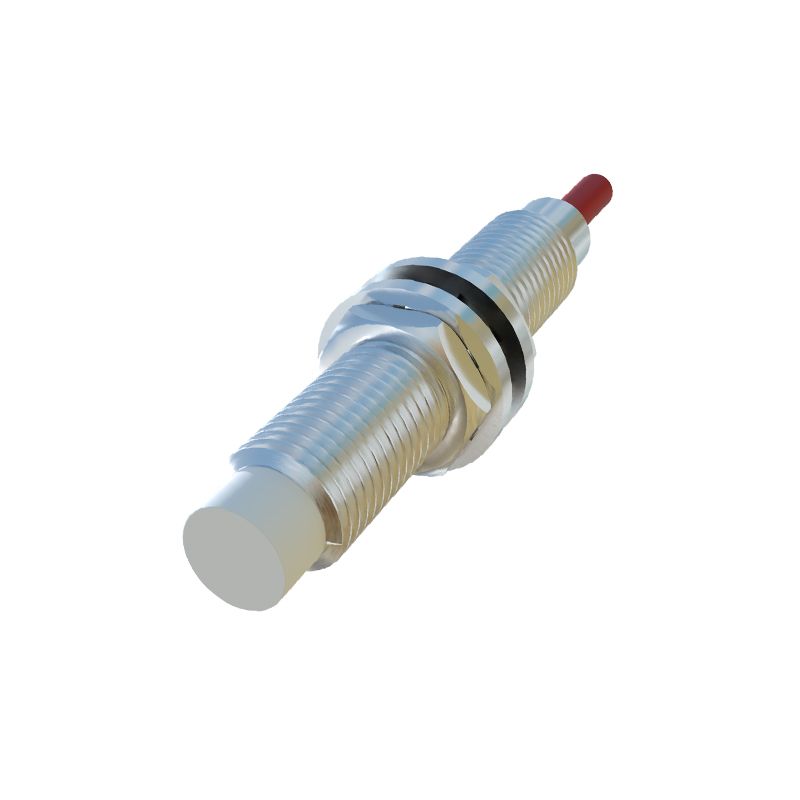
Another significant type is the Photoelectric Proximity Sensor. These sensors use light beams, often infrared, to detect objects. They comprise a light emitter and a receiver. When an object interrupts or reflects the light beam, the receiver detects the change, prompting an output signal. Photoelectric sensors come in several configurations: through-beam (where emitter and receiver are separate), retro-reflective (using a reflector), and diffuse (reflective), where the sensor detects light reflected directly from the object. They are capable of detecting a wide range of materials over long distances and are used in applications like bottle counting on production lines, web break detection in paper processing, and automated door systems. Factors like ambient light, color, and surface texture can influence their performance.
Lastly, Magnetic Proximity Sensors, often referred to as Reed Switches or Hall Effect sensors, detect magnetic fields. Reed switches consist of two ferromagnetic reeds sealed in a glass tube; when a magnet approaches, the reeds attract and close the circuit. Hall Effect sensors generate a voltage when exposed to a magnetic field, indicating proximity. These sensors are specifically designed to detect permanent magnets. They are widely used in applications where only magnetic targets are present, such as sensing door positions in security systems, detecting cylinder position in pneumatic systems, and in automotive applications for speed sensing. They offer high reliability and long operational life with minimal power consumption.
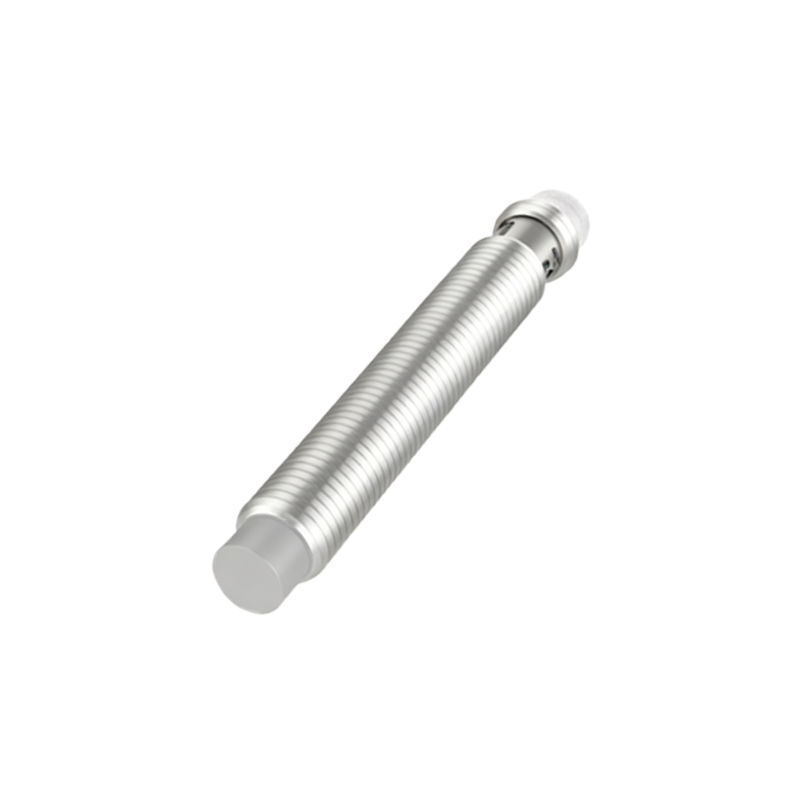
In conclusion, each type of proximity sensor—inductive, capacitive, ultrasonic, photoelectric, and magnetic—has distinct operating principles and ideal application domains. The choice depends on factors like target material, required sensing distance, environmental conditions, and cost considerations. By leveraging the appropriate sensor technology, engineers can enhance system efficiency, safety, and automation capabilities, driving innovation in modern industrial processes.