In modern industrial automation and control systems, proximity and photoelectric sensors are indispensable components, enabling non-contact detection of objects with high precision and reliability. These sensors operate on distinct physical principles but share the common goal of converting the presence or absence of a target into an electrical signal. This article delves into the fundamental working mechanisms of these sensors, their key characteristics, and typical applications in the electrical and automation engineering fields.
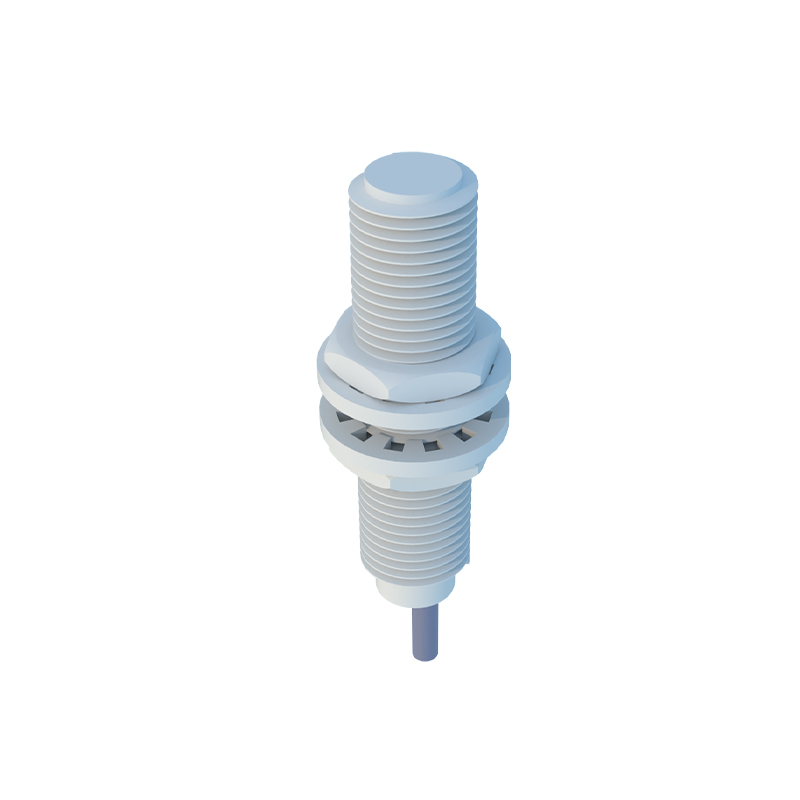
Proximity sensors are designed to detect the presence of nearby objects without any physical contact. They are primarily categorized based on their sensing technology: inductive, capacitive, and magnetic (e.g., Hall effect or reed switches). Inductive proximity sensors are among the most common in industrial settings. They generate an electromagnetic field using a coil and oscillator circuit. When a metallic object enters this field, eddy currents are induced in the target, causing a change in the oscillation amplitude. This change is detected by the sensor's circuitry, which then triggers a switching action—typically opening or closing a solid-state or relay output. These sensors are ideal for detecting ferrous and non-ferrous metals, with sensing ranges varying from a few millimeters to several centimeters. Their robustness, immunity to environmental factors like dust or oil (provided they are properly rated), and fast response times make them suitable for applications such as position sensing in conveyor systems, machine tool automation, and metal part counting.
Capacitive proximity sensors, on the other hand, can detect both metallic and non-metallic materials, including liquids, plastics, and wood. They operate by generating an electrostatic field. When an object with a different dielectric constant than air enters this field, it alters the capacitance of the sensor's circuit. This capacitance change is measured, and when it exceeds a preset threshold, the sensor switches its output state. Capacitive sensors are valuable in applications like level detection in tanks, material handling for non-metallic items, and presence detection through non-metallic containers.
Photoelectric sensors utilize light beams to detect objects. Their operation is based on the emission, reflection, or interruption of light, typically in the visible or infrared spectrum. The three main types are through-beam, retro-reflective, and diffuse reflective sensors. Through-beam sensors consist of separate emitter and receiver units placed opposite each other. Detection occurs when an object interrupts the light beam traveling from the emitter to the receiver. This configuration offers the longest sensing distances and highest reliability, as it is less affected by the object's color, texture, or reflectivity. Common uses include safety curtains, object counting on high-speed lines, and break detection.
Retro-reflective sensors house both emitter and receiver in a single housing. They rely on a reflector (like a prism or tape) to bounce the emitted light back to the receiver. An object is detected when it blocks this reflected beam. These sensors provide a good balance between range and installation convenience, often employed in packaging machinery, door control, and palletizing systems. Diffuse reflective sensors, also with a combined emitter and receiver, detect objects by measuring the light reflected directly off the target's surface. The detection range depends heavily on the object's size, color, and surface properties. They are commonly used for short-range detection, such as in material presence sensing on conveyors or bottle cap alignment.
Key performance parameters for these sensors include sensing distance, repeat accuracy, response time, and environmental ratings (e.g., IP67 for dust and water resistance). Engineers must select sensors based on the target material, required precision, ambient conditions (light, temperature, contaminants), and electrical interface compatibility (e.g., NPN/PNP outputs, analog signals, or IO-Link for smart sensors).
In summary, proximity and photoelectric sensors form the backbone of automated sensing in industrial environments. Understanding their core principles—electromagnetic induction, capacitance change, and light modulation—allows engineers to design efficient, reliable control systems. As Industry 4.0 advances, these sensors are increasingly integrating with digital networks and IoT platforms, enabling predictive maintenance and enhanced data analytics, yet their fundamental operating principles remain critical for effective implementation and troubleshooting.