In the realm of industrial automation, precision, reliability, and durability are non-negotiable. Among the myriad of components that ensure seamless operations, proximity switch sensors stand out as critical elements for non-contact detection. The X4 series of proximity sensors represents a pinnacle of engineering in this category, designed to meet the rigorous demands of modern manufacturing, packaging, material handling, and automotive assembly lines.
X4 proximity switches are typically inductive sensors, engineered to detect metallic objects without physical contact. Their operating principle is based on generating an electromagnetic field from an oscillator circuit. When a metallic target enters this field, it induces eddy currents, causing a change in the oscillation amplitude. This change is detected by the sensor's circuitry, which subsequently triggers a solid-state output switch. This mechanism allows for highly accurate and repeatable detection of ferrous and non-ferrous metals, making the X4 series exceptionally versatile.
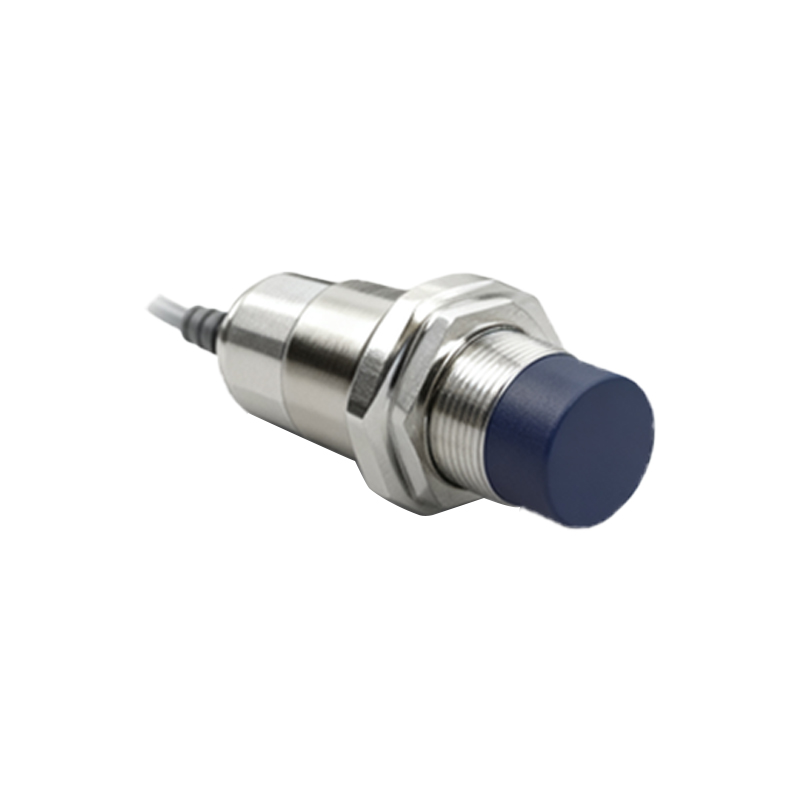
One of the defining characteristics of the X4 sensor is its robust construction. Housed in a stainless steel or nickel-plated brass body, these sensors are built to withstand harsh industrial environments. They offer high resistance to shock, vibration, moisture, and chemicals, often conforming to IP67 or IP69K ingress protection ratings. This ensures consistent performance in settings exposed to coolants, oils, dust, and high-pressure washdowns, common in food processing or automotive plants.
The technical specifications of X4 sensors are tailored for high-performance applications. Key parameters include sensing range, which can vary from a few millimeters to several tens of millimeters, depending on the model and target material. Factors such as the target's size, shape, and material (e.g., steel, aluminum, copper) influence the effective sensing distance. Additionally, X4 sensors feature short-circuit and overload protection, reverse polarity protection, and LED status indicators for easy diagnostics. Their output configurations are diverse, including NPN (sinking), PNP (sourcing), NO (normally open), and NC (normally closed) options, allowing for seamless integration into various PLC (Programmable Logic Controller) systems and control architectures.
When selecting an X4 proximity sensor for a specific application, several critical factors must be considered. First, the operating environment dictates the required housing material and protection rating. For instance, a stainless steel housing is preferable in corrosive environments. Second, the sensing distance must be chosen with a safety margin, typically 70-80% of the nominal range, to account for target variations and mechanical tolerances. Third, the switching frequency, or response time, is vital for high-speed applications like counting or sorting on conveyor belts. X4 sensors often boast high switching speeds, enabling detection of rapidly moving objects. Lastly, electrical characteristics such as supply voltage (commonly 10-30V DC) and output current must match the control system's requirements to ensure reliable operation and avoid damage.
Installation and wiring are straightforward but require attention to detail. Mounting the sensor correctly is crucial; flush-mounted sensors have a reduced sensing range compared to non-flush models. Adequate clearance from surrounding metal objects (the so-called "mounting distance") must be maintained to prevent false triggering. Wiring should follow the manufacturer's diagram precisely, ensuring correct connections for power, ground, and output signals. Regular maintenance, though minimal, involves periodic checks for physical damage, accumulation of debris on the sensing face, and verification of electrical connections.
The advantages of implementing X4 proximity switches are manifold. Their non-contact nature eliminates mechanical wear, leading to a significantly longer operational lifespan compared to mechanical limit switches. This translates to reduced downtime and maintenance costs. Their high speed and accuracy enhance process efficiency and product quality. Furthermore, their robust design ensures reliability in challenging conditions, contributing to overall system stability and safety.
In conclusion, the X4 series of proximity switch sensors embodies a blend of advanced technology and rugged design, making it an indispensable component in industrial automation. By understanding their operating principles, specifications, and application considerations, engineers and technicians can leverage these sensors to optimize machine performance, improve productivity, and ensure reliable operation across diverse industrial sectors. As automation continues to evolve, the role of precise and durable sensing solutions like the X4 will only grow in importance.