Proximity sensors are integral components in modern robotic systems, enabling precise, non-contact detection of objects within a defined range. These sensors enhance the efficiency, safety, and accuracy of robotic operations, particularly in industrial automation, manufacturing, and logistics. Understanding their working principles is essential for optimizing robotic performance and ensuring reliable interaction with the environment.
Proximity sensors function by emitting a field or beam of electromagnetic radiation, such as infrared light, ultrasonic waves, or magnetic fields, and detecting changes in the return signal caused by nearby objects. The absence of physical contact minimizes wear and tear, reduces maintenance needs, and allows for high-speed operation. Common types include inductive, capacitive, ultrasonic, and optical sensors, each suited to specific applications based on material properties, environmental conditions, and detection requirements.
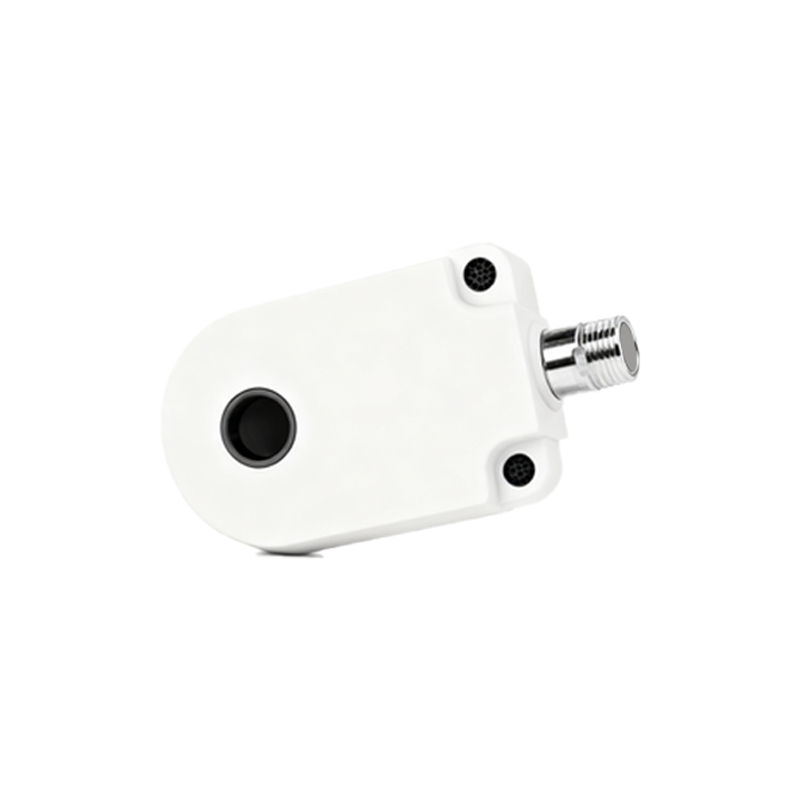
Inductive proximity sensors are widely used in robotics for detecting metallic objects. They operate on the principle of electromagnetic induction, where an oscillator generates a fluctuating magnetic field. When a conductive metal enters this field, eddy currents are induced, altering the oscillation amplitude. This change triggers a switch in the sensor's output circuit, signaling the presence of the object. These sensors are ideal for harsh industrial environments due to their robustness, immunity to dust, oil, and moisture, and fast response times. However, they are limited to metallic targets and have a relatively short detection range, typically up to 60 millimeters.
Capacitive proximity sensors can detect both metallic and non-metallic materials, including liquids, plastics, and wood. They work by measuring changes in capacitance between the sensor's electrode and the target object. The sensor forms one plate of a capacitor, with the target acting as the other plate. As the object approaches, the capacitance increases, altering the oscillator frequency or amplitude. Once a threshold is reached, the sensor outputs a signal. These sensors are versatile and effective in applications like level detection, material handling, and packaging, but they can be sensitive to environmental factors like humidity and temperature variations.
Ultrasonic proximity sensors utilize sound waves beyond the human hearing range (typically 20 kHz to 200 kHz) to detect objects. They consist of a transmitter that emits ultrasonic pulses and a receiver that listens for echoes reflected from nearby surfaces. By calculating the time delay between emission and reception, the sensor determines the distance to the object. This technology offers long-range detection (up to several meters), high accuracy, and the ability to sense transparent or irregularly shaped items. It is commonly used in robotic navigation, obstacle avoidance, and assembly line monitoring. Drawbacks include potential interference from ambient noise, temperature fluctuations affecting sound speed, and slower response times compared to inductive or optical sensors.
Optical proximity sensors, often based on infrared (IR) or laser technology, rely on light beams to detect objects. They can be configured in through-beam, retro-reflective, or diffuse reflection modes. In through-beam setups, an emitter and receiver are placed opposite each other; an object interrupts the beam, triggering detection. Retro-reflective sensors use a reflector to bounce light back to the receiver, while diffuse reflection sensors detect light scattered directly from the target. Optical sensors provide high precision, fast response, and long ranges, making them suitable for tasks like part positioning, counting, and quality inspection. However, they may be affected by ambient light, dust, or color variations in targets.
In robotic applications, proximity sensors are critical for tasks such as object grasping, collision avoidance, and precise positioning. For instance, in a robotic arm, inductive sensors can verify the presence of metal components before assembly, while ultrasonic sensors help navigate around obstacles in dynamic environments. Integration with control systems allows real-time adjustments, improving operational safety and productivity. When selecting a proximity sensor, engineers must consider factors like detection range, response time, environmental resilience, and target material to ensure optimal performance.
Advancements in sensor technology continue to drive innovation in robotics. Smart sensors with embedded microprocessors offer self-diagnosis, adaptive calibration, and communication capabilities via protocols like IO-Link or Ethernet. These features enable predictive maintenance, reduce downtime, and enhance system flexibility. As robotics evolve toward greater autonomy and collaboration with humans, proximity sensors will play an even more vital role in enabling sensitive, responsive interactions. Future trends may include miniaturization, multi-sensor fusion, and AI-enhanced detection algorithms for complex environments.
In summary, proximity sensors are foundational to robotic functionality, providing essential data for decision-making and control. By leveraging electromagnetic, acoustic, or optical principles, they enable non-contact detection across diverse scenarios. A thorough understanding of their mechanisms and applications empowers engineers to design more efficient, reliable, and intelligent robotic systems, contributing to advancements in automation and industry 4.0 initiatives.